

Sri Lanka is one of the most rewarding family destinations in South Asia. It is compact enough to cover real ground in two weeks, varied enough to keep children of every age genuinely interested, and warm enough in hospitality that families travelling with young children are welcomed almost everywhere. From ancient rock fortresses and elephant sanctuaries to glowing lagoons and leopard safaris, this guide covers the 15 must-see places in Sri Lanka with family that belong on any itinerary, whether you have ten days or three weeks. Each entry includes what younger travellers will love, the best age range, and when to go.

1. Sigiriya Rock Fortress
Sigiriya is the single most dramatic sight in Sri Lanka, a 200-metre volcanic rock rising from the jungle with a 5th-century palace complex on its summit. The climb takes approximately 90 minutes and involves staircases, ladders, and a famous lion-paw entrance carved directly into the rock face. Children old enough to manage the climb find it genuinely thrilling rather than just educational.
The surrounding area includes a moat, water gardens, and boulder gardens at the base that can be explored without the summit climb for younger children. A sunrise visit before the heat builds is strongly recommended.
Best for: Children aged 7 and above for the climb. Younger children can explore the base gardens.
Season: Year-round. Early morning is essential to beat the heat.

2. Pinnawala Elephant Orphanage
Located near Kegalle between Colombo and Kandy, Pinnawala Elephant Orphanage is home to one of the largest herds of captive elephants in the world. The twice-daily river bathing, when the elephants walk from the orphanage to the Ma Oya River and spend an hour washing and playing in the water, is the most memorable visit for children at any age.
The orphanage cares for orphaned and injured elephants and has been operating since 1975. Viewing is from the riverbank and from paths within the orphanage grounds. It is one of the most reliably enjoyable family stops on the main tourist circuit.
Best for: All ages. Toddlers respond as enthusiastically as teenagers.
Season: Year-round.
3. Kandy
Sri Lanka's cultural capital sits around a lake in the central highlands and rewards families with a combination of easily accessible experiences. The Temple of the Tooth Relic, which houses one of Buddhism's most sacred objects, has a puja ceremony three times daily that children find visually arresting. The Peradeniya Botanical Gardens, established in 1371, sprawls across over 60 hectares of palms, orchids, and canopy walkways.
Evening Kandyan cultural dance performances, lasting about an hour, introduce children to traditional Sri Lankan costumes, drumming, and acrobatics in a way that holds attention much better than a museum visit.
Best for: All ages. Cultural depth suits older children best.
Season: Year-round.
4. Yala National Park
Sri Lanka's most visited national park covers 979 square kilometres of dry scrub forest, lagoons, and coastal habitat. It holds one of the highest leopard densities in the world, along with Asian elephants, sloth bears, crocodiles, and 215 recorded bird species. An early morning safari from the main gate in Block 1 gives the highest probability of wildlife encounters.
Yala suits families with children old enough to sit quietly in an open jeep for two to three hours and find genuine excitement in the wildlife rather than restlessness. The open vehicles give children unobstructed views at eye level with the animals, which makes the experience more immediate than a glass-sided vehicle.
Best for: Children aged 5 and above.
Season: October to May. Avoid the June to September monsoon on the south coast when Yala can be wet.
5. Udawalawe National Park
For families with younger children, Udawalawe is often a better choice than Yala. It is open, flat, and specifically famous for Asian elephants rather than the elusive leopard, which means encounters are almost guaranteed rather than hoped for. Herds of elephants at the Udawalawe Reservoir are a regular morning sight, and the park is considerably less crowded than Yala.
The Udawalawe Elephant Transit Home adjacent to the park feeds orphaned elephant calves in public viewing sessions and is especially popular with young children.
Best for: All ages, including toddlers. The flat terrain and reliable elephant sightings suit families who want wildlife without uncertainty.
Season: Year-round, best from May to September.
6. Galle Fort
Galle Fort on the southwest coast is a UNESCO World Heritage Site, a 16th-century Dutch colonial fortification enclosing a small town of narrow streets, boutique hotels, lighthouse, churches, and museums. Children enjoy walking the broad ramparts with the ocean on three sides and the town on the other, and the scale is manageable: the fort is small enough to explore fully on foot in half a day.
The National Maritime Museum within the fort and the Dutch Reformed Church, dating to 1755, are worth a short visit. The beaches immediately south of the fort at Unawatuna are good for a family afternoon in the water after the fort is explored.
Best for: All ages. Manageable scale suits families with young children.
Season: November to April for the south coast.
7. Ella
Ella is a mountain village in the southern hill country, surrounded by tea estate ridges and jungle peaks. For families, the activities here are physically accessible without being demanding. The hike to Little Adam's Peak takes under an hour each way on a clear trail and rewards with panoramic views. The Nine Arch Bridge, a colonial stone viaduct through the tea bushes, is one of the most photographed structures in Sri Lanka.
For older children and teenagers, the Flying Ravana zipline near Ella is one of the longest in Asia and produces the kind of reaction that becomes a permanent family memory. Ravana Falls, a broad cascade near the base of the hill, is a short tuk-tuk ride from the village.
Best for: Families with children aged 5 and above. Teenagers will find the zipline particularly compelling.
Season: December to April for the best weather.
8. Nuwara Eliya
At nearly 2,000 metres above sea level, Nuwara Eliya is the coolest town in Sri Lanka and the centre of the island's tea industry. The contrast with the coast is dramatic: thick mist, colonial bungalows, and green hills layered with tea bushes. A visit to a working tea factory to watch the processing stages from leaf to dried tea holds children's attention better than the outcome suggests.
Gregory Lake in the centre of town has paddle boats for hire. The Hakgala Botanical Gardens, at high altitude with rose gardens and a resident monkey population, suits a gentle afternoon walk.
Best for: All ages. Younger children respond to the temperature change, monkeys, and paddle boats. Older children and teenagers appreciate the scenery.
Season: March to May for the clearest conditions.

9. Dambulla Cave Temple
The Dambulla Cave Temple is a complex of five cave shrines carved into a granite outcrop, containing 153 statues of the Buddha and covering 2,100 square metres of painted ceiling and walls. The caves date to the 1st century BCE and are a UNESCO World Heritage Site.
Families visiting Dambulla are often surprised by how physically interesting the space is for children: the scale of the caves, the ceiling paintings covering every surface, and the views from the rock over the surrounding jungle hold attention in a way that many religious monuments do not. It is typically combined with Sigiriya, an hour away by road.
Best for: Children aged 5 and above.
Season: Year-round. Mornings are cooler and less crowded.
10. Bentota and Hikkaduwa Beaches
The southwest coast beaches at Bentota and Hikkaduwa offer a combination that suits families particularly well: calm water inside the bay for swimming, turtle hatcheries and glass-bottom boat experiences just offshore, and a range of water sports for older children and adults.
The Hikkaduwa turtle hatchery protects hawksbill and green turtle eggs and releases hatchlings at dusk. Children watching a hatchling enter the ocean for the first time is a frequently cited family highlight of Sri Lanka trips. Glass-bottom boat rides over the Hikkaduwa reef allow young children to see coral and reef fish without snorkelling.
Best for: All ages. Younger children love the turtle hatchery and glass-bottom boats.
Season: November to April for the southwest coast.
11. Colombo
Sri Lanka's capital city rewards a one or two night stay at either end of a family trip. The Gangaramaya Temple, a large and eclectic Buddhist complex on the lake, has a museum section full of unusual objects and the grounds have resident elephants and tortoises. Galle Face Green, the urban seafront promenade, is best at sunset when the kite sellers and snack vendors make it genuinely lively.
The National Museum of Colombo, the Dutch Period Museum, and the Colombo Lotus Tower offer additional depth for families with older children who want historical and cultural context before travelling around the island.
Best for: All ages as a transitional stop. Colombo works best as two nights at the start and end of a trip rather than a dedicated destination.
Season: Year-round.
12. Polonnaruwa
The ancient city of Polonnaruwa is the more accessible of Sri Lanka's two major archaeological sites (the other being Anuradhapura) and suits families because the key structures are clustered together and reachable by bicycle or tuk-tuk within the site. The Gal Vihara, four colossal Buddha figures carved from a single granite face, is genuinely impressive at any age.
Polonnaruwa dates to the 11th and 12th centuries. The site has good shade from the surrounding forest and is manageable in three to four hours.
Best for: Children aged 8 and above for the historical context. The bicycle ride through the site suits all ages.
Season: Year-round. The dry season from May to September is most comfortable.
13. Mirissa Whale Watching
From November to April, the deep water off Mirissa on the south coast hosts blue whale sightings that are among the most reliable in the world. The short boat journey from Mirissa harbour, typically returning by mid-morning, fits comfortably into a family day.
Children who have only seen whales in photographs respond to a real encounter with the scale of the animal in a way that stays with them. The boat crews are experienced at positioning for good sightings. Dolphins frequently accompany the whale watching boats on the outward journey.
Best for: Children aged 5 and above who are comfortable on a boat.
Season: November to April.
14. Kalpitiya and the Northwest Coast
Kalpitiya on the northwest coast is the family destination in Sri Lanka that most itineraries miss, and the one that children consistently name as a highlight of the island when they get home.
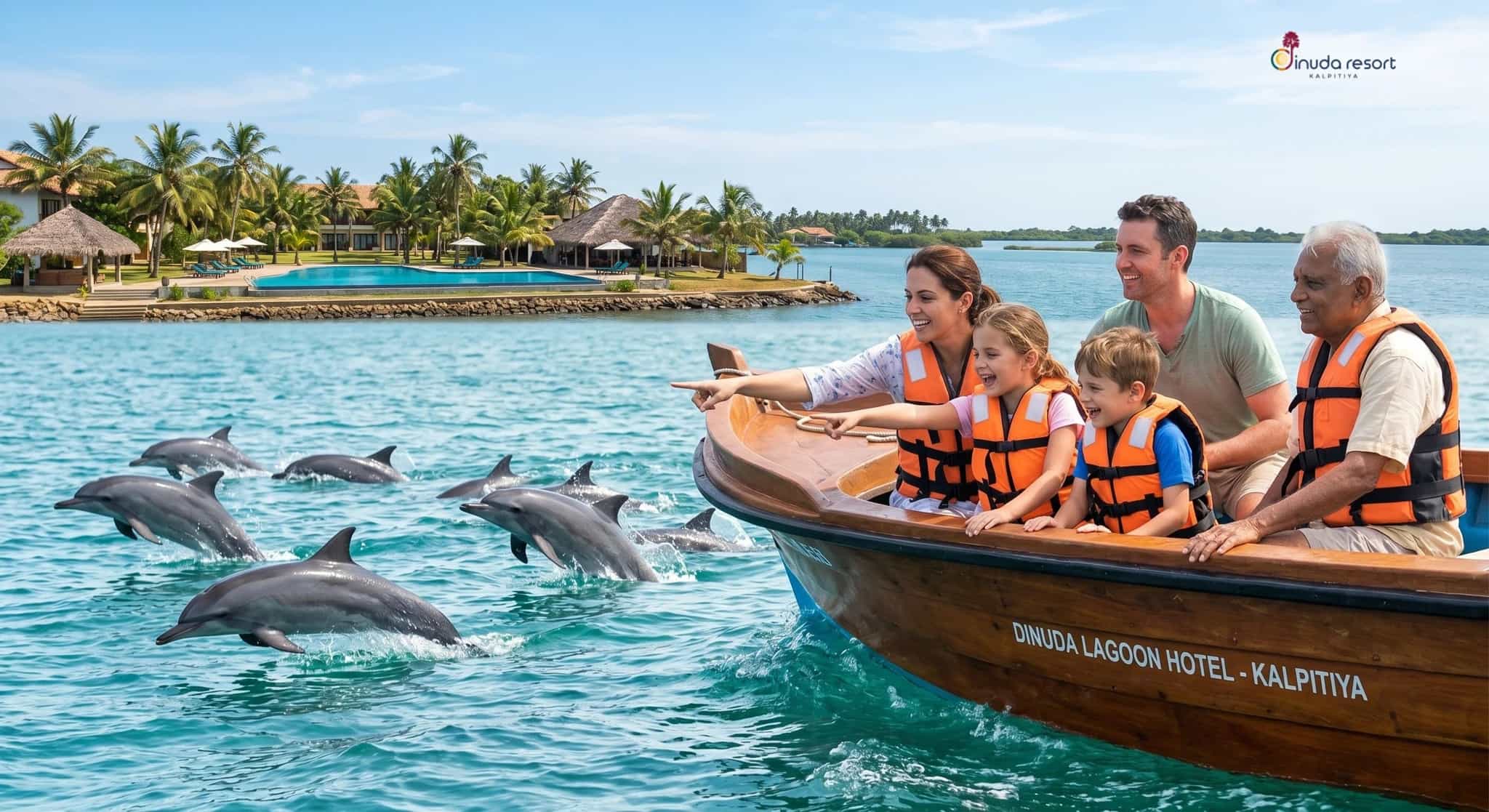
The Dutch Bay Lagoon is calm, shallow, and safe for children around the water. Dolphin watching boats depart at sunrise and encounter spinner dolphin superpods of hundreds of animals that children find completely extraordinary. Lagoon kayaking through the mangrove channels at dawn is quiet and rich with birdlife, at a pace suited to any age. The Wilpattu safari by boat from Kalpitiya, accessible as a full day trip, covers elephants, leopards, and crocodiles from a completely different angle than the road-based parks further south.
For a complete guide to what the northwest coast offers families with children, read the Kalpitiya with kids travel guide.
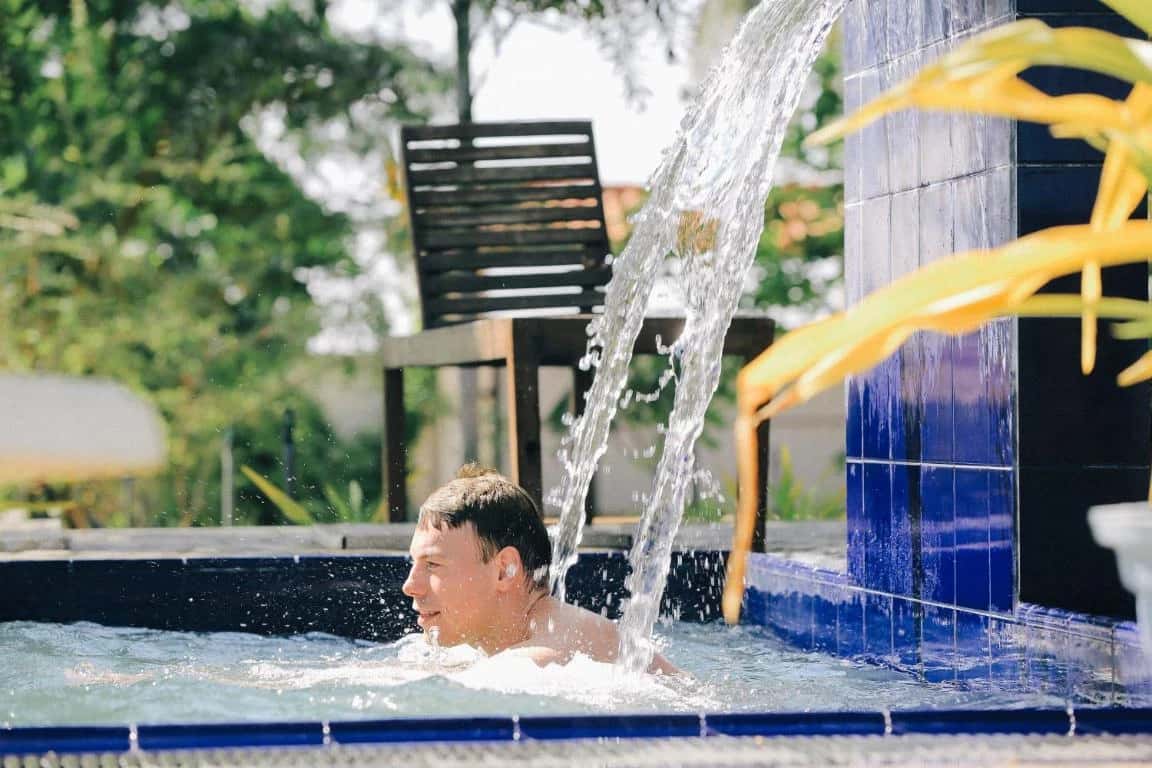
Dinuda Lagoon Resort in Kalpitiya has eight family rooms on the lagoon, a pool, and organises every experience above from one base.
Best for: All ages. The lagoon is particularly suited to younger children. Dolphin watching suits children aged 5 and above.
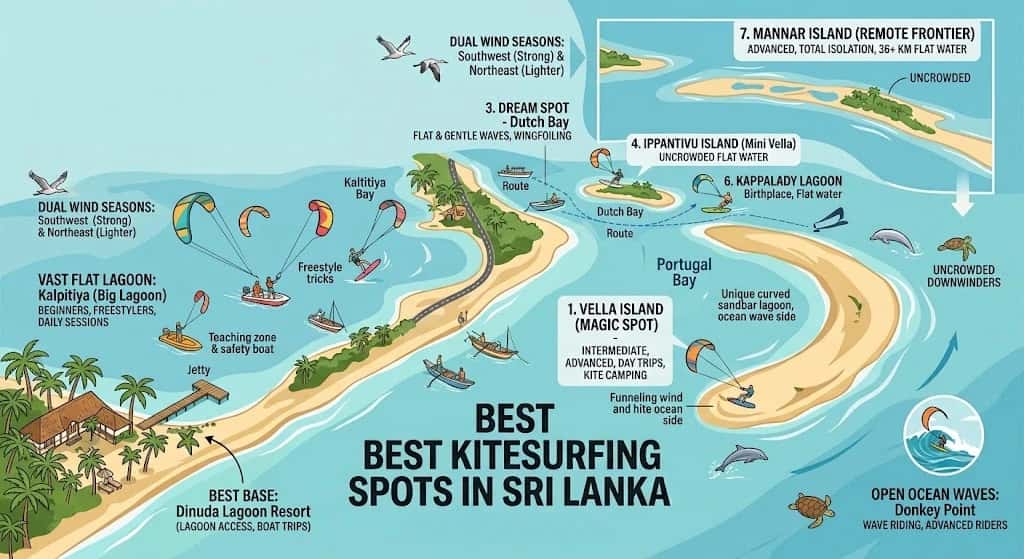
Season: November to April for dolphin watching and Bar Reef snorkelling. May to October for kitesurfing.
15. Anuradhapura
Sri Lanka's oldest ancient city, Anuradhapura is one of the sacred cities of the ancient world and a UNESCO World Heritage Site. The Sri Maha Bodhi, a sacred fig tree grown from a cutting of the tree under which the Buddha attained enlightenment, is believed to be the oldest historically documented living tree in the world, planted in 288 BCE.
The scale of Anuradhapura, with its enormous dagobas (dome-shaped reliquary monuments) rising from the jungle, gives the site a visual impact that older children and teenagers find genuinely impressive. The site is large and is best covered by tuk-tuk or bicycle.
Best for: Children aged 8 and above for historical and cultural context.
Season: Year-round.
Building a Sri Lanka Family Itinerary
With 15 destinations spread across a compact island, the best family routes group nearby sites together to minimise travel time and maximise the time spent at each place.
A two-week family route works well in two clusters: the Cultural Triangle and Hill Country in the first week (Colombo, Pinnawala, Kandy, Sigiriya, Dambulla, Polonnaruwa, Anuradhapura, Nuwara Eliya, Ella) and the Coasts in the second week (south coast beaches and Mirissa, Galle, then northwest to Kalpitiya before the return to Colombo airport).
Ending at Kalpitiya on the northwest coast is logistically practical because the airport transfer from Kalpitiya to Colombo takes under three hours. Finishing the trip on the lagoon, with dolphin watching on the final morning before departure, is the kind of ending that children lobby to repeat.
For a day-by-day itinerary incorporating Kalpitiya into a full Sri Lanka circuit, read the Sri Lanka one-week travel guide.
Plan Your Sri Lanka Family Trip
Sri Lanka rewards family travel in a way that very few destinations do. The range of experiences, the safety of the country for travelling families, and the genuine warmth with which children are welcomed make it one of the best choices in Asia for a trip that works for parents and children equally.
Kalpitiya and Dinuda Lagoon Resort are the northwest coast chapter of your Sri Lanka family story. The lagoon, the dolphins, the mangrove channels, the Wilpattu safari, and the pool back at the resort make the days full and the evenings easy.