
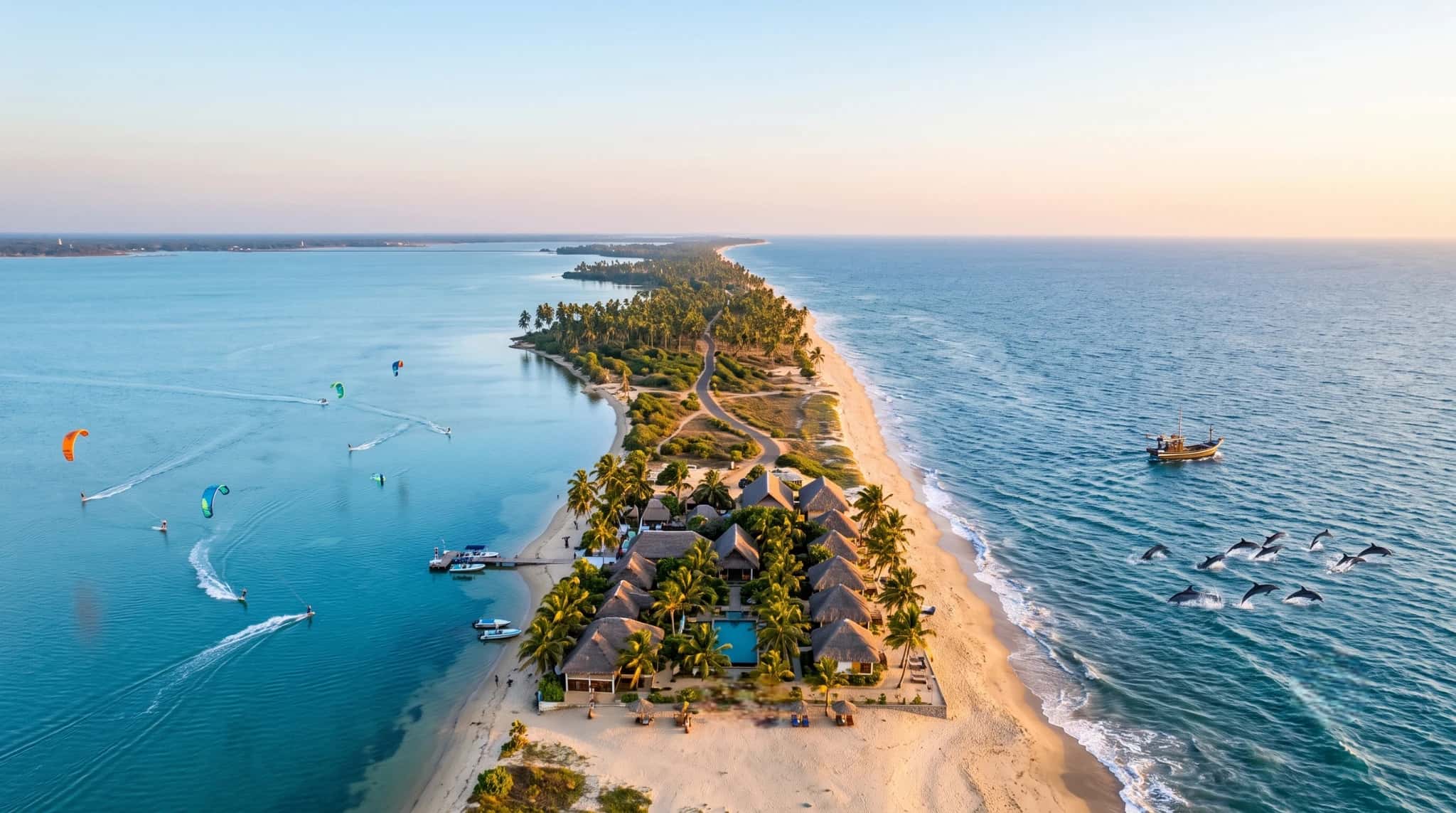
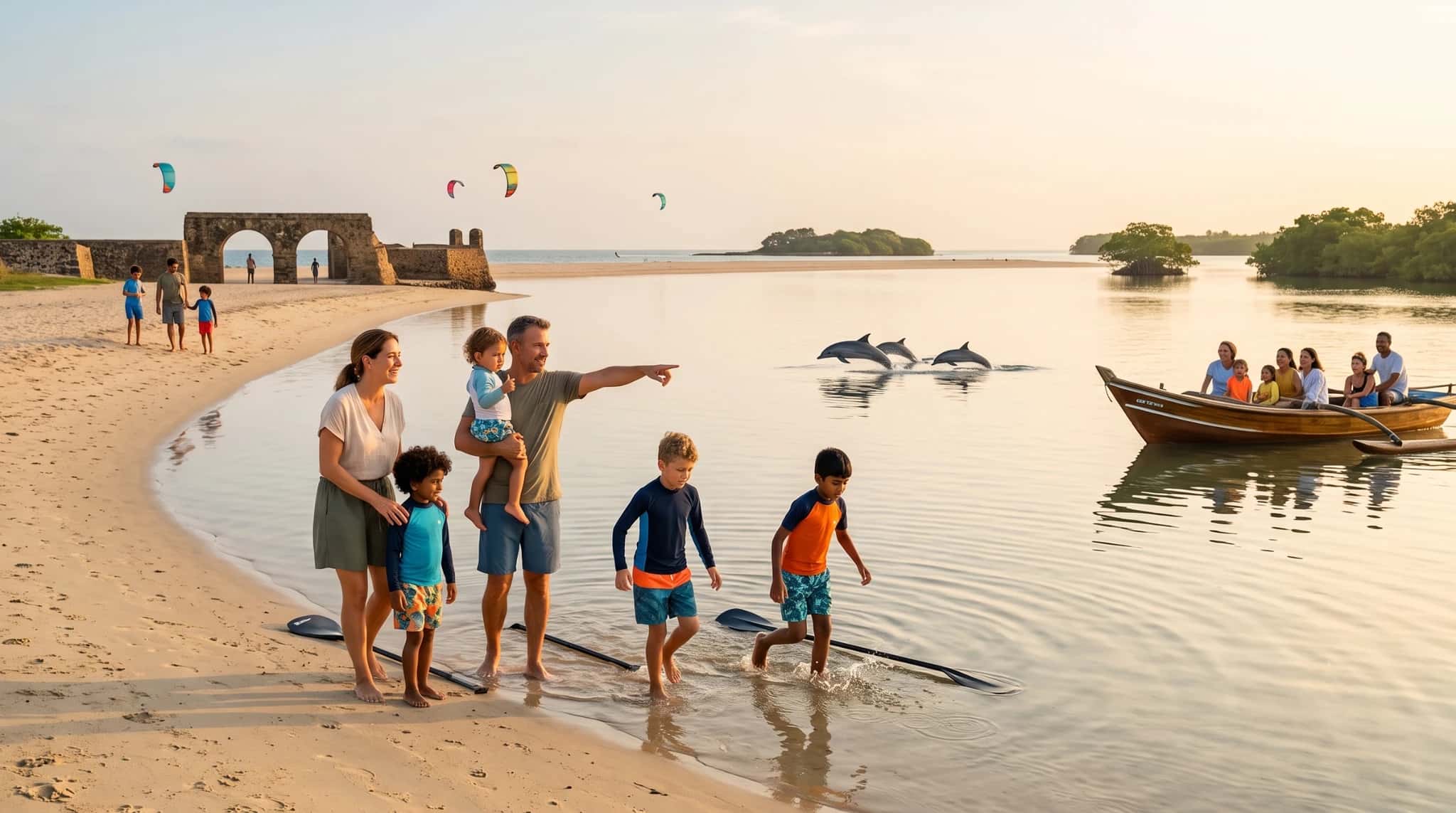
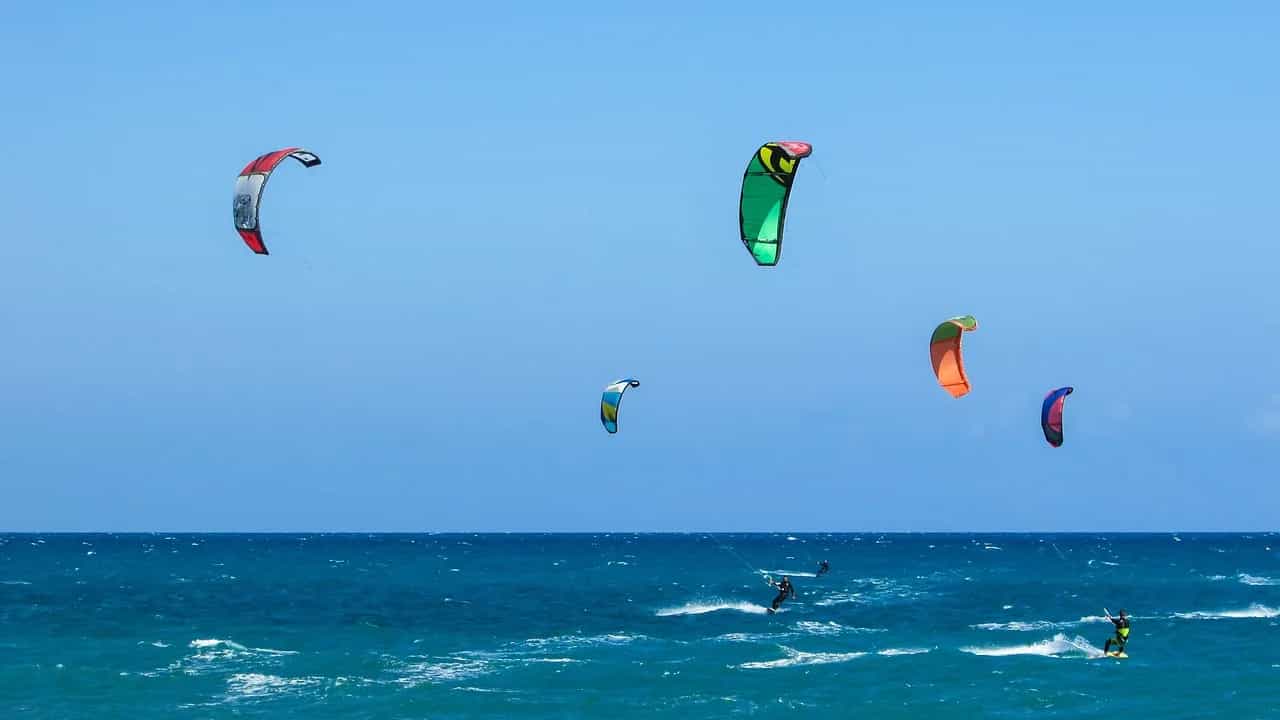
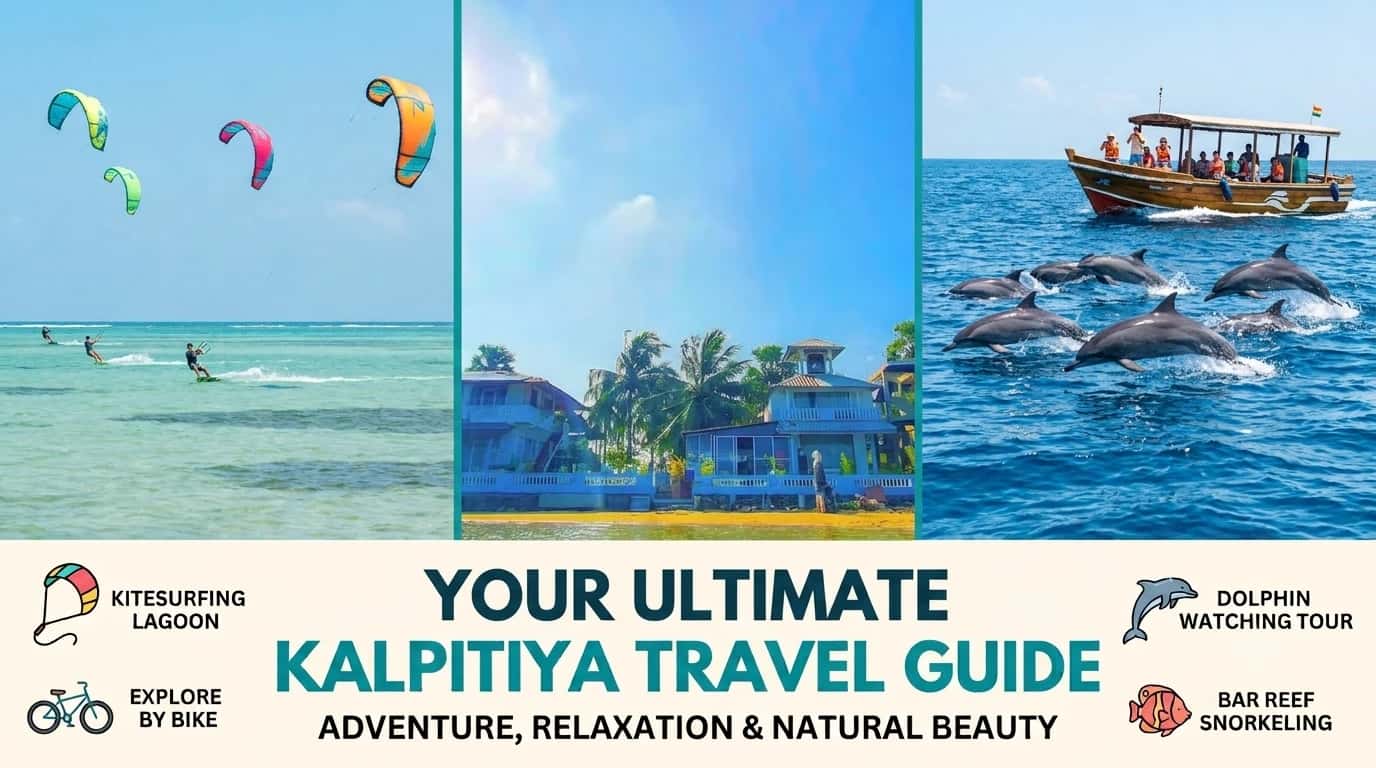
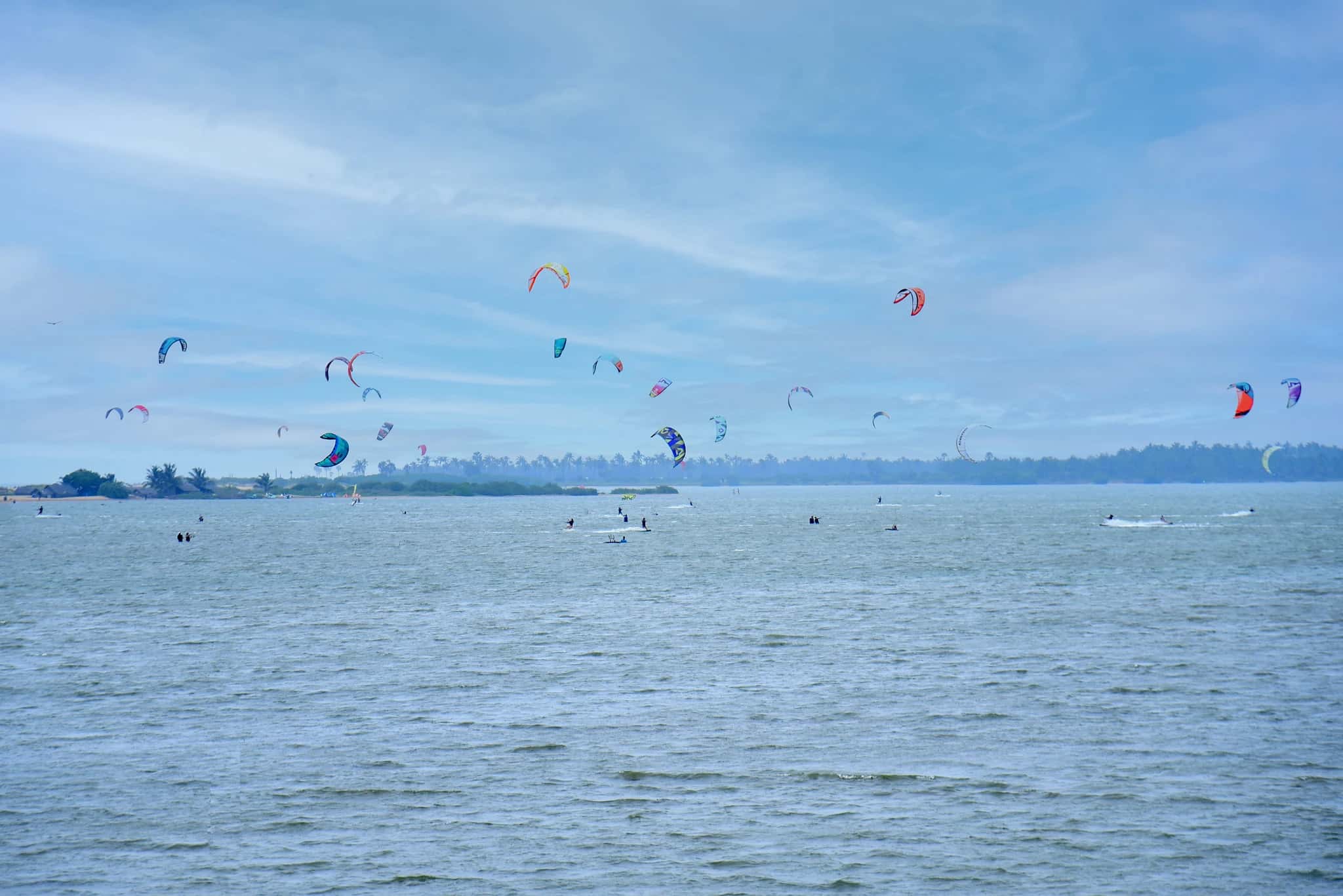
Sri Lanka has quietly become one of Asia's finest kitesurfing destinations, and almost all of the action is concentrated on one stretch of the northwest coast. The best kitesurfing spots in Sri Lanka are found in and around the Kalpitiya peninsula, a narrow strip of sand separating a vast, flat lagoon from the open Indian Ocean. Add in a rare dual wind season, warm water year-round, and uncrowded downwinders past uninhabited islands, and you have a genuine world-class flat water playground. This guide covers every spot worth knowing, honestly ranked, along with the best base to reach them all.

Why Sri Lanka is a World-Class Kitesurfing Destination
A few things set Sri Lanka apart from other Asian kite destinations.
The first is the dual season. Most kite spots have one reliable wind window. Sri Lanka has two: a strong southwest monsoon season from June to October, and a lighter northeast season from December to March. That gives you roughly ten months of rideable wind across the year.
The second is the water. The Kalpitiya and Puttalam lagoons offer enormous stretches of shallow, flat water, ideal for beginners learning to ride and for freestylers working on tricks. Beyond the sandbanks, the open ocean offers waves for those who want them.
The third is the lack of crowds. Sri Lanka has not been overrun by mass tourism. On many of the island spots, you can ride for hours with only local fishermen and migrating birds for company.
If you are completely new to the sport, start with our kitesurfing in Kalpitiya beginner's guide before planning which spots to visit.
The Best Kitesurfing Spots in Sri Lanka, Ranked
Here are the spots worth planning a trip around, from the essential main lagoon to the remote adventure destinations.
1. Kalpitiya Lagoon (The Big Lagoon)
This is the heart of kitesurfing in Sri Lanka and where most riders spend the majority of their time. The Kalpitiya Lagoon, often called the Big Lagoon, is nearly a kilometre wide and two kilometres long, separated from the Indian Ocean by a long, thin sandbank.
The water is shallow, flat, and largely obstacle-free, which makes it the single best place in the country to learn. Beginners find their footing in the designated teaching zones while independent riders spread out across the vast open space. Safety boats operate throughout the day.
Best for: beginners, freestylers, and daily sessions.
Season: both seasons, especially the winter northeast wind (December to March).
2. Vella Island (Magic Spot)
Ask experienced riders about the best kitesurfing spot in Sri Lanka and many will name Vella Island. This long, curved sandbar sits in Portugal Bay, around 25 km north of the main lagoon, reached by a 45-minute boat ride up through the Dutch Bay.
The curved shape of the sandbank creates a perfectly protected flat water lagoon on one side, with the open ocean on the other. A unique Venturi effect funnels and accelerates the wind through the channel, so conditions here are often stronger and cleaner than at the main lagoon. There is almost nothing on the island but a few sun huts, which is exactly the appeal.
Best for: intermediate and advanced riders, day trips, and overnight kite camping.
Season: best in the summer season (June to October).
3. Dream Spot
Dream Spot is a stretch of about one kilometre of beach in the Dutch Bay, roughly a 15-minute boat ride from the Kalpitiya Lagoon. It is one of the deeper flat water spots in the area and offers a combination of flat water on the lagoon side and gentle waves on the ocean side.
This mix makes it a genuinely versatile spot, suitable for beginners building confidence and for wave-curious riders wanting to experiment. It is also an excellent spot for wingfoiling.
Best for: all levels, and riders wanting both flat water and small waves.
Season: ridden year-round with a downwinder option in winter.
4. Ippantivu Island (Mini Vella)
Ippantivu, nicknamed Mini Vella, sits in the Puttalam Lagoon roughly 30 minutes by boat from Kalpitiya. It offers very similar conditions to Vella Island in a smaller, even less crowded package. Its position close to Wilpattu National Park means the same Venturi wind acceleration applies, so the wind here is often stronger than at the main lagoon.
Because it sits roughly halfway to Vella, it also works well as a shorter half-day kite trip when you do not have a full day to spare.
Best for: intermediate riders wanting an uncrowded flat water session.
Season: summer season (June to October).
5. Donkey Point
Donkey Point is a cape around 10 km south of Kalpitiya town, and it is the spot of choice for riders who want waves rather than flat water. Small waves break in front of the Baby Lagoon, offering onshore wave riding across the sandbar.
It has become far more accessible in recent years with the addition of a beach hut, rental gear, and safety boat cover. It is best ridden with an experienced rider or guide who knows the spot.
Best for: wave riding and more advanced riders.
Season: winter season (December to March) via downwinder.
6. Kappalady Lagoon
Kappalady is a smaller lagoon a short ride south of the Big Lagoon, and it holds a special place as the birthplace of kitesurfing in Sri Lanka. It offers perfect flat water and grassy shores, though its small size means it can get crowded and has its own resident kite schools.
It works well as a day trip or a short downwinder back to the main lagoon, but it is not a spot to base yourself at if you want space.
Best for: beginners and a change of scene from the Big Lagoon.
Season: both seasons.
7. Mannar Island (The Remote Frontier)
Mannar is the one genuinely separate kite region in Sri Lanka, and it is worth knowing about even though it sits roughly three to four hours north of Kalpitiya. Mannar comprises a long series of sandbars, islands, and lagoons offering more than 36 km of flat water in conditions comparable to Kalpitiya, but with almost nobody there.
Riders often compare Mannar to Brazil's famous lagoons, minus the crowds. It is remote, raw, and best suited to intermediate and advanced riders who want isolation and are prepared for basic infrastructure. In winter, Mannar is also a breeding ground for migratory birds, so birdwatchers can combine the two.
Best for: advanced riders seeking total isolation.
Season: summer season (June to October).
Which Spot is Right for You?
- Complete beginners should base themselves at the Kalpitiya Lagoon, where the teaching zones, shallow water, and safety cover make learning straightforward.
- Improving intermediate riders will love the island spots: Ippantivu, Dream Spot, and eventually Vella Island.
- Advanced riders and freestylers should aim for Vella Island and, for a real adventure, Mannar.
- Wave riders should head to Donkey Point.
The beauty of Sri Lanka is that most of these spots are reachable from a single base on the Kalpitiya peninsula, so you can ride a different spot almost every day of your trip.
The Best Base for Kitesurfing in Sri Lanka
Nearly every spot on this list is reached by boat from the Kalpitiya peninsula. That makes where you stay the single most important decision of your kite trip. The ideal base sits directly on the lagoon, with easy access to the water and a team that can arrange the boat trips and downwinders to the island spots.
Dinuda Lagoon Resort sits right on the Dutch Bay Lagoon in Sethawadiya, at the heart of the Kalpitiya kite scene. You can ride the main lagoon directly from the property, and the team arranges trips out to Vella Island, Dream Spot, Ippantivu, and the other spots covered in this guide. Equipment hire and lessons are available on site.
Between sessions, or on the rare windless day, the same base gives you access to dolphin watching, a Wilpattu safari, and lagoon tours. For the full range, see our guide to things to do in Kalpitiya, or browse the resort's kitesurfing and water sports experiences.
When to Visit for the Best Wind
Timing your trip to the season is essential.
Summer season (June to October): the southwest monsoon brings strong, consistent winds averaging 20 to 25 knots, with gusts up to 30 or more. This is the stronger of the two seasons and the best time for the island spots like Vella and Mannar. Ideal for intermediate and advanced riders.
Winter season (December to March): the northeast wind is lighter but still reliable, averaging 15 to 20 knots, usually building through the day to a thermal peak around noon. Smoother and more forgiving, this season is excellent for beginners and for riding the main Kalpitiya Lagoon.
The transition months of April and November are the off season, when the wind is unreliable and many schools close for maintenance.