
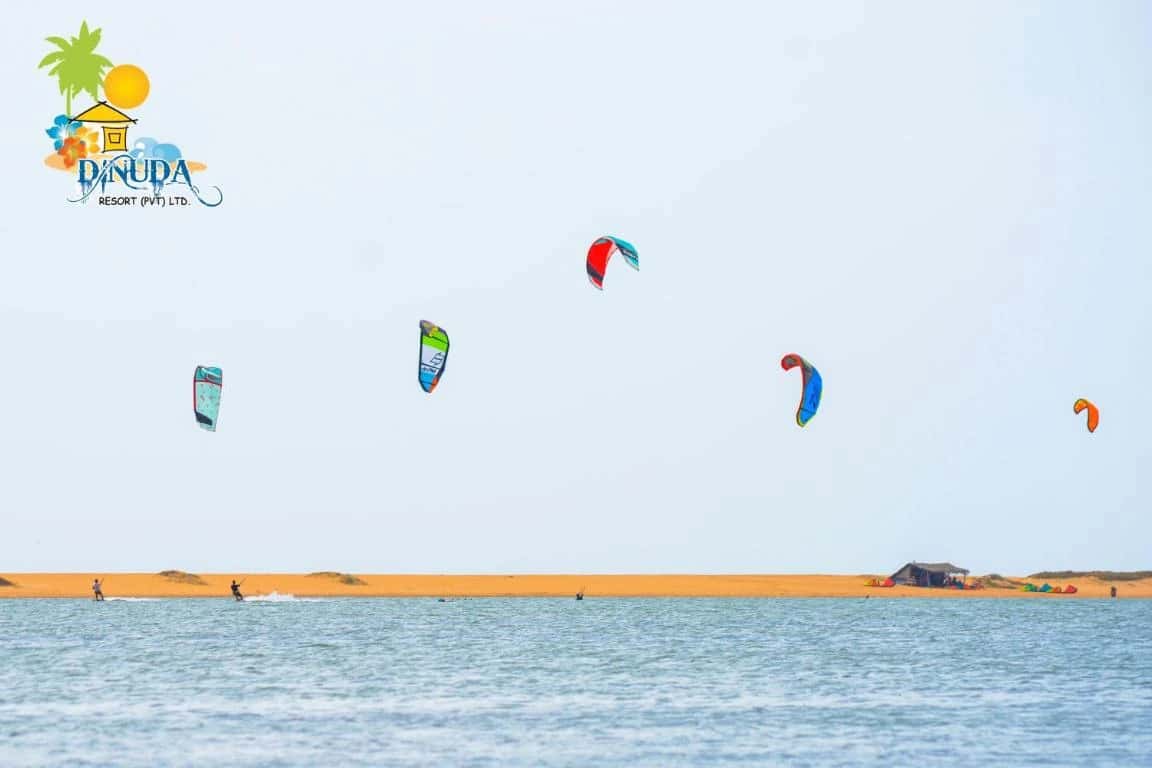
Most people come to Kalpitiya for the wind. What they do not always expect is how much the lagoon itself has to offer when the kite is packed away. Lagoon kayaking in Kalpitiya opens up a quieter, slower, and genuinely extraordinary side of the peninsula: a vast network of mangrove channels, fishing villages, shrimp farms, and waterbird colonies that most visitors never reach. This guide covers both experiences, kayaking at your own pace and guided mangrove boat tours, so you know exactly what to expect before you get on the water.

Why the Kalpitiya Lagoon Is Worth Exploring Slowly
The Dutch Bay Lagoon and the Puttalam Lagoon together form one of the most ecologically rich coastal systems in Sri Lanka. The lagoon is enormous, stretching across hundreds of square kilometres, with 14 small islands, dozens of fishing communities, and a mangrove ecosystem that ranks among the largest in the country.
From the water's surface, at kayak level, this world looks completely different from anything visible from the shore. The channels are narrow and shaded. The water is still. The only sounds are birds, the dip of a paddle, and the distant low hum of a fishing boat engine somewhere in the distance.
This is Kalpitiya without the wind, and it is one of the most peaceful places on the island.
The Mangrove Ecosystem: What Makes Kalpitiya Special
The mangroves around Alankuda village, on the eastern edge of the Kalpitiya peninsula, are among the largest and most intact mangrove forests in Sri Lanka. Four main species dominate the system, each with a distinct appearance and ecological role.
Rhizophora mucronata is the most visually striking, with its distinctive arching prop roots that lift the trunk clear of the water and anchor the tree in the soft muddy substrate. These are the mangroves that look like they are walking on stilts.
Avicennia marina grows at the waterline and is recognisable by its pencil-like pneumatophores, the small breathing roots that push straight up through the mud to absorb oxygen from the air above the water.
Ceriops tagal and Bruguiera gymnorrhiza complete the mix, together forming dense, layered canopies over the narrower channels where the water barely moves.
These forests are not just scenically remarkable. According to the IUCN, mangrove systems like these store carbon at rates significantly higher than most terrestrial forests, protect coastlines from erosion and storm surge, and provide essential nursery habitat for the fish species that sustain local fishing communities.
Paddling through them is the most direct way to understand what they actually are.
Lagoon Kayaking in Kalpitiya: What to Expect
The Experience
Kayaking on the Kalpitiya lagoon is accessible to all fitness levels. No previous kayaking experience is needed on the lagoon, which is flat, sheltered, and calm for most of the day.
The most popular route runs along the mangrove edge from the southern lagoon toward the channel network, covering approximately six kilometres on a round trip at a relaxed pace. The full paddle takes around two to three hours and can be shortened or extended depending on how much time you have.
Best Time to Kayak
The early morning, between sunrise and around 9 AM, is the best window. The water is completely still before the wind builds, the light is low and golden across the lagoon surface, and the birdlife is at its most active. Kingfishers dart low over the water. Herons stand motionless at the channel edge. Cormorants spread their wings on exposed roots to dry in the first sun.
By midday, the wind picks up and the lagoon surface becomes choppier. Still paddleable, but the conditions are more work and the birds have retreated.
What You Will See
The route passes through several distinct environments. The open lagoon crossing is wide and bright. As the kayak enters the mangrove channels, the canopy closes overhead and the light changes completely. The water here is dark and clear, the roots of the Rhizophora trees curving down into the mud on both sides.
Fishing platforms appear at intervals, small wooden structures built on stilts where local fishermen set their lines and traps overnight. Occasionally a traditional wooden boat passes slowly through the channel. These are working waterways, not tourist infrastructure, and that is exactly what makes them interesting.
Skill Level and Safety
The flat lagoon water and sheltered channels make kayaking in Kalpitiya genuinely suitable for beginners. Children from around age six or seven can ride along in a double kayak with a parent. The water is shallow in most areas and there are no currents or waves to manage.
Kayaks and guides can be arranged through Dinuda Lagoon Resort, which provides safety briefings and local route knowledge.
Mangrove Boat Tour: What to Expect
For those who prefer a guided experience or want to cover more ground than kayaking allows, the mangrove boat tour takes you deeper into the lagoon ecosystem in a traditional wooden boat.
The Route and Duration
A standard tour runs approximately two and a half hours and covers the mangrove channels, a section of the open lagoon, and several of the small islands that sit between the mainland and the peninsula. The naturalist guide identifies bird species, explains the ecology of the mangroves, and navigates into the narrower channels where the overhead canopy is thickest.
What You See
Fishing villages and communities. The lagoon shore is lined with small fishing settlements where families have worked the same waters for generations. You pass through these communities at water level, which is a completely different perspective from seeing them from a road.
Shrimp farms. Aquaculture is a significant part of the Kalpitiya lagoon economy. The shrimp farms that line parts of the eastern lagoon shore are a visible part of the local food system and worth understanding.
Birdlife. The lagoon is a significant habitat for resident and migratory waterbirds. Purple herons, grey herons, little egrets, and Indian cormorants are present year-round. During the winter migration months from November to March, species numbers increase significantly, with waders, terns, and occasionally rare migrants appearing in the mangrove edges.
Island stops. Most guided tours include a stop on one of the small lagoon islands, where passengers can walk the waterline, sit on a sandbank, and see the lagoon from a different angle before returning.
What to Bring
- Water and snacks. There are no facilities on the lagoon. Bring more water than you think you need, particularly on morning trips when the sun is already strong.
- Reef-safe sunscreen. Apply generously before departure. There is minimal shade on the open lagoon sections.
- A hat and polarised sunglasses. The glare off the lagoon surface is intense in midmorning light.
- A small dry bag. To protect your phone, camera, and any valuables from spray.
- Binoculars. For birdwatching. Even a compact pair makes an enormous difference to the quality of bird sightings in the mangrove channels.
- Light, long-sleeved clothing. For sun protection and to reduce mosquito exposure in the mangrove channels, particularly in the early morning.
Combining with Other Kalpitiya Experiences
Lagoon kayaking and mangrove boat tours pair naturally with several other Kalpitiya experiences as part of a longer stay.
As a rest-day activity during a kitesurfing trip, the mangrove tour is the perfect contrast to an afternoon on the Dutch Bay flats. The pace, the environment, and the sensory experience are as different from kitesurfing as it is possible to get.
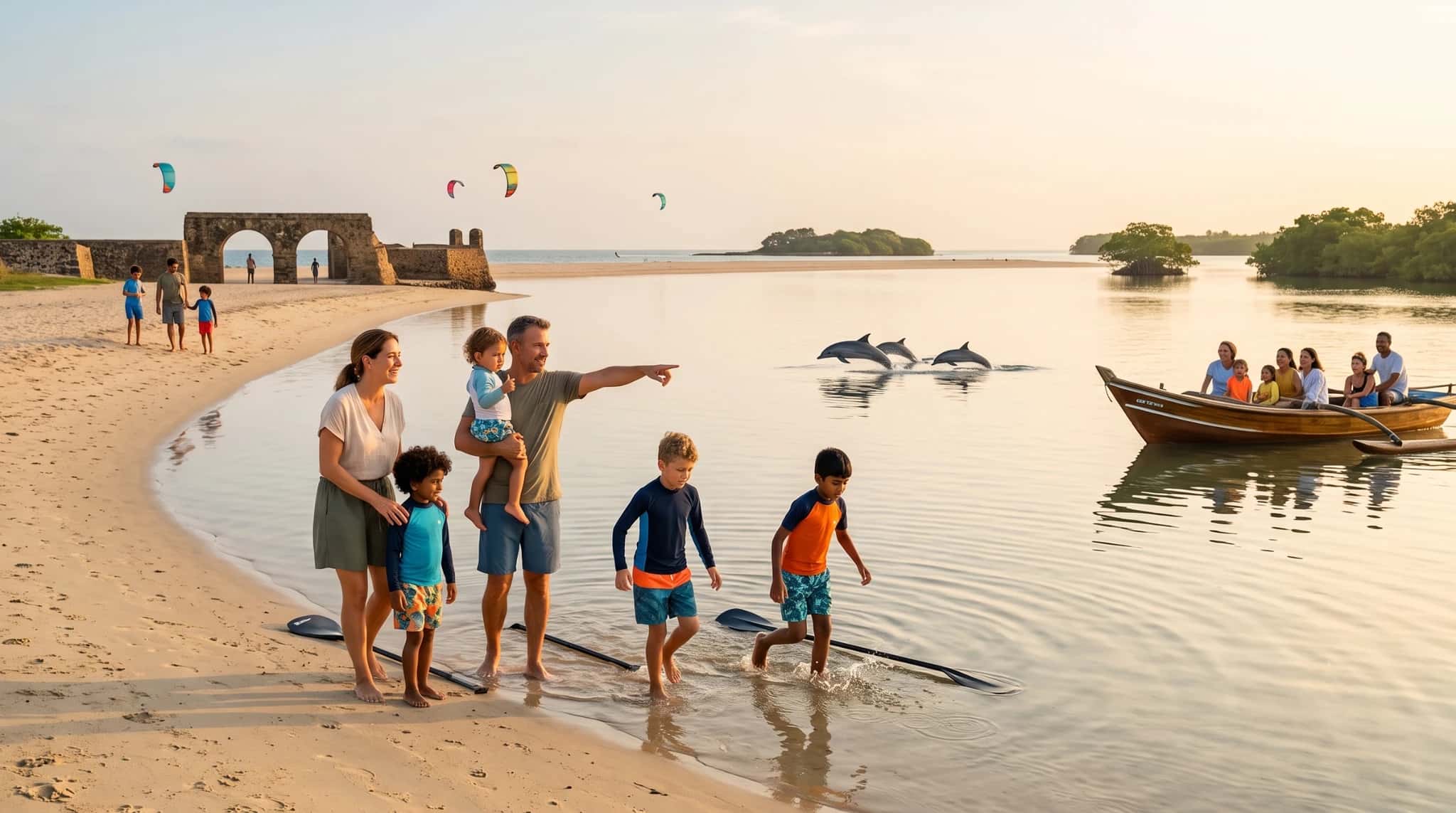
For families, the calm lagoon and the guided boat tour are among the most accessible and child-friendly activities available in Kalpitiya. The Kalpitiya family travel guide covers everything else suited to children visiting the peninsula.
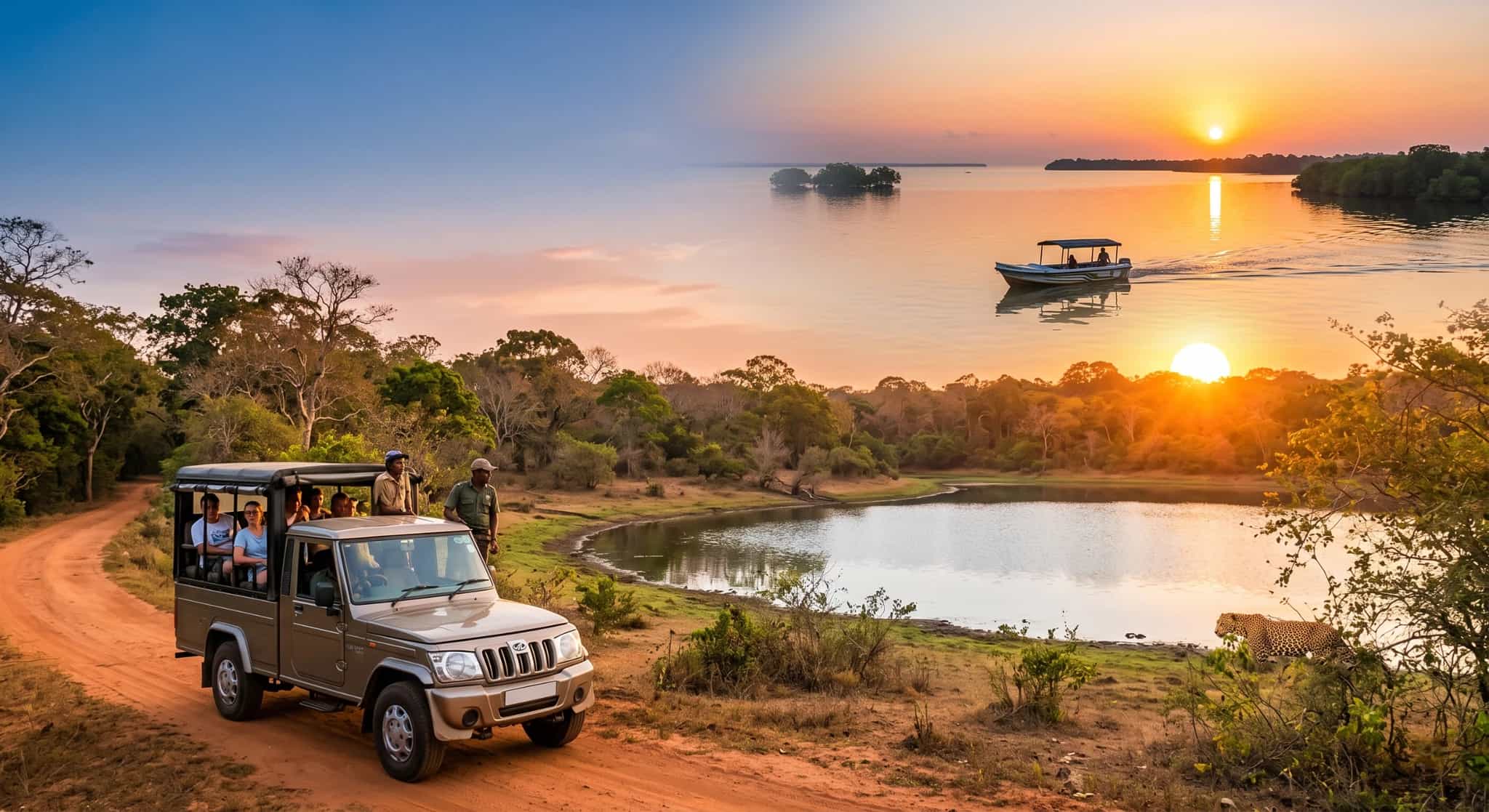
For wildlife-focused visitors, combining the mangrove birdwatching with a dawn dolphin watching trip and a Wilpattu safari creates a genuinely comprehensive natural history itinerary. All three can be arranged from Dinuda and coordinated by the team. Read the full things to do in Kalpitiya guide for the complete overview.