
A 15-metre sperm whale surfacing 200 metres from your boat is not something you describe easily when you get back to shore. It is one of those encounters that sits in a category of its own, outside ordinary travel experiences, and it is happening in the waters off Kalpitiya more regularly than most people realise. Whale watching in Kalpitiya has been quietly developing as one of Sri Lanka's most extraordinary marine wildlife experiences, and the northwest coast is now recognised alongside Mirissa and Trincomalee as one of only three principal whale watching hubs on the island. This guide covers the species, the season, the tour logistics, and everything you need to plan your own encounter.

Why Kalpitiya for Whale Watching
Most visitors come to Kalpitiya expecting dolphins. What they do not always expect is what else is out there.
The Kalpitiya peninsula sits on Sri Lanka's northwest coast, where the continental shelf drops relatively close to the shoreline. That proximity to deep water means large cetaceans, including sperm whales, blue whales, and occasional orcas, pass through waters that are accessible by a reasonably short boat trip. Compared to some whale watching destinations where you travel far offshore for hours before reaching productive water, Kalpitiya puts you in range quickly.
The International Whaling Commission lists Kalpitiya as one of three established whale watching locations in Sri Lanka, alongside Mirissa on the south coast and Trincomalee on the northeast. Of those three, Kalpitiya receives the fewest visitors, which means encounters here are significantly more private than at the busier southern departure points.
Whale Species You Can See in Kalpitiya
Kalpitiya waters host a remarkably diverse range of cetacean species. Here is what has been recorded.
Sperm Whale (Most Common)
The sperm whale is the species most reliably sighted off Kalpitiya, and the one the tour operators here focus on. The largest of the toothed whales, sperm whales are recognisable by their distinctive blunt, squarish head, which can account for up to one third of their total body length. They can reach 18 metres and dive to depths exceeding 1,000 metres in pursuit of giant squid.
Superpods of sperm whales, groups of up to 150 individuals, have been recorded in Kalpitiya waters. When you encounter a large pod, the scale of it is genuinely hard to process from a small boat.
Blue Whale (Occasional)
The largest animal ever to have existed on Earth. Blue whales reach up to 30 metres in length and can weigh as much as 200 tonnes. Their hearts are roughly the size of a small car. Sightings off Kalpitiya are less frequent than sperm whales but confirmed and recorded by multiple operators. An encounter with a blue whale is among the most statistically improbable and visually extraordinary things a person can experience at sea.
Bryde's Whale
A medium-sized baleen whale frequently seen near the surface and often spotted feeding. More commonly sighted in Kalpitiya than blue whales, Bryde's whales are active and often approach boats with curiosity.
Other Confirmed Species
- Minke whale, the smallest of the baleen whales, occasionally sighted
- Melon-headed whale, a small oceanic dolphin-like species that appears in large groups
- Dwarf sperm whale, a small, deep-water species infrequently encountered
- Fin whale, the second-largest whale species, occasionally recorded off the northwest coast
- Pilot whale, seen in small groups during certain years
- Orca (killer whale), rare but genuinely confirmed off Kalpitiya. One guide documented a pod of orcas engaging a pod of sperm whales offshore, an encounter almost never observed in Sri Lankan waters
The Season: When to Go for the Best Whale Sightings
This is where Kalpitiya whale watching differs from what many generic Sri Lanka guides state, and it is worth understanding the distinction.
November to April is the full whale and dolphin season off Kalpitiya, when the ocean is calm and the marine life concentrates along the Dolphin Line that runs parallel to the peninsula.
However, the whale encounter specifically is not evenly distributed across that window. The pattern that on-ground operators consistently report is:
November to February: Dolphins are highly reliable in large pods. Whale sightings are possible but not the primary focus of most trips during this window.
March to April: This is the peak period for whale movement specifically. Sperm whale superpods are most frequently reported during March and April, as migration patterns bring larger groups of whales closer to the Kalpitiya coast. Multiple operators describe early March to April as the single most productive window for dedicated whale encounters.
If your primary goal is seeing whales rather than dolphins, plan your visit for March or April. If you want the combination of guaranteed dolphins with a chance of whales, November through March covers both.
What the Tour Looks Like
Departure
Whale watching trips from Kalpitiya depart in the early morning, typically between 5:30 and 7 AM, when sea conditions are calmest and marine activity is at its peak. Boats carry a maximum of four passengers for whale watching excursions, keeping the experience intimate and ensuring the boat can manoeuvre carefully around wildlife.
The trip runs three to five hours total, depending on conditions and how far offshore the guide needs to travel to locate the whales.
Finding the Whales
Guides track whale activity based on local knowledge, surface blow patterns, and communication with other operators in the area. Sperm whales surface to breathe every 45 to 90 minutes and their distinctive forward-angled blow is visible at a considerable distance. When a blow is spotted, the boat approaches slowly and at an angle, never heading directly toward the animal.
The Encounter
Sperm whales often rest at the surface in a behaviour called logging, lying motionless with their backs just above the water. During this phase they are relatively approachable and encounters can last 20 to 30 minutes. Tail-lob dives, when the whale lifts its distinctive wide fluke clear of the water before descending, are one of the most photographed moments in marine wildlife watching.
Large superpod encounters, where dozens of sperm whales are simultaneously at the surface, are less predictable but when they occur, they are completely unlike anything else in Sri Lanka's wildlife calendar.
Practical Logistics
- DWC ticket: Foreign visitors are required to purchase a USD 10 entry ticket from the Department of Wildlife Conservation. The team at Dinuda Lagoon Resort handles this as part of the booking, so there is nothing to arrange on the day.
- Boat capacity: A maximum of four passengers per boat for whale encounters. Book early, particularly for March and April when demand is highest.
- Guide: All trips are conducted by trained, English-speaking guides certified to operate marine wildlife tours.
- Duration: Three to five hours from departure.
Kalpitiya vs Mirissa: Which is Better for Whale Watching?
This is a question worth answering honestly, because the two destinations offer genuinely different experiences.
Mirissa is the most famous whale watching destination in Sri Lanka and the best location for blue whale sightings specifically. December to March is its peak window for blue whales, and the concentration of sightings in the deep water south of Dondra Head is well established. The main drawback is the number of boats. At peak times in Mirissa, a whale sighting can attract a large number of vessels simultaneously.
Kalpitiya leads on sperm whale encounters and offers a significantly more private experience. Superpods of sperm whales in Kalpitiya are a phenomenon that Mirissa cannot replicate. The lower volume of whale watching boats means that when you find a whale here, you are unlikely to be sharing the encounter with a crowd.
The honest summary: go to Mirissa in December and January if blue whale sightings are your priority. Come to Kalpitiya in March and April if you want sperm whale superpods in a quiet, uncrowded setting. If you are based in Kalpitiya already for kitesurfing, dolphin watching, or a Wilpattu safari, adding a whale watching morning in March or April requires no travel at all.
Practical Tips for Your Whale Watching Trip
Book well in advance for March and April. These are the peak months for whale movement and boats fill quickly. Contact the resort team at least one week ahead during this window.
Dress for the early morning boat. The water temperature offshore before sunrise is noticeably cooler than on shore. A light fleece or jacket worn over swimwear is the right combination. The sun is strong once it rises, so layers you can remove are ideal.
Bring a dry bag. Spray from the boat's movement offshore is inevitable. Your phone, camera, and any valuables should be inside a waterproof bag for the duration of the trip.
Use a zoom lens. A 200mm or longer zoom lens is needed to fill the frame with a whale at a safe viewing distance. A smartphone is fine for the experience but produces limited results for photography at offshore distances.
Manage your expectations honestly. Whale sightings are wildlife, not a guaranteed service. On the great majority of trips during the peak window, encounters happen. On some days, conditions or whale location work against you. The same honest framing applies to every marine wildlife experience: the ocean sets the terms.
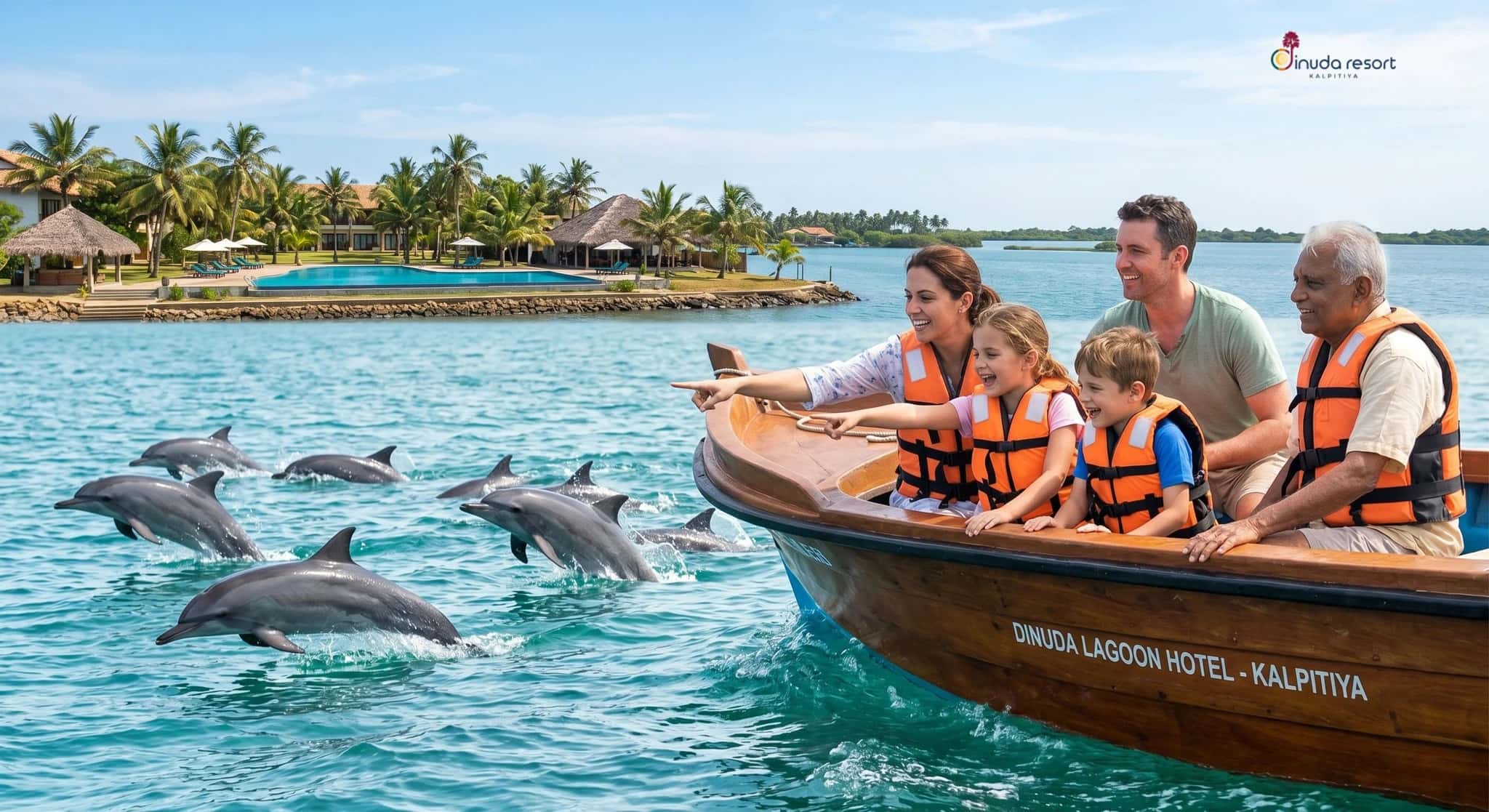
Combine with dolphin watching. On days when conditions are good, whale watching and dolphin watching can happen on the same trip. The Dolphin Line runs offshore parallel to the peninsula, and many trips encounter dolphins before or after the whale portion of the journey. For a dedicated dolphin watching guide, read our dolphin watching in Kalpitiya guide.
Combining Whale Watching With Other Kalpitiya Experiences
Whale watching sits naturally within a broader Kalpitiya itinerary and pairs well with several other experiences.
For the most complete marine wildlife programme, combine whale watching with dolphin watching and Bar Reef snorkelling. Together these three cover every major marine species in Kalpitiya waters, from reef fish and sea turtles at Bar Reef through to spinner dolphins on the Dolphin Line and sperm whale superpods offshore.
For a wildlife-focused trip that goes beyond the ocean, add a Wilpattu National Park safari. The full two-day experience from Dinuda combines the sunrise lagoon boat ride, jeep safari, jungle breakfast, and river lunch at Gagewadiya. Details are in our things to do in Kalpitiya guide.
All marine experiences including whale watching, dolphin watching, and Bar Reef snorkelling are arranged through Dinuda Lagoon Resort. Boats depart from the lagoon frontage of the property, with no transfers to a separate embarkation point.