
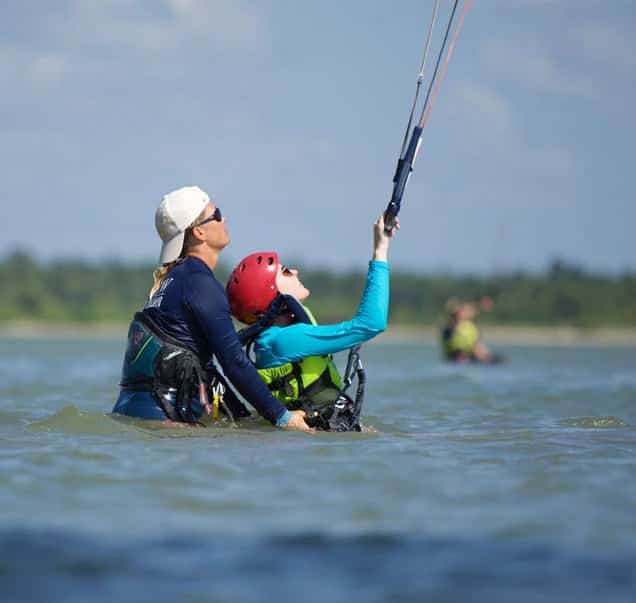
A week in Kalpitiya is enough time to make real progress as a kiter, ride several distinct spots, have at least one session that you talk about for years, and still fit in dolphins, a downwinder, and a proper rest day. The question is how you structure it. A kitesurfing holiday in Kalpitiya rewards planning, particularly around the wind season, the island spots that need a boat, and the non-kite experiences that make the peninsula more than just a wind destination. This guide gives you a day-by-day framework for both the summer and winter seasons, along with the honest wind knowledge you need to make the most of every day.

Step One: Choose Your Season
The most important decision you make before booking a Kalpitiya kitesurfing holiday is which season you are travelling in. The two windows produce fundamentally different experiences.
Summer Season (May to September)
The southwest monsoon arrives in May and builds through June. June to August is the strongest and most consistent window, with 20 to 30 knot winds that blow through most of the day. Most riders are on a 9m kite during June and July. The wind is reliable, the island spots are running, and the downwinders are at their best. September is productive but less consistent, with around 15 to 20 reliable wind days on average.
Winter Season (December to March)
The northeast wind is lighter, typically 15 to 20 knots, and builds gradually through the morning rather than being present from dawn. This makes the mornings free for dolphin watching and other activities, with kite sessions running from around noon through late afternoon. Ideal for beginners, for improvers who want unhurried water time, and for anyone wanting to combine kiting with the marine wildlife season.
What to avoid: October is transitional and genuinely unpredictable. Wind can disappear mid-month when rain arrives. November has no reliable kite wind in Kalpitiya. If your primary purpose is kitesurfing, do not travel in October or November.
One planning note for any season: Full moon periods consistently kill the wind for three to five days in Kalpitiya. Check the lunar calendar against your travel dates and adjust accordingly if you can.
The 7-Day Summer Kitesurfing Holiday (June to August)
This plan assumes arrival on Day 1 and departure on Day 7. Adjust to your flight times.
Day 1: Arrive, Orientate, First Session
Travel from Colombo takes approximately three hours by road. Arriving in Kalpitiya by early afternoon gives you time to check in, change, and get on the water for a first session before the wind drops in the early evening.
The Dutch Bay Lagoon is your starting point for the week. Spend Day 1 getting a feel for the local conditions: the direction the wind swings through the afternoon, the areas used by schools and by independent riders, and the general layout of the lagoon.
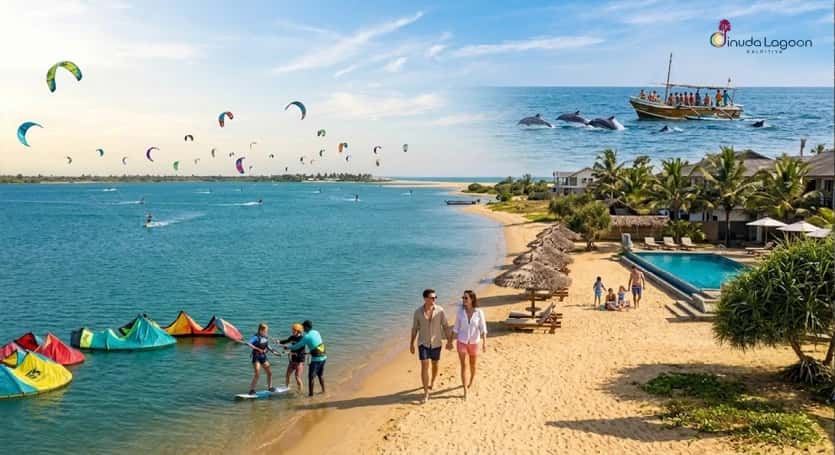
Book your equipment hire or arrange your first lesson through the Dinuda Lagoon Resort team on arrival. Dinner at the lagoon edge. Early night.
Day 2: Full Lagoon Day, Build Your Sessions
The first proper full day on the water. The summer wind is typically on by mid-morning and runs through the late afternoon. Two sessions with a midday break is a sensible structure: a morning session from around 9 AM to noon, rest and food, then back on for the afternoon session from 2 PM to 5 PM.
For beginners, this is day two of the lesson programme. For intermediate riders, this is the day to start working on upwind riding and water relaunches if they need attention. For advanced riders, the lagoon is the place to warm up before the island trips later in the week.
The flat water on the Kalpitiya Lagoon is forgiving. Use Day 2 to build confidence before the spots that need a boat.
Day 3: Dream Spot or Ippantivu Island
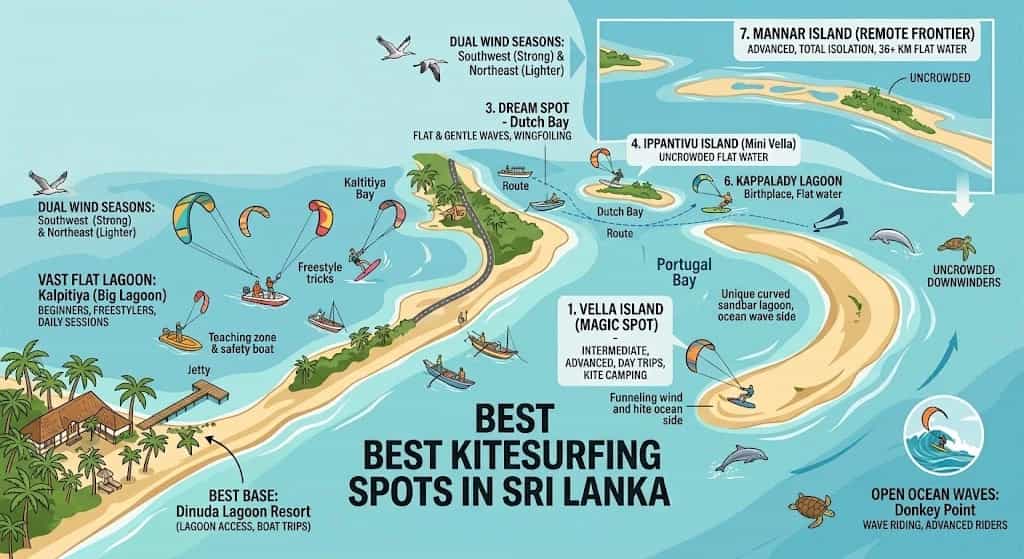
The first island trip of the week. Both Dream Spot and Ippantivu (Mini Vella) are reached by boat in around 15 to 30 minutes from the main lagoon and offer conditions that are distinct from the Big Lagoon.
Dream Spot combines flat water on the lagoon side with small waves on the ocean side, making it suitable for all levels. Ippantivu offers very similar flat water to the Big Lagoon in a significantly more isolated setting.
Boats for island trips are arranged through the resort team the evening before. Depart early, ride the morning session on the island, return for lunch, and use the afternoon for a shorter lagoon session or rest.
For a full breakdown of each spot and what to expect, read our best kitesurfing spots in Sri Lanka guide.
Day 4: Rest Day (Dolphin Watching or Mangrove Tour)
Every serious kite trip needs a planned rest day. Kitesurfing is physically demanding and sessions in 25 knot wind are more exhausting than they feel in the moment. A full rest day mid-week means your body is ready for the bigger sessions at the end of the week.
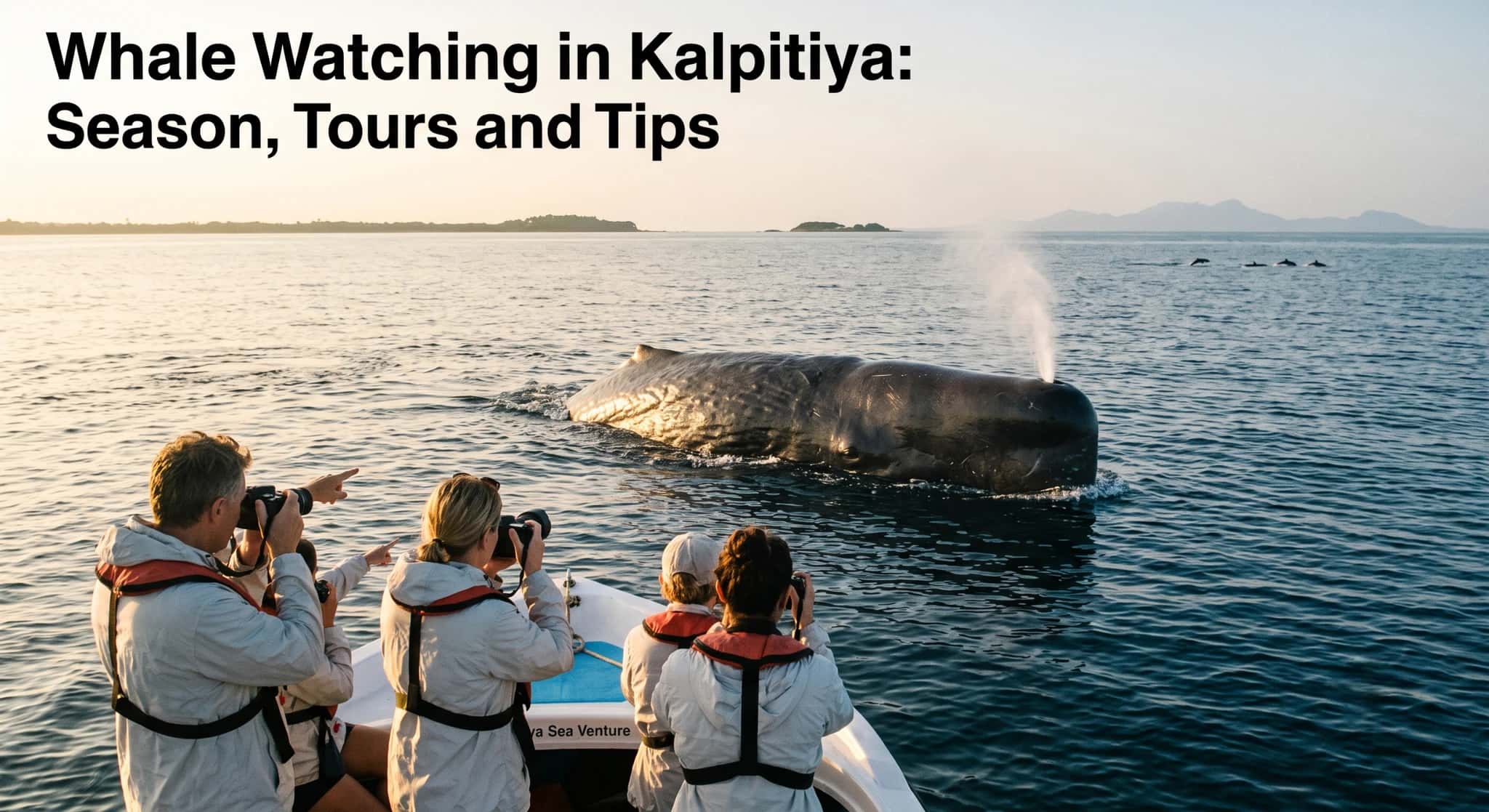
The best Kalpitiya rest day starts before dawn with a dolphin watching trip. The boats leave between 5:30 and 6 AM and return by late morning, giving you the whole afternoon for the pool, the lagoon shore, and recovery.
If dolphins are not your preference, a guided mangrove boat tour through the lagoon channels is the perfect unhurried contrast to a week of wind and speed. For both options, see our things to do in Kalpitiya guide.
Day 5: Full Lagoon Day, Progression
Back on the water after the rest day. This is the session where most riders notice the improvement that accumulated over the first three days. Use Day 5 to consolidate: work on whatever technique is the current focus, push it further than you did in the first two days.
For intermediate riders, Day 5 is typically the day transitions and directional changes come together properly. For advanced riders, this is the session for freestyle progression. For beginners, this is when independent riding starts to feel real.
Day 6: Vella Island Downwinder (The Big Day)
The highlight of the week. Vella Island sits around 25 km north of the main lagoon, reached by a 45-minute boat ride up through Dutch Bay. The curved sandbar creates a protected flat water lagoon on one side and open ocean on the other, with a Venturi wind effect that accelerates the breeze through the channel.
The classic Kalpitiya downwinder runs from the Puttalam Lagoon through the island chain toward the Wilpattu river boundary, one of those sessions that riders describe for years afterward.
This is an intermediate to advanced day. Beginners who have made strong progress during the week can attempt Vella Island with a guide in controlled conditions. Arrange the boat and guide the evening before through the resort experiences team.
Day 7: Morning Session and Departure
A final morning session on the Big Lagoon before the transfer back to Colombo. Keep it short and enjoyable rather than ambitious. The drive back takes around three hours, so a morning session from 8 AM to 10:30 AM with a 11 AM departure is a workable schedule.
The 7-Day Winter Kitesurfing Holiday (December to March)
The winter plan is structured differently because the wind builds from around noon rather than from morning. This frees up mornings for marine wildlife activities that are at their peak during this season.
Day 1: Arrive and Afternoon Session
Arrive mid-morning, check in, and get on the water for the afternoon wind session from around 1 PM to 5 PM. The winter wind is lighter and more forgiving than the summer season, which makes the first session less intimidating for returning riders and genuinely ideal for beginners.
Day 2: Dolphin Watching Morning, Kite Afternoon
The winter marine season overlaps perfectly with the kite season. The dolphin watching boat departs before sunrise and returns by late morning, leaving the full afternoon free for the lagoon. This combination of dawn dolphins and afternoon kiting is one of the things that makes the winter season in Kalpitiya genuinely special. Read the full dolphin watching guide for what to expect on the water.
Day 3: Full Kite Day
A full day on the water with no early start. The morning is free for breakfast at the lagoon edge and a relaxed preparation before the wind arrives. Two afternoon sessions with a break between.
Day 4: Wilpattu National Park Safari
A full day away from the lagoon. The Wilpattu safari from Kalpitiya is the most complete wildlife experience available from this base: sunrise boat across the lagoon past ten islands, jeep safari through the jungle, breakfast inside the park, a second safari session, and a river lunch at Gagewadiya on the Kala Oya. The full day guide is in our Wilpattu safari from Kalpitiya blog.
This doubles as the rest day mid-week. The safari is a long and rewarding day but involves no physical exertion, so your body recovers properly while your mind is completely elsewhere.
Day 5: Kite Day and Sunset Lagoon Cruise
Back on the water with fully recovered legs. The winter afternoon session has a particular quality to it: the wind builds slowly through noon, peaks at around 3 PM, and then softens as the sun drops toward the Indian Ocean. A short sunset lagoon cruise after the kite session is the perfect end to the day.
Day 6: Morning Kayak or Mangrove Tour, Afternoon Kite
Use the free morning for a guided mangrove boat tour through the lagoon channels. The birdlife in winter, when migratory species join the year-round residents, is at its richest. Back on the kite from noon.
Day 7: Final Morning and Departure
A shorter afternoon session or a relaxed morning before the transfer back. In winter, the wind does not arrive until midday, so a late morning departure is entirely compatible with one final session if timing allows.
Reading the Wind in Kalpitiya
Wind knowledge is the difference between a trip that delivers every day and one that leaves you frustrated on zero-wind afternoons. Two resources are worth checking daily.
Windfinder and Windguru both provide Kalpitiya-specific forecasts that local riders rely on. Search for Kalpitiya or Dutch Bay and check the forecast the evening before each session to plan the next day.
A few local patterns worth knowing:
The full moon reliably reduces wind for three to five days in any season. This is well established among Kalpitiya operators and worth working into your planning if your dates are flexible.
In summer, the wind typically builds from mid-morning and peaks in the early to mid-afternoon. The very early morning is often lighter, which makes it a good time for a short session before the wind becomes more demanding.
In winter, the wind is almost absent in the mornings and builds from around noon. Do not expect kiting before midday in the winter season.
Gusty conditions are more common in the lagoon than on the island spots in summer, when the wind can spike. Experienced riders adjust kite size accordingly and keep one size down available.
What to Bring
Kite sizes for summer (June to August):
Most riders use a 9m as their main kite. Having a 7m available for the stronger days and a 12m for the lighter edges of the season is a sensible quiver if you are travelling with your own gear. Equipment hire on site means you can adjust daily if you are renting.
Kite sizes for winter (December to March):
A 12m is the standard main kite. A 14m or 15m handles the lighter days. A 10m or 9m for the occasional stronger afternoon.
General kit:
- Rash guard and UV-protective shorts for long sessions in the tropical sun
- Reef-safe sunscreen, reapplied frequently
- Polarised sunglasses with a strap
- Wetsuit top or shorty for early winter sessions when the water is cooler
- A dry bag for anything you take on the boat
- A waterproof case for your phone or camera during island trips
- Basic first aid kit, including antiseptic for any reef or sand abrasions