
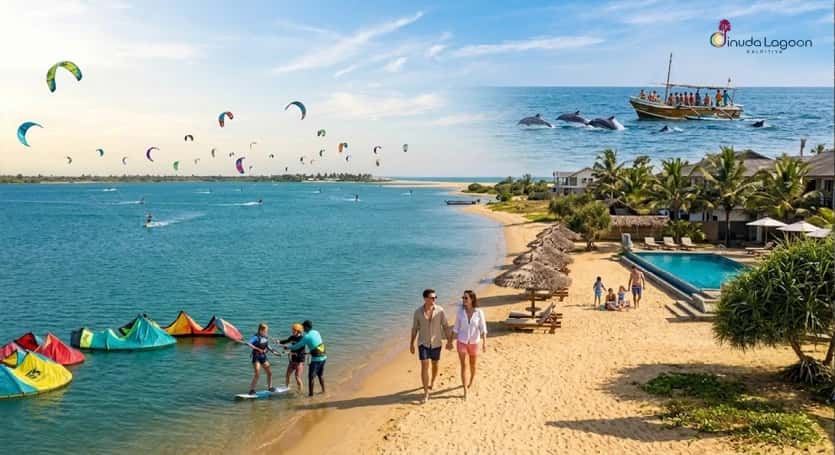
The most common question people ask before booking a Kalpitiya trip is not about the wind or the dolphins or the safari. It is about the money. What does this place actually cost? The honest answer is that Kalpitiya sits at a comfortable mid-point in Sri Lanka's tourism pricing, cheaper than the busy south coast resort belt and significantly more affordable than equivalent kitesurfing and wildlife destinations in Europe, Thailand, or the Maldives. This guide breaks down the kalpitiya trip cost across every category, from the transfer from Colombo to the last dolphin watching boat, so you can plan your budget with confidence before you arrive.

A Note on Currency
Sri Lanka uses the Sri Lankan Rupee (LKR). Most activity and accommodation prices in Kalpitiya are quoted in both LKR and USD, particularly for foreign visitors. Prices in this guide are given in both where relevant. For current exchange rates before your trip, check Xe.com or your bank's travel rate. All prices in this guide are approximate and subject to seasonal variation.
Getting There: Transfer Costs from Colombo
The journey from Colombo or Bandaranaike International Airport to Kalpitiya takes approximately two and a half to three hours by road. There is no train to Kalpitiya and no direct bus. For full transport options and routes, read our complete guide to getting to Kalpitiya from Colombo.
Cost breakdown by option:
| Transport | Cost (approx) | Journey Time |
|---|---|---|
| Private transfer (airport to Kalpitiya) | LKR 12,000 to 18,000 (USD 40 to 60) | 2.5 to 3 hrs |
| Self-arranged taxi (airport) | LKR 10,000 to 15,000 | 2.5 to 3 hrs |
| Bus to Puttalam + local taxi | LKR 200 to 400 + LKR 1,000 to 2,000 | 4 to 6 hrs |
For families, groups, or anyone travelling with kitesurfing equipment, the private transfer is worth every rupee. The bus option is viable for solo budget travellers with minimal luggage.
Accommodation: What Rooms Cost in Kalpitiya
Kalpitiya has a wider range of accommodation than most people expect, from genuinely cheap guesthouses to well-appointed lagoon-front chalets.
Budget (USD 14 to 30 per night)
Basic guesthouses and small eco-bungalows in and around Kalpitiya town and along the peninsula road. Air conditioning is not always included at this price point. Most offer a simple breakfast. Fine for solo budget travellers whose priority is time on the water rather than the room.
Mid-Range (USD 40 to 70 per night)
The most popular category for kite travellers and couples. This range covers well-maintained resort properties with pools, restaurant access, and organised activities. The average hotel price across Kalpitiya sits at approximately USD 67 per night based on aggregated booking data, which tells you this is where most visitors land.
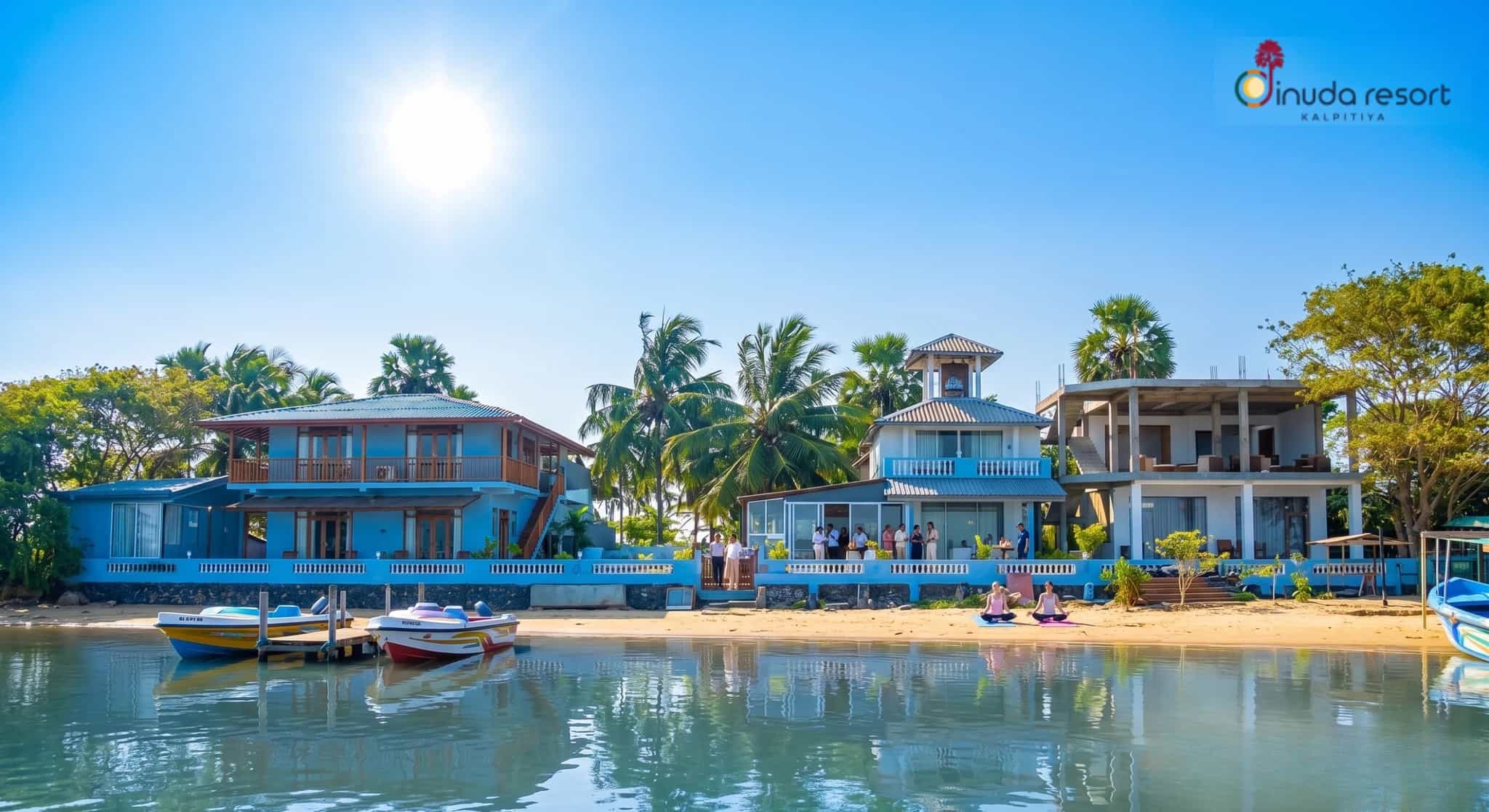
Dinuda Lagoon Resort
Dinuda sits in the mid-range to upper-mid category, with the distinguishing feature that all activities depart directly from the lagoon frontage of the property.
| Room Type | Rate |
|---|---|
| Deluxe Rooms (8 units) | LKR 13,500 to 17,500 per person |
| Superior Rooms | LKR 17,000 to 20,000 per person (selected excursions included) |
| Glass Lagoon Cabanas (2 units) | Contact team for rates |
Rates include breakfast. For the full room breakdown and availability, see the Dinuda rooms page.
The value case for staying at Dinuda: When all activities, boat trips, and excursions depart directly from the property with no coordination across separate operators, the effective cost of convenience is significant. Comparing room rates alone does not capture this difference.
When Prices Are Lowest
The cheapest months to stay in Kalpitiya are May to June and October, when visitor numbers are lower and hotels offer reduced rates. The most expensive months are March to April (peak wildlife season) and July (peak wind season). Booking one month in advance is generally sufficient outside peak periods.
Food: What Eating in Kalpitiya Costs
Food in Kalpitiya is very good value compared to Colombo or the south coast resort belt, particularly if you eat where the locals eat.
Local Restaurants and Road Stalls
A full rice and curry meal at a local restaurant in Kalpitiya town costs LKR 300 to 600. A fresh fish curry with rice from a roadside spot is often LKR 400 to 700. Short eats (pastries, rotis, and snacks) from bakeries cost LKR 50 to 150 per piece.
Kalpitiya is a fishing community and the seafood is exceptional at all price points. Lagoon crab, fresh prawn, and locally caught fish are available at prices that feel startlingly affordable.
Resort Dining
Resort restaurants charge more, as expected. A main course at a resort restaurant typically costs LKR 1,200 to 2,500. A full dinner with drinks at a lagoon-front resort runs LKR 2,500 to 5,000 per person depending on what you order.
At Dinuda, the kitchen uses seafood purchased directly from local fishermen and vegetables sourced from nearby farms. Guests consistently rate the food as a highlight of their stay, and the BBQ dinners at the lagoon edge represent strong value for the quality.
Daily Food Budget
| Eating Style | Approximate Daily Cost |
|---|---|
| Fully local (town restaurants and stalls) | LKR 1,000 to 2,000 per day |
| Mix of local and resort meals | LKR 2,500 to 5,000 per day |
| All meals at resort | LKR 5,000 to 10,000 per day |
Kitesurfing Costs: Lessons, Equipment and Courses
Kitesurfing is where the largest costs in a Kalpitiya trip tend to sit, and it is worth understanding exactly what you are paying for. For the full breakdown of what each learning stage involves, read our kitesurfing in Kalpitiya beginner's guide.
Lessons
| Lesson Type | Cost (approx) |
|---|---|
| Group lesson (2 to 3 students) | USD 50 to 70 per hour |
| Private lesson (1:1) | USD 70 to 100 per hour |
| IKO Level 1 full course (9 to 12 hours) | USD 400 to 600 |
| IKO certification card | USD 30 to 40 |
Most IKO-certified schools in Kalpitiya include helmet, impact vest, and harness in the lesson price. Confirm this when booking.
Equipment Hire (Independent Riders)
| Hire Period | Cost (approx) |
|---|---|
| Per hour | USD 25 to 40 |
| Full day | USD 80 to 120 |
Equipment hire is available to riders who hold an IKO Level 1 certification or equivalent. Proof of certification is typically required before hire.
Budget Planning for Kitesurfing
A full beginner course over three to four days costs USD 400 to 600 in lesson fees alone, before accommodation and food. An experienced rider hiring equipment for seven days of full-day sessions spends approximately USD 560 to 840 in equipment hire. These are the honest numbers, and planning around them avoids surprises on arrival.
Activity Costs: Tours and Excursions
Dolphin Watching
The dolphin watching boat departs in the early morning and runs two to four hours. Boats carry a maximum of six guests.
| Cost | Amount |
|---|---|
| Boat trip per person (approximate) | USD 25 to 35 |
| DWC wildlife entry ticket (foreign visitors) | USD 10 |
The resort team arranges the DWC ticket as part of the booking. For full details on what to expect, read the dolphin watching in Kalpitiya guide.
Whale Watching
| Cost | Amount |
|---|---|
| Boat hire per trip (max 4 persons) | USD 170 |
| Per person (split across 4) | approximately USD 43 |
| DWC wildlife entry ticket | USD 10 |
The whale watching season peaks in March and April. Read the whale watching guide for full season detail.
Wilpattu National Park Safari
The full Dinuda Wilpattu package (sunrise boat, jeep safari, jungle breakfast, river lunch at Gagewadiya) is arranged as a two-day, one-night experience. Costs include:
| Component | Cost |
|---|---|
| DWC park entry ticket (foreign visitors) | USD 15 per person (Wilpattu rate) |
| Safari jeep and tracker | Included in Dinuda package |
| Boat transport | Included in Dinuda package |
| All meals | Included in Dinuda package |
Contact the Dinuda team directly for the full package rate. For an overview of the day-by-day experience, read the Wilpattu safari from Kalpitiya guide.
Other Activities
| Activity | Approx Cost |
|---|---|
| Oyster picking and mangrove tour | LKR 4,000 per person (min group 8, breakfast and lunch included) |
| Heritage and church excursion (Uchchimuni, Mohothuwaram) | LKR 4,000 per person (min group 8) |
| Lagoon kayak hire | LKR 3,000 per hour (single), LKR 4,000 per hour (double) |
| Guided mangrove boat tour | Arranged through resort, contact for rate |
| Bar Reef snorkelling | Often combined with dolphin trip, contact for rate |
| Sunset lagoon cruise | Arranged through resort, contact for rate |
| Kalpitiya Dutch Fort entry | Free |
What Does a Full Day Actually Cost?
Budget Traveller (USD 40 to 70 per day)
Staying in a basic guesthouse, eating at local restaurants in town, and spending most of the day on the water with rented equipment or a group lesson. Activities are chosen selectively rather than daily. Transport was by bus.
Mid-Range Traveller (USD 100 to 180 per day)
Staying at a mid-range lagoon resort, one main meal at the resort and one local meal per day, one kite session or guided activity daily. Private transfer from the airport.
Premium Traveller (USD 200 to 350 per day)
Staying at Dinuda or equivalent with selected excursions included, all meals at the resort, private lessons or equipment hire daily, plus one major excursion (Wilpattu or whale watching) every few days.
What Is Free in Kalpitiya
Not everything in Kalpitiya costs money. Several of the most memorable parts of the destination are completely free.
- Watching the sunset over the Indian Ocean from the lagoon shore
- Walking the peninsula road and watching kite surfers from the shore
- The Kalpitiya Dutch Fort entry is free (tours by naval personnel inside are informally guided)
- Lagoon swimming from the resort shore
- Watching dolphins from the shore on calm mornings when pods come unusually close (rare but it happens)
- Stargazing, as the lack of light pollution in Kalpitiya makes the night sky exceptional
Tips for Keeping Costs Down
Book accommodation directly. OTA platforms add markup on top of the resort rate. Booking directly with Dinuda via WhatsApp or email guarantees the best available price.
Travel in shoulder season. May to June offers lower accommodation rates while the wind season is just beginning. October is cheaper but wind is unreliable for kitesurfing.
Share the boat trips. Dolphin watching and whale watching boats have a maximum capacity, and the cost is split across all passengers. Travelling as a group of four to six immediately cuts the per-person cost significantly.
Eat local for at least one meal per day. Kalpitiya's town restaurants and roadside kitchens are genuinely excellent and cost a fraction of resort prices.
Plan your kitesurfing in advance. Last-minute lesson bookings during peak season can mean you miss slots or pay premium rates. Book your course and equipment hire before you arrive.
Combine activities on the same trip. Bar Reef snorkelling is most economically combined with a dolphin watching morning, using the same boat. Wilpattu safari and Gagewadiya river lunch are part of the same package. Bundling saves both money and logistics.