
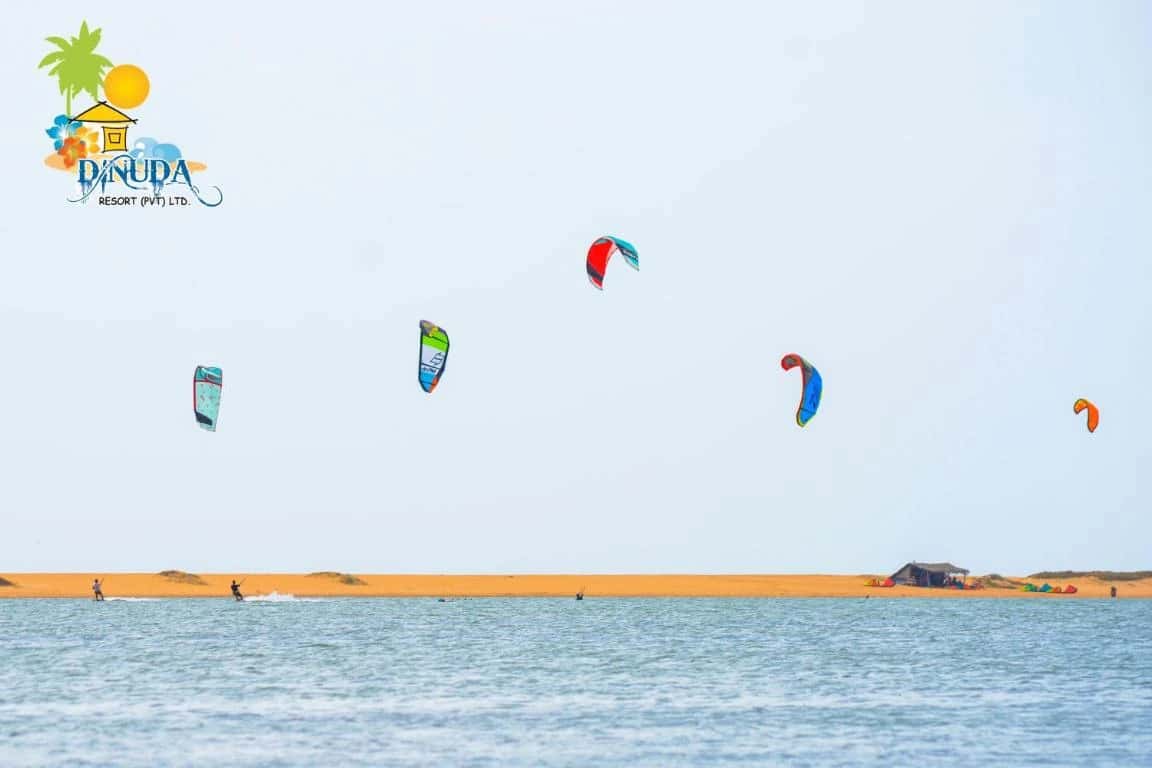
Kalpitiya has built a reputation as one of the best places to learn kitesurfing in Asia. Flat water, consistent wind, a wide shallow lagoon, and professional instructors everything a beginner needs is already here. This guide covers exactly what to expect before your first lesson, what learning actually looks like, what it costs, and which spots suit first-time riders.
If you are already thinking about where to stay while you learn, Dinuda Lagoon Hotel sits directly on the lagoon with kitesurfing access from the property.

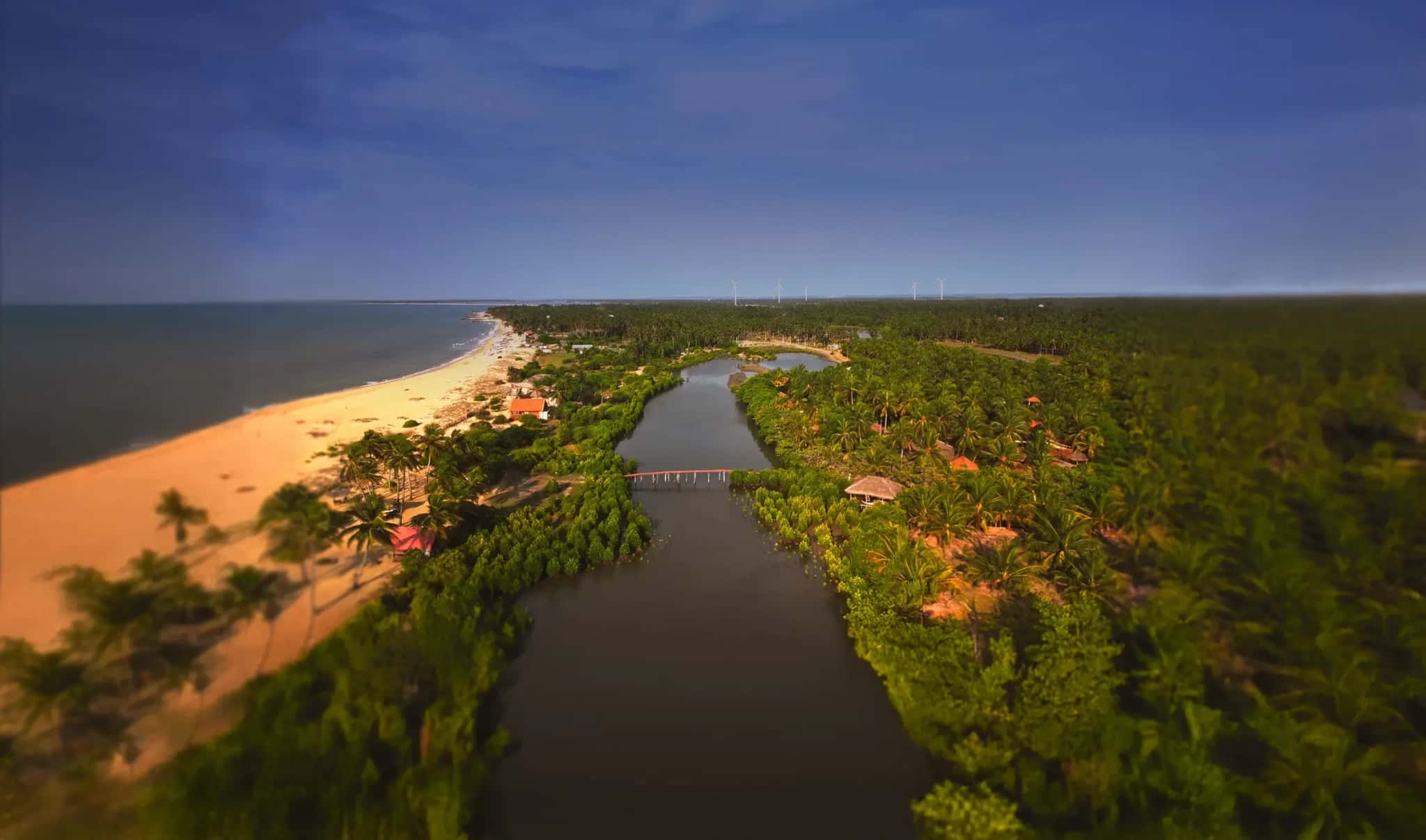
Why Kalpitiya is Ideal for Beginners
Not every kitesurfing destination is suitable for learning. Many spots have choppy ocean waves, strong currents, or crowded water that makes it difficult and unsafe for beginners. Kalpitiya removes almost all of those problems.
The Dutch Bay Lagoon offers three things that matter most for beginners:
- Flat, shallow water with no waves falls are far less dangerous and less intimidating
- Consistent side-shore wind that gives instructors full control of the session
- Wide open space with very few obstacles and predictable conditions
The wind blows steadily from June to October each year, when the southwest monsoon pushes reliable 15–25 knot winds across the lagoon. This is peak kitesurfing season in Kalpitiya and the best window for anyone learning for the first time.
The lagoon is also forgiving. In most areas the water is waist-deep for a significant stretch from shore, meaning beginner crashes are manageable and recovery is straightforward.
What to Expect When You Learn to Kitesurf
Learning kitesurfing is typically broken into three to four stages. Most beginners progress through the full sequence over three to five days of lessons.
1. Kite Control on the Ground
Before you touch the water, you spend time on the beach learning to fly a trainer kite. This teaches you to read the wind window, manage kite direction, and understand power. Most first-time students spend the majority of day one here.
What you learn:
- Wind window the zones of power and neutral flight
- Steering the kite with both hands
- Safety systems and how to release the kite instantly
This stage cannot be rushed. Instructors certified by the International Kiteboarding Organisation (IKO) follow a structured progression skipping ground control leads to accidents in the water.
2. Body Dragging
Body dragging is exactly what it sounds like the kite pulls you through the water while you use it to practise control without a board. This is typically day two.
What you learn:
- Power generation and depowering in the water
- Controlled entry and exit from the lagoon
- Upwind body dragging essential for recovering your board later
Most beginners find body dragging the most enjoyable stage. The kite is already doing the work and the feeling of being pulled across the lagoon gives you your first real sense of what kitesurfing is like.
3. Water Relaunch and Board Recovery
Before riding, you need to be able to relaunch a kite that has crashed into the water and retrieve your board while flying the kite one-handed. This is day two to three.
4. Board Riding
Standing on the board and riding in a straight line is day three or four for most beginners. Turning and riding upwind typically comes over the following days of practice.
Most students achieve their first successful ride in three to four days of consistent instruction. Some take longer the wind, water confidence, and individual coordination all play a role. Kalpitiya's flat lagoon conditions give you the best possible environment to progress quickly.
The Best Kite Spots in Kalpitiya for Beginners
Kalpitiya has several distinct zones. Not all are suitable for learning.
Dutch Bay Lagoon - Best for Beginners
The main lagoon between the Kalpitiya peninsula and the mainland is the primary learning area. Flat, shallow, consistent, and spacious. Almost all beginner lessons take place here. The water stays shallow far from shore and the sandy bottom means safe falls.
Kalpitiya Peninsula Beach - Intermediate
The open ocean side of the peninsula picks up more swell and has stronger, less predictable wind. Better suited to riders who can already ride upwind and are comfortable in choppier conditions.
Northern Lagoon Areas - Advanced
The northern sections of the lagoon near Wellamundalama and towards the ocean channel are used by more experienced riders and freestylers. Not recommended for beginners.
Kitesurfing in Kalpitiya: Cost Breakdown
Costs vary by school and season. The following is a general guide to what beginners can expect to pay.
Lessons:
- Group lesson (2–3 students per instructor) approximately USD 50–70 per hour
- Private lesson (1:1 with instructor) approximately USD 70–100 per hour
- Full beginner course (IKO Level 1, 9–12 hours) approximately USD 400–600
Equipment hire (post-lessons, once you can ride independently):
- Full kit hire per hour approximately USD 25–40
- Full day hire approximately USD 80–120
IKO Certification:
- IKO Level 1 card approximately USD 30–40, issued on course completion
Prices in Kalpitiya are generally lower than equivalent schools in Europe, Thailand, or Zanzibar, making it one of the most cost-effective places to learn kitesurfing in Sri Lanka or anywhere in South Asia.
Most schools include all safety equipment helmet, impact vest, and harness in the lesson price. Confirm this when booking.
What to Bring to Your First Lesson
You do not need your own equipment as a beginner. The school provides everything. However, a few personal items make a significant difference to your comfort.
Essentials:
- Rash guard or UV-protective shirt the lagoon sun is strong even on overcast days
- Board shorts or swimwear that stays secure in the water
- Reef-safe sunscreen applied before arrival reapply between sessions
- Sunglasses with a strap so they do not fly off
- Water bottle lessons are physically demanding
Optional but useful:
- Wetsuit top or shorty for early morning sessions in June and July when the water is cooler
- Waterproof camera or GoPro mount for recording your first rides
Safety Rules Every Beginner Must Know
Kitesurfing carries real risk if basic safety rules are ignored. Reputable schools in Kalpitiya will cover all of these in the first session, but it is worth knowing them before you arrive.
- Always use the quick-release system if you lose control of the kite. Letting go of the bar while keeping the safety leash attached depowers the kite instantly.
- Never kitesurf alone as a beginner. Always have an instructor or experienced rider nearby.
- Stay downwind of other riders and give experienced riders space. Beginners have less control and right-of-way rules exist for this reason.
- Check wind forecasts before every session. A reliable tool for Kalpitiya wind conditions is Windfinder search Kalpitiya or Dutch Bay for local forecasts.
- Do not ride in offshore wind. If the wind is blowing from land to sea, a kite failure could carry you out to the open ocean. The Kalpitiya lagoon is set up for side-shore wind, which is the safest direction.
How to Choose a Kitesurfing School in Kalpitiya
There are several kitesurfing schools operating in Kalpitiya during peak season. When choosing, look for:
- IKO-certified instructors - the International Kiteboarding Organisation sets the global standard for instruction quality and safety protocols
- Small student-to-instructor ratios - no more than three students per instructor for beginner lessons
- Radio helmets - the best schools use radio communication helmets so the instructor can guide you from the shore while you are on the water
- Equipment condition - newer kites and well-maintained safety systems matter
The resort team at Dinuda Lagoon Hotel can connect you with vetted local instructors and help arrange your full lesson package directly.
Combining Kitesurfing with Other Kalpitiya Experiences
Kalpitiya offers far more than kitesurfing. Many visitors combine a kitesurfing course with other experiences during their stay. A few worth reading about:
- Dolphin Watching in Kalpitiya Early morning spinner dolphin boat trips to the Indian Ocean Dolphin Line, November to April. Easily combined with a kitesurfing trip during the transition months.
- Wilpattu Safari from Kalpitiya Sri Lanka's oldest national park, reached by sunrise boat across the lagoon and jeep safari through the jungle. A full-day experience from the same base.
- Dinuda Lagoon Hotel Resort Guide Everything about staying at Dinuda, including rooms, food, activities, and guided tours.