
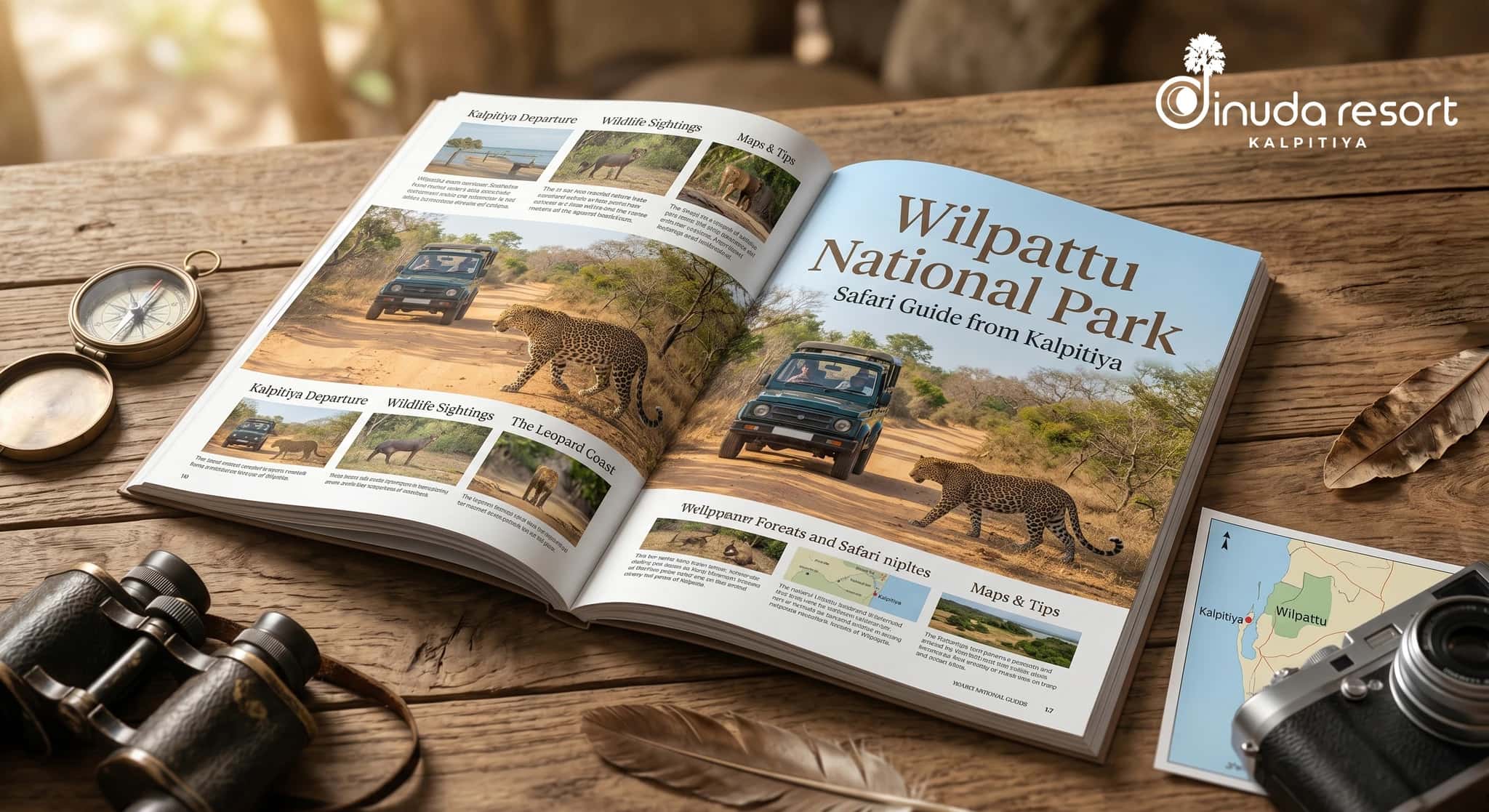
The most common question people ask when they are planning a Kalpitiya stay and have Wilpattu on their radar is whether it can actually be done in a single day. The honest answer is yes, and the Wilpattu safari from Kalpitiya is structured specifically to make that possible. It is a long, full day with a very early start, but it covers the full morning safari, breakfast inside the national park, and a river lunch at Gagewadiya on the return, all within a single departure and return from the same lagoon. This guide covers how the day trip works, what it costs, who it suits, and how it compares to doing the safari on an overnight stay.

Can You Do Wilpattu as a Day Trip from Kalpitiya?
Yes. The route from Kalpitiya to Wilpattu National Park is designed around a single-day loop that begins before sunrise and returns to the resort by late afternoon.
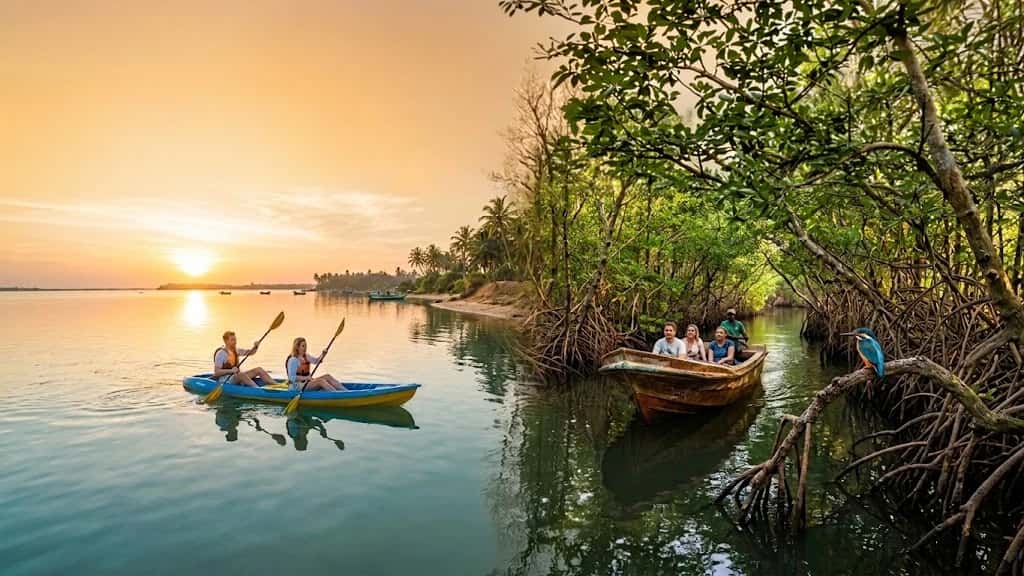
The journey uses two forms of transport in each direction: a boat across the Kalpitiya Lagoon to the park's northern boundary, and an open-roof jeep inside the park. The boat crossing takes approximately 45 minutes each way and passes through one of the most scenic stretches of water on the northwest coast, across the flat lagoon past ten uninhabited islands as the sun rises. At the park boundary, guests transfer to the jeep and enter through the Eluwankulama gate in the northern section of Wilpattu.
This is the only route in Sri Lanka where you can reach Wilpattu by water. Visitors arriving from Colombo or Puttalam drive directly to the main gate. The Kalpitiya approach is completely different in character, and the boat journey is a genuine part of the experience rather than simply a means of getting there.
The Full Day Trip: Hour by Hour
The day is long and the timing is non-negotiable. Wilpattu wildlife is most active in the early morning, and the boat ride is most beautiful at sunrise. Both of these facts determine the schedule.
5:00 AM - Bed tea is served at Dinuda Lagoon Resort. The lagoon outside is pale grey and completely silent.
5:15 AM - Boat departure from the resort lagoon frontage. The crossing begins in darkness and the sunrise happens around you on the water. The route passes ten small uninhabited islands, some with mangroves and roosting cormorants, some completely bare. As the sun clears the horizon, the whole lagoon turns gold. This crossing is, by itself, worth the early alarm.
6:30 AM - Jeep safari begins from the Eluwankulama entrance. Sri Lanka's oldest and largest national park covers over 1,300 km² of dry mixed evergreen forest. Your tracker reads the prints in the mud at the gate before you have gone 50 metres inside. The 60 or more natural villus (sand-rimmed, rain-fed lakes) are where the wildlife concentrates, and this is where the jeep takes you first.
9:30 AM - Breakfast inside Wilpattu. A proper Sri Lankan breakfast is served at a shaded spot deep inside the park: string hoppers, dhal, sambol, and fresh fruit. The sounds of the forest are the only background. No restaurant anywhere in Sri Lanka matches this setting.
9:30 AM to 12:00 PM - Second safari session. The morning's second block is often the richest. Elephants move between waterholes as the temperature climbs. Crocodiles appear on the muddy banks of the villus. Sloth bears, if you are fortunate, emerge from the scrub near the tree line. Your tracker takes the jeep into sections of the park that day-trippers arriving by road rarely reach.
12:00 PM - Leave Wilpattu and return to the boat.
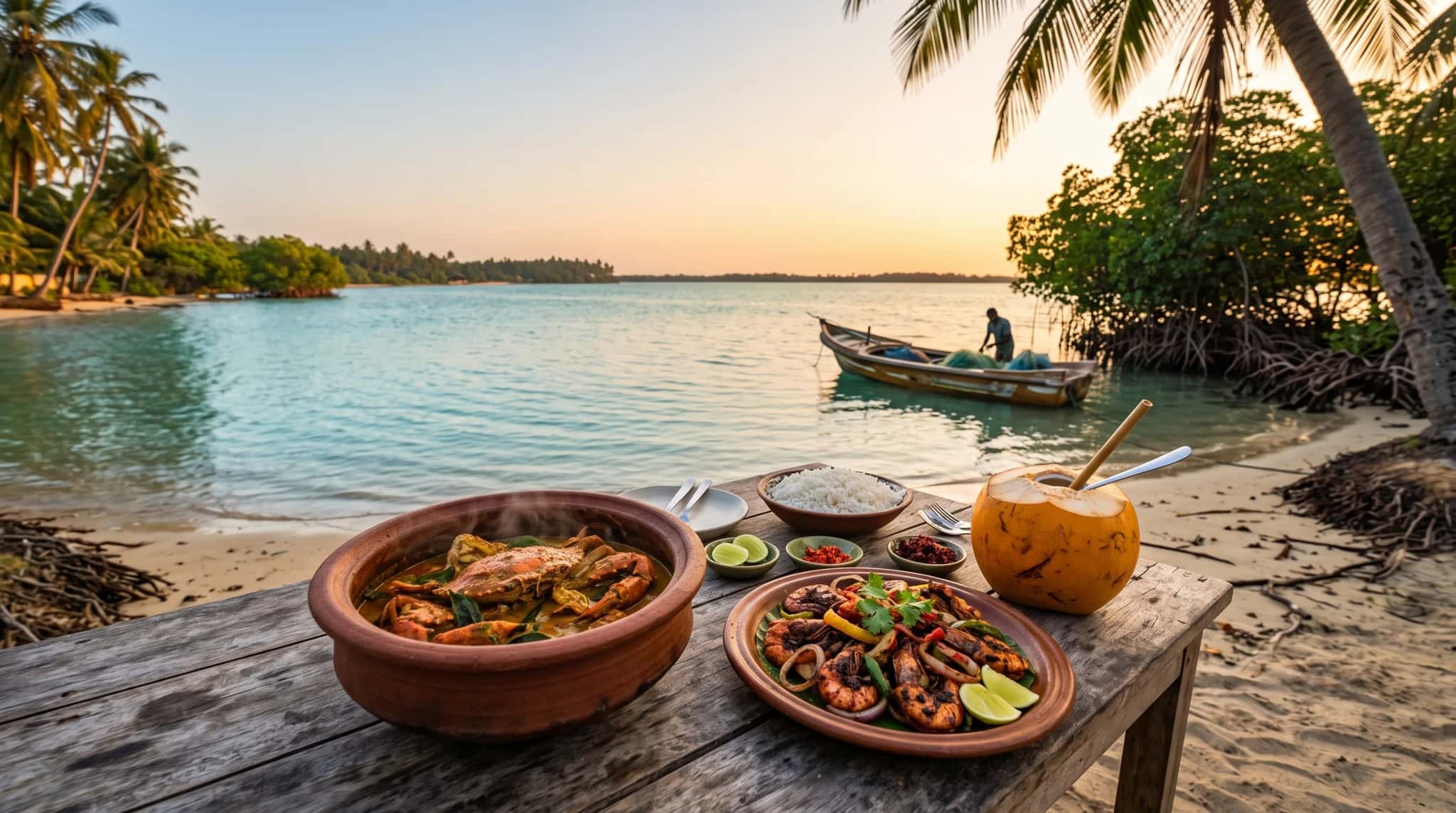
Afternoon - Boat to Gagewadiya on the Kala Oya River. The return journey does not go directly back to Kalpitiya. Instead, the boat turns east up the Kala Oya River to Gagewadiya, a traditional riverbank outpost accessible only by water. Rope swings hang over the river. Fishing families sit on the bank. Traditional Sri Lankan rice and curry is served on a banana leaf with the river in front of you.
3:00 PM - Leave Gagewadiya and return south through the lagoon. At this time of day, the kite surfers are out on the Dutch Bay flats. Dozens of colourful kites against the afternoon sky as the boat crosses back.
4:00 PM - Back at Dinuda Lagoon Resort.
In eleven hours from departure to return, you cover a lagoon at sunrise, a national park for a full morning, a jungle breakfast, a second safari session, and a river lunch. It is one of the most complete single-day wildlife experiences in Sri Lanka.
Wilpattu Safari Cost from Kalpitiya
Understanding the full cost of a Wilpattu day trip from Kalpitiya requires knowing what is included in the package versus what is charged separately.
Department of Wildlife Conservation entry ticket: USD 15 per foreign visitor. This is the park entry fee set by the Sri Lanka government and applies to all foreign nationals entering Wilpattu. Sri Lankan visitors pay a significantly lower local rate. The Dinuda team handles this ticket as part of the booking, so there is nothing to purchase or queue for on the day.
The Dinuda package covers the boat transport both ways, the jeep and tracker inside Wilpattu, the jungle breakfast, the Gagewadiya river lunch, and all logistics between departure and return. The package is booked directly through the resort team at dinudaresortkalpitiya.com.
Contact the team on WhatsApp at +94 77 342 0339 for the current package rate. Pricing varies by group size, and small groups typically share the boat and jeep to reduce the per-person cost.
Comparative note on cost: Visitors who drive directly from Colombo or Puttalam to Wilpattu pay the same DWC entry ticket but also incur the cost of private transport both ways (approximately three to four hours from Colombo), a local jeep hire at the Hunuwilagama main gate, and a separate guide or tracker fee. The Kalpitiya package bundles these elements into a single arrangement. For a solo traveller or couple, the all-inclusive approach is often comparable in total cost to self-arranging the direct route, and significantly simpler in logistics.
For context on how Wilpattu compares to Yala National Park in terms of cost and experience, see our Yala vs Wilpattu comparison guide.
Wilpattu from Puttalam: How the Route Compares
Puttalam is the nearest major town to Kalpitiya and approximately 35 km south on the peninsula road. For visitors not staying in Kalpitiya, the standard route to Wilpattu from the northwest coast runs from Puttalam directly to the Hunuwilagama main entrance by road.
The drive from Puttalam to Hunuwilagama takes approximately one hour. Jeep hire and tracker fees are arranged at the gate or through operators in Puttalam.
The comparison with the Kalpitiya boat route is instructive. Both approaches reach the northern section of the park in roughly similar total travel time, but the boat approach covers the journey across the Kalpitiya Lagoon at sunrise, which the road approach cannot replicate. The Gagewadiya river lunch on the return is also exclusive to the boat route.
For travellers already staying in Kalpitiya, there is no practical reason to drive to Puttalam first. The boat approach is more scenic, more logistically contained, and includes the Gagewadiya stop that the road route cannot access.
Day Trip vs Overnight: Which Should You Choose?
A day trip from Kalpitiya covers two full morning safari sessions, a jungle breakfast, and the Gagewadiya river lunch. That is a comprehensive Wilpattu experience for most visitors.
The overnight option, which involves staying in or near Wilpattu after the first day's safari and returning to Kalpitiya the following day, adds a second full morning safari on day two and a late afternoon session on day one. This produces significantly more wildlife viewing time and a higher probability of leopard sightings, since the additional sessions cover different parts of the park and catch different wildlife patterns.
Choose the day trip if:
- Your primary goal is the overall experience (lagoon boat, jungle, river) rather than maximising leopard probability
- You are visiting with children aged seven to twelve who handle a long day well but would find a second full day difficult
- Your stay in Kalpitiya is short and you want to cover both the marine wildlife (dolphins) and the jungle in separate days
- You have limited flexibility in your schedule
Choose the overnight if:
- Leopard sightings are the specific goal and you want maximum time on the ground
- You are a wildlife photographer who needs multiple sessions and different light conditions
- You have four or more nights in Kalpitiya and the budget for the extended package
For the full day-by-day breakdown of how the overnight version of the Wilpattu experience is structured from Kalpitiya, read our complete Wilpattu safari guide.
Wildlife You Can Expect on a Day Trip
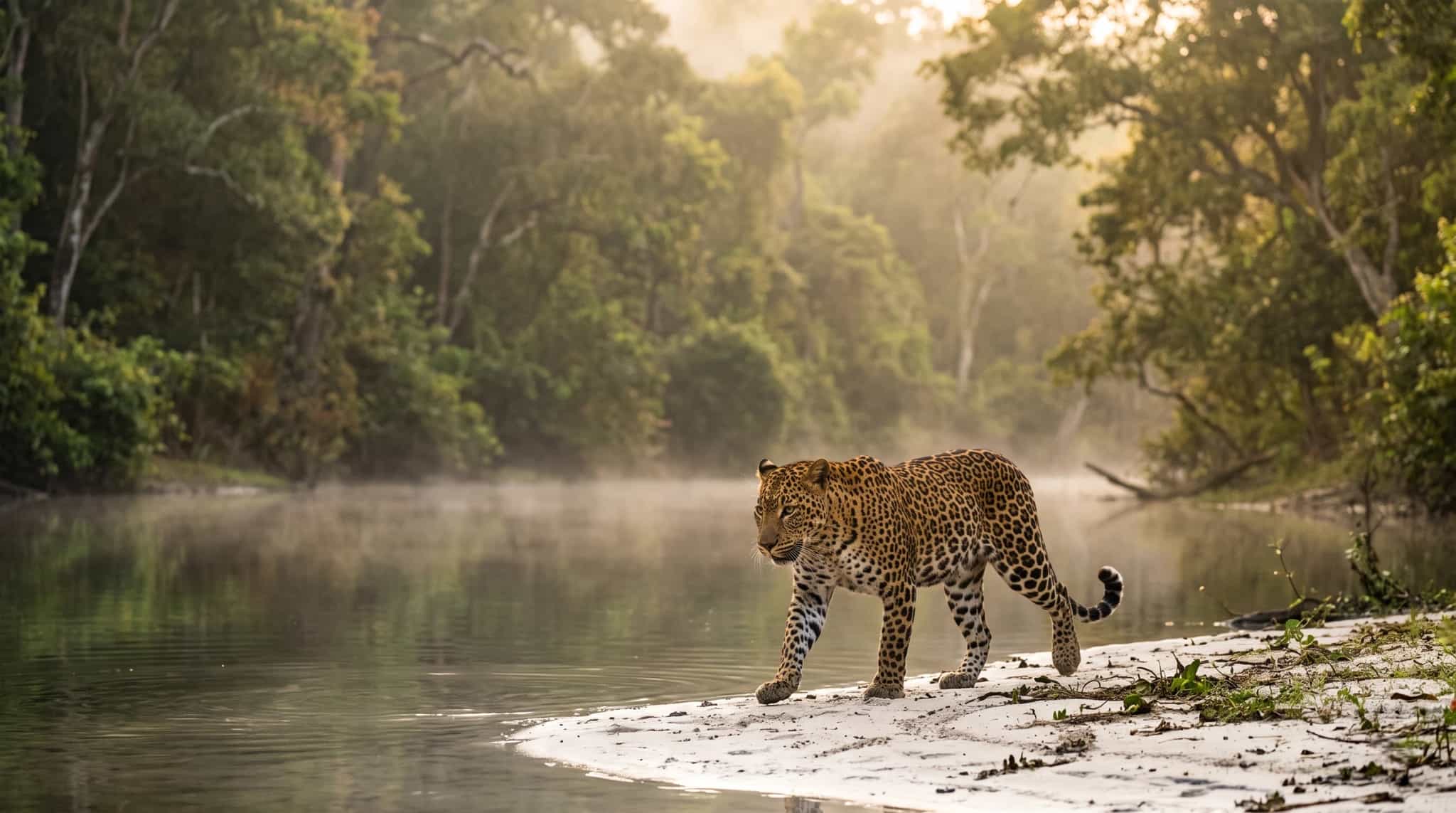
Wilpattu holds the highest density of leopards in Sri Lanka, along with a full complement of large mammals and over 240 recorded bird species. A full morning of two safari sessions in the northern zones accessed via Eluwankulama gives a genuine chance at the following:
Regularly sighted: Sri Lankan leopard, Asian elephant, spotted deer, wild boar, Indian peafowl, grey langur, water monitor lizard, mugger crocodile, purple-faced leaf monkey.
Commonly sighted: Sloth bear (best sightings May to July during palu fruit season), painted stork, lesser adjutant stork, Malabar pied hornbill.
Bird species of note: Serpent eagle, crested hawk-eagle, Indian roller, kingfisher species, and 240+ others, making Wilpattu one of the richest birdwatching destinations in South Asia.
The Eluwankulama gate gives access to the northern villus, which are the zones where leopard sightings are most consistently reported by guides and trackers. The 6:30 AM start is critical, as this is peak wildlife activity across all species before the heat of the day pushes animals into shade.
Practical Tips for the Wilpattu Day Trip
The 5:00 AM start is non-negotiable. The entire programme is designed around the golden hour at both the lagoon and the park. An hour's delay shifts both windows.
Bring a zoom lens. A 200mm or longer zoom is needed for leopards at the villus and birds in the canopy. A smartphone is fine for the river and the lagoon, but produces limited results inside the park at wildlife viewing distances.
Wear neutral colours. Khaki, olive, and grey. No bright colours or white inside the park. Long sleeves are recommended for sun protection and mosquito cover during the early morning.
Bring insect repellent. Apply before the jeep departure and reapply at the jungle breakfast stop.
Malaria precautions. Consult your doctor before visiting if travelling between May and November, when the risk is slightly elevated in this region. Pack any personal medications and ensure the nearest pharmacy, located in Puttalam, is noted before you leave.
Bring more water than you think you need. The day is long and the morning heat inside an open jeep is significant by 10 AM.
Phone signal is limited inside the national park. Download offline maps before you leave the resort if you want any navigation reference. Gagewadiya has basic connectivity.
For a complete packing list covering both the lagoon crossing and the jungle sections of the day, see our things to do in Kalpitiya guide.