
Sri Lanka has two destinations that draw wind-chasing, wave-hunting travellers more than anywhere else on the island. Arugam Bay on the east coast is one of Asia's most celebrated surf towns. Kalpitiya on the northwest coast is Asia's top kite surfing destination. Both are off the standard tourist trail. Both attract people who want something more active and more real than the usual beach resort circuit.
But they are very different places, and choosing the wrong one for your travel style wastes time on an island where every day counts.
This guide breaks down Kalpitiya vs Arugam Bay across every category that matters: the sport, the season, the vibe, the wildlife, the accommodation, and who each destination actually suits best.
The Core Difference: Kite Surfing vs Ocean Surfing
This is the most important thing to understand before anything else.
Arugam Bay is a surfing destination. You need a surfboard, waves, and the skill or willingness to learn to ride them. The breaks here are genuine, and the Main Point at Arugam Bay is considered one of the best right-hand point breaks in Asia according to The Surf Atlas. Beginners can learn here, but the appeal is primarily to surfers.
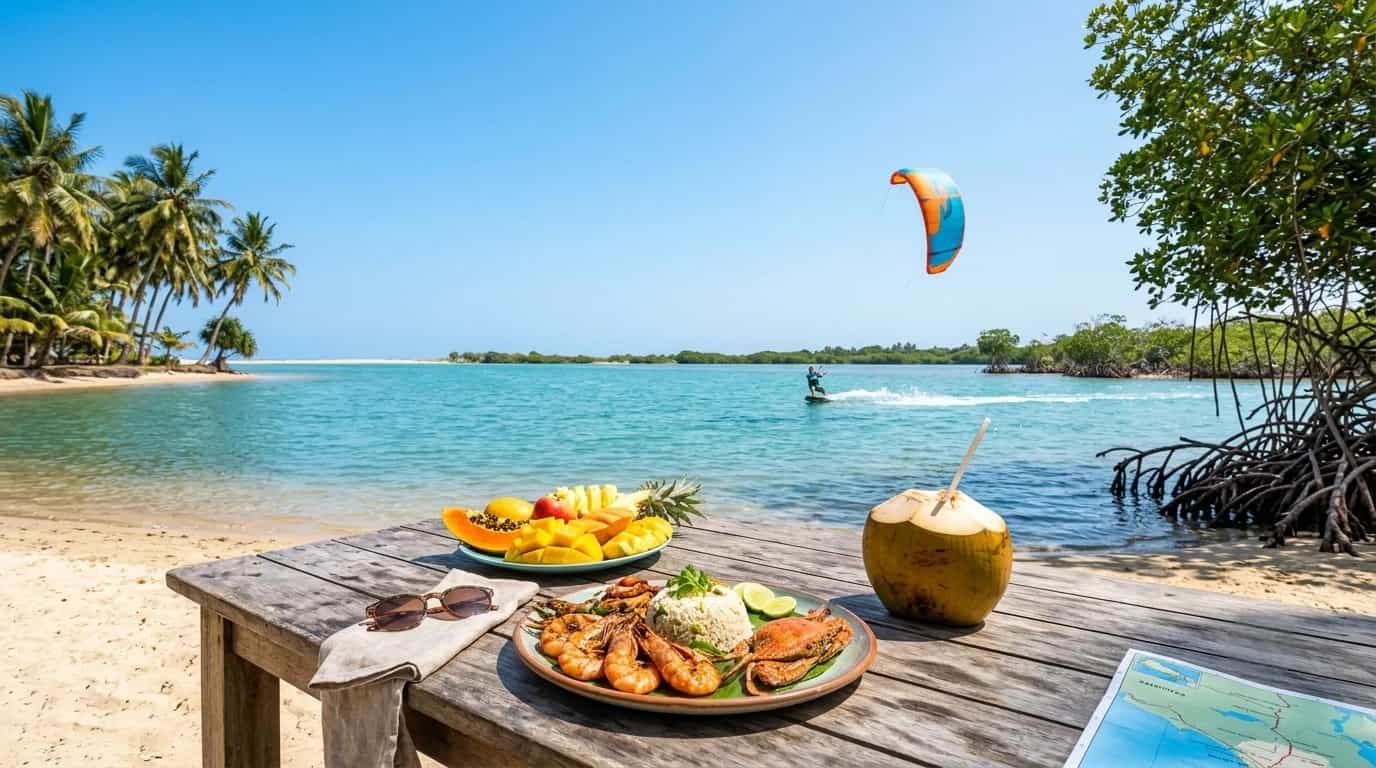
Kalpitiya is a kite surfing destination. You need wind, a kite, and a board. The lagoon here is flat, shallow, and consistent, which is why it has become one of the most popular kite surfing spots in Asia. As IKSurf Magazine notes, Kalpitiya's flat lagoon water and reliable wind make it ideal for both beginners learning to kite and advanced riders looking for speed and freestyle space. You can read more about what the kite surfing experience looks like in the Kalpitiya Beginner's Guide to Kitesurfing.
If you want to surf ocean waves, go to Arugam Bay. If you want to kite surf on a flat lagoon, go to Kalpitiya. If you want to try both on the same Sri Lanka trip, they can be combined because their seasons are different.
Season and Weather
Arugam Bay is best between May and October, when the east coast is dry and the swells are consistent. The peak surf months are June, July, and August. Outside this window the bay can be rough and wet, and most of the surf-focused accommodation and schools operate on a seasonal basis.
Kalpitiya is best between May and October for kite surfing, when the southwest monsoon sends 20 to 30 knot winds across the lagoon. This is the opposite coast to Arugam Bay, which means when one is in season the other is also running. November to April is Kalpitiya's quieter kitesurfing period but its best season for wildlife, with spinner dolphins, sperm whales, and calm seas for snorkelling. You can check the full seasonal breakdown in the Kalpitiya Weather Month by Month guide.
Planning tip: A Sri Lanka trip that starts with kite surfing in Kalpitiya (May to October) and ends with surfing in Arugam Bay (or vice versa) is entirely possible and makes for an excellent two-destination trip across the island.

The Vibe
Arugam Bay has the classic surf town atmosphere. Budget guesthouses, beachfront cafes, reggae bars, motorbike rentals, and a transient community of long-term surfers from Europe, Australia, and South America. It is relaxed, social, and slightly hedonistic. You can disappear for three weeks and barely notice the time passing. The town is small, walkable, and entirely oriented around the surf culture.
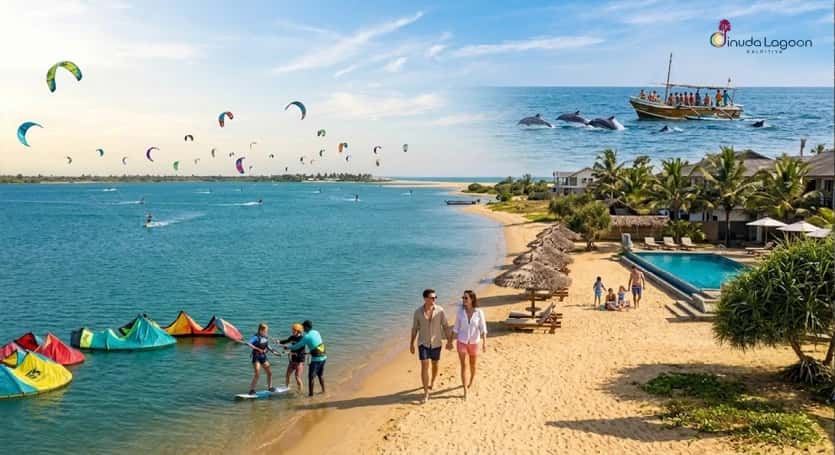
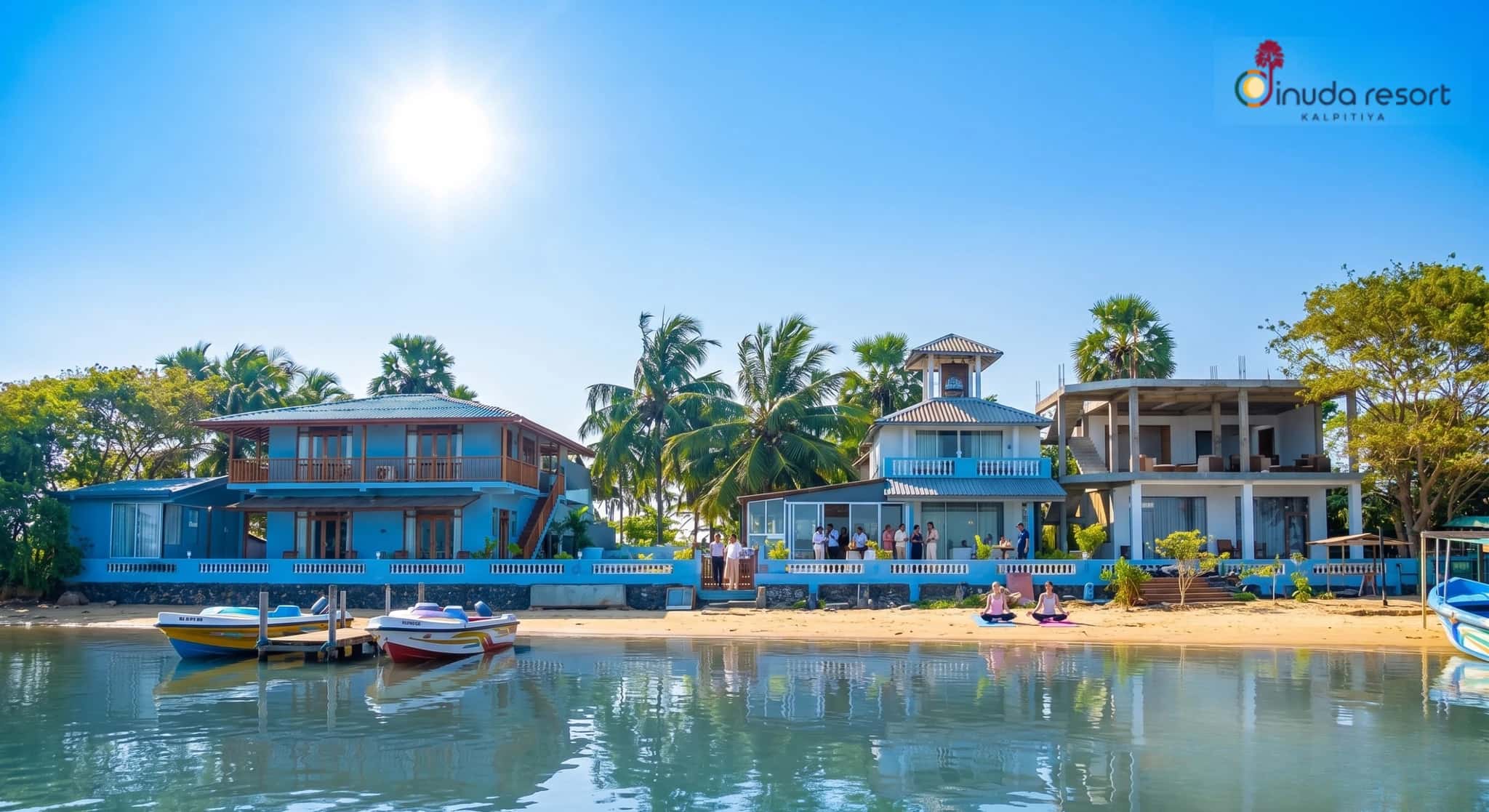
Kalpitiya is quieter and less developed. It does not have a strip of beach bars or a backpacker market. What it has is space, sky, and silence broken only by kites and wind. The resort scene here is more established than Arugam Bay, with proper lagoon-front properties that attract a mix of kite surfers, wildlife travellers, couples, and families. Dinuda Lagoon Resort sits directly on the lagoon, which means you step outside and you are already where you need to be. The Things to Do in Kalpitiya guide gives a full picture of how a typical day here actually looks.
If you want a buzzy social scene, Arugam Bay wins. If you want space, nature, and a more complete travel experience, Kalpitiya is the stronger choice.
Wildlife
This is where Kalpitiya pulls well ahead.
Arugam Bay has wildlife nearby. Kumana National Park is about an hour south and is known for its bird life, particularly during nesting season. Elephants can sometimes be spotted in the surrounding area.
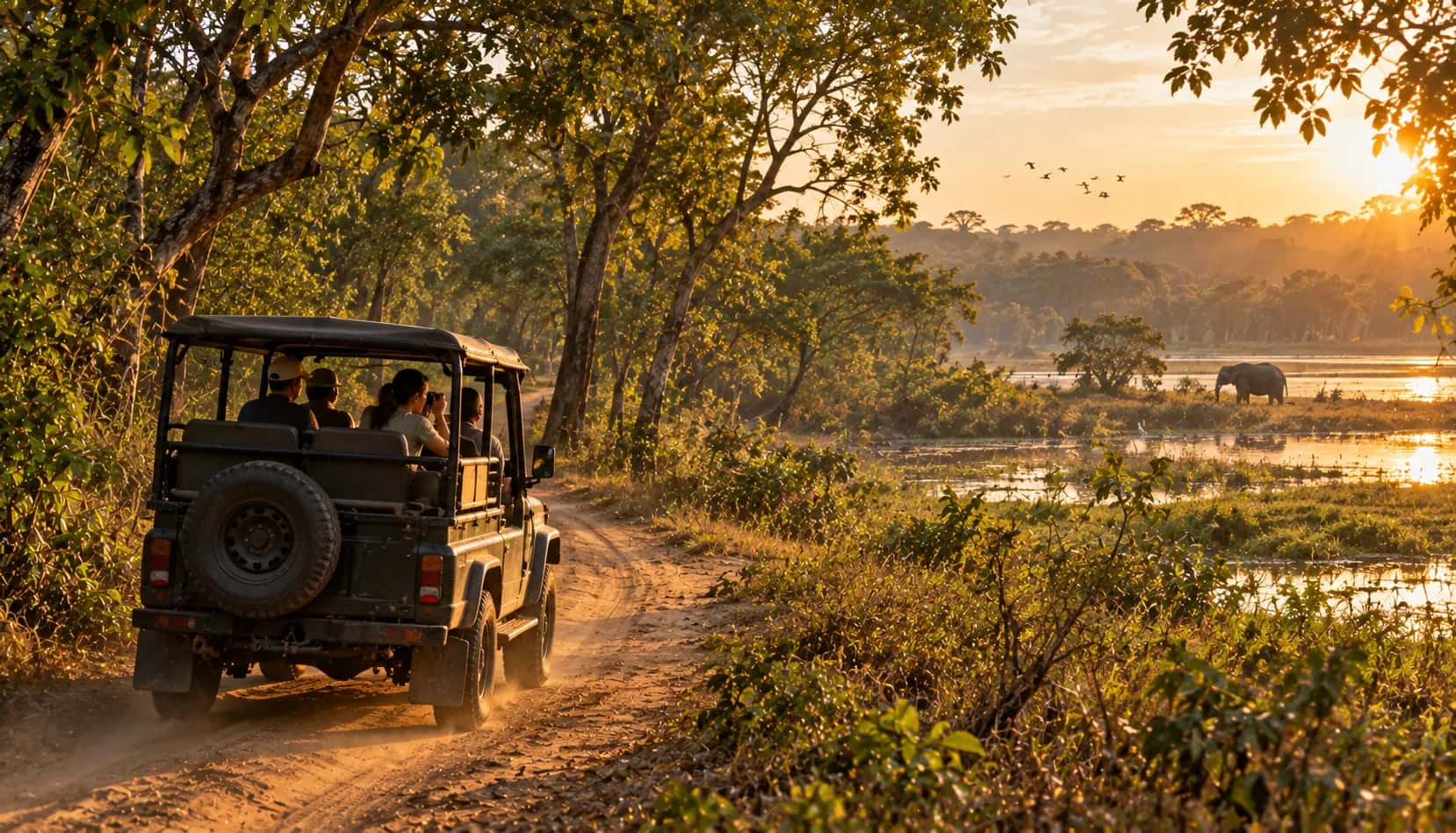
Kalpitiya has some of the most concentrated wildlife in Sri Lanka within a short distance of the resort. Between November and April, spinner dolphin pods of hundreds regularly appear just a few nautical miles offshore. Sperm whales migrate through the same waters between January and March. The Kalpitiya Dolphin Watching guide covers what to expect on a morning trip. Wilpattu National Park, Sri Lanka's largest and oldest, is also accessible from Kalpitiya as a day trip by boat and jeep safari. If wildlife is any part of your Sri Lanka agenda, Kalpitiya gives you dolphins, whales, leopards, and elephants all from one base. You can see how the safari day works in the Wilpattu Day Trip from Kalpitiya.
Getting There
Arugam Bay is on the east coast, about six to seven hours from Colombo by road or overnight train to Colombo East and then a tuk-tuk. It is remote by Sri Lankan standards, which is part of its appeal.
Kalpitiya is on the northwest coast, about three hours from Colombo by road. It is significantly easier to reach, which makes it a practical first or last stop on a Sri Lanka trip without eating too much travel time. Full transport options including bus routes are covered in the Colombo to Kalpitiya guide.
Cost
Both destinations sit in the mid-budget range, though they serve different traveller types.
Arugam Bay leans budget-friendly at the lower end, with cheap guesthouses and local food that keeps costs down for backpackers. Surf lessons and board rentals add to the daily spend during peak season.
Kalpitiya has a wider range. Basic guesthouses exist but the stronger offer is mid-range lagoon resorts that include activities, food, and transfers in one place. Kite surfing lessons and gear rental are the main additional costs. A full breakdown of what a Kalpitiya trip costs across rooms, food, and activities is in the Kalpitiya Trip Cost guide.

Side by Side: Kalpitiya vs Arugam Bay
| Kalpitiya | Arugam Bay | |
|---|---|---|
| Main sport | Kite surfing | Ocean surfing |
| Best season | May to October (kiting), Nov to April (wildlife) | May to October |
| Water type | Flat lagoon | Ocean waves |
| Wildlife | Dolphins, whales, Wilpattu safari | Kumana birds, occasional elephants |
| Vibe | Quiet, spacious, nature-led | Buzzy, social, surf culture |
| Distance from Colombo | 3 hours | 6 to 7 hours |
| Best for | Kiters, wildlife seekers, families, couples | Surfers, backpackers, long stays |
| Snorkelling | Bar Reef, one of Sri Lanka's largest coral reefs | Limited nearby |
Which One Should You Choose?
Choose Kalpitiya if:
You want to kite surf or learn to kite surf. You are travelling with family. You want wildlife alongside the beach. You want a quieter, more nature-focused trip. You are short on time and need a destination close to Colombo. You want dolphins and a national park safari on top of your water sports.
Choose Arugam Bay if:
You are a surfer or want to learn to surf. You want a classic surf town social scene. You have more time and do not mind the longer journey. You want to meet other travellers and stay in the same place for weeks.
Choose both if:
You have ten days or more and want the full picture of Sri Lanka's water sports scene. Start with Kalpitiya in the north, then cross to Arugam Bay on the east coast. The two destinations complement each other perfectly, and together they give you an experience of Sri Lanka that most visitors completely miss. The Complete Guide to Exploring Sri Lanka in 7 Days can help you map out the wider itinerary.