
Every traveller planning a Sri Lanka trip eventually arrives at the same question. Yala or Wilpattu? Both parks are real leopard destinations. Both offer genuinely extraordinary wildlife. And both are so fundamentally different in atmosphere, landscape, and experience that choosing between yala vs wilpattu comes down not to which park is better, but to which type of safari you actually want. This guide gives you an honest, detailed answer.

At a Glance: Yala vs Wilpattu
| Yala | Wilpattu | |
|---|---|---|
| Size | 978 km² | 1,317 km² |
| Location | Southeast Sri Lanka | Northwest Sri Lanka |
| Leopard probability | Very high (Block 1) | Good (improving on well-guided safaris) |
| Crowds | High in peak season | Low year-round |
| Sloth bear | Occasionally spotted | Best park in Sri Lanka |
| Bird species | 215+ | 240+ |
| Landscape | Open scrub, rock, coast | Dense forest, 60+ natural lakes |
| Best combined with | Galle, Mirissa, Ella | Kalpitiya, Anuradhapura, Sigiriya |
| Safari atmosphere | Active, fast-paced | Slow, immersive, private |
About Yala National Park
Yala is Sri Lanka's most visited and most photographed national park. It sits in the southeast of the country and is the natural wildlife anchor for the popular southern tourist circuit that connects Galle, Mirissa, Ella, and the hill country. Its Block 1 holds the highest density of wild leopards of any protected area on Earth, estimated at approximately one leopard per square kilometre in prime zones. That single fact drives most of its popularity and most of its crowds.
The landscape is a mix of open coastal scrub jungle, rocky outcrops, grassland, and wetland lagoon. During the dry season from February to July, the vegetation is sparse and sightlines are long. A leopard resting on a rock in Block 1 is visible from 200 metres. That openness is Yala's greatest practical advantage for wildlife encounters.
Key facts about Yala:
- Block 1 (142 km²) is where most safaris operate and where leopard density is highest
- Up to 300 to 400 jeeps can enter the park daily during peak season
- 10 to 20 jeeps may converge on a single leopard sighting at peak times
- Open from 6 AM to 6 PM daily
- Foreign visitor entry fee approximately USD 35 to 42 per person, total safari cost approximately USD 80 to 95 per person for a half-day
Yala's leopards are habituated to vehicles. They have grown up around jeeps and will often rest in full view, walk along roads, or feed without concern for the audience. For a first-time safari traveller whose primary goal is a guaranteed leopard sighting, Yala is the correct choice.
The drawback is the experience around the sighting. In peak season, a popular leopard in Block 1 can attract a dozen or more vehicles simultaneously. The wildlife is undeniably extraordinary. The atmosphere around it can feel pressured.
About Wilpattu National Park
Wilpattu is Sri Lanka's largest and oldest national park, covering 1,317 km² of the northwest coast. Its name means "Land of Lakes" in Sinhala, a reference to the 60 or more natural villus scattered throughout the park. These villus are naturally formed, sand-rimmed, rain-fed lakes that fill during the monsoon and slowly dry through the dry season. They are the defining ecological feature of Wilpattu and the main reason its wildlife distribution and behaviour differs so markedly from Yala.
The landscape is dense, forested, and ancient. Tall weera, palu, and ebony trees form a thick canopy over long sandy tracks that weave between the villus. Where Yala feels like an open, active wildlife park, Wilpattu feels like a genuine wilderness. You can drive for an hour without seeing another jeep. Sightings, when they come, are private.
The park reopened after the Sri Lankan civil war and has been recovering strongly since. Leopard sightings have been increasing year on year as the population stabilises and grows. On well-guided safaris in Wilpattu, leopard sighting probability has been reported at 50% or more on recent visits, a significant improvement on earlier years. Wilpattu's leopards are less habituated to vehicles than Yala's, which makes them harder to find but means that when you do find one, there is almost always nobody else there.
Key facts about Wilpattu:
- 60+ natural villus provide extraordinary wildlife viewing points
- 240+ bird species recorded, including the rare black-capped kingfisher
- Sloth bear sightings are more reliable here than anywhere else in Sri Lanka
- Far fewer jeeps than Yala, even in peak season
- Entered via several gates including Hunuwilagama (main) and Eluwankulama (north)
- Open from 6 AM to 6 PM daily
- Entry fees are lower than Yala for foreign visitors
Yala vs Wilpattu: The Honest Head-to-Head
Leopard Sightings
Yala wins on probability. If your single non-negotiable goal is to see a leopard, Block 1 Yala during dry season gives you the best statistical chance of any safari destination in Sri Lanka. The animals are visible, the terrain is open, and experienced guides know individual leopards by name.
Wilpattu's leopard sightings are improving and now represent a genuine probability rather than a hope. The key difference is the quality of the sighting. A Wilpattu leopard encounter is almost always private. The dense forest means the animal often appears suddenly and close. For wildlife photographers who want an intimate, unshared encounter, Wilpattu consistently produces images that Block 1 Yala, with its jeep traffic, cannot.
Crowds and Atmosphere
This is Wilpattu's clearest advantage and it is substantial. In peak season, Yala's Block 1 can feel less like a wilderness experience and more like a competition. Jeeps radio sightings to each other and converge fast. At popular spots, the queue of vehicles can be long enough to obscure the animal entirely.
Wilpattu's vehicle density is a fraction of Yala's at any time of year. The park is vast and the jeep tracks are long. Most safaris produce extended periods of complete solitude in the forest. For travellers who value the atmosphere of a safari as much as the sighting count, this difference is decisive.
Sloth Bear
This is Wilpattu's strongest card. Wilpattu is widely considered the best place in Sri Lanka to see the Sri Lankan sloth bear. The palu fruit season from May to July brings sloth bears into the open near the villus as they feed, often in daylight, often in clear view. Yala also has sloth bears but sightings are less consistent.
If a sloth bear sighting is as important to you as a leopard, Wilpattu is the clear choice.
Landscape and Scenery
Both parks are beautiful. They are beautiful in entirely different ways.
Yala's landscape is dramatic and varied: rocky outcrops, open grassland, coastal lagoon, and sections of the Indian Ocean shoreline where elephants sometimes walk on the beach. The visual range is wide and the pace is fast.
Wilpattu's landscape is quieter and deeper. The forest is tall and green. The villus appear suddenly through the trees like hidden mirrors. The red sand tracks wind for kilometres between them. It feels older, more remote, and more genuinely wild than any other park in Sri Lanka.
Location and What You Can Combine
This is where the two parks split most clearly for trip planning purposes.
Yala sits in the deep south and is a natural stop on the classic tourist route: Colombo, Galle, Mirissa, Ella, Yala, back to Colombo. Most visitors combine it with southern beaches, hill country train journeys, and the southern cultural circuit.
Wilpattu sits on the northwest coast and is the natural wildlife component for a completely different type of Sri Lanka trip. It pairs with the Cultural Triangle (Anuradhapura, Sigiriya, Dambulla), the ancient sites of the north, and above all, Kalpitiya.
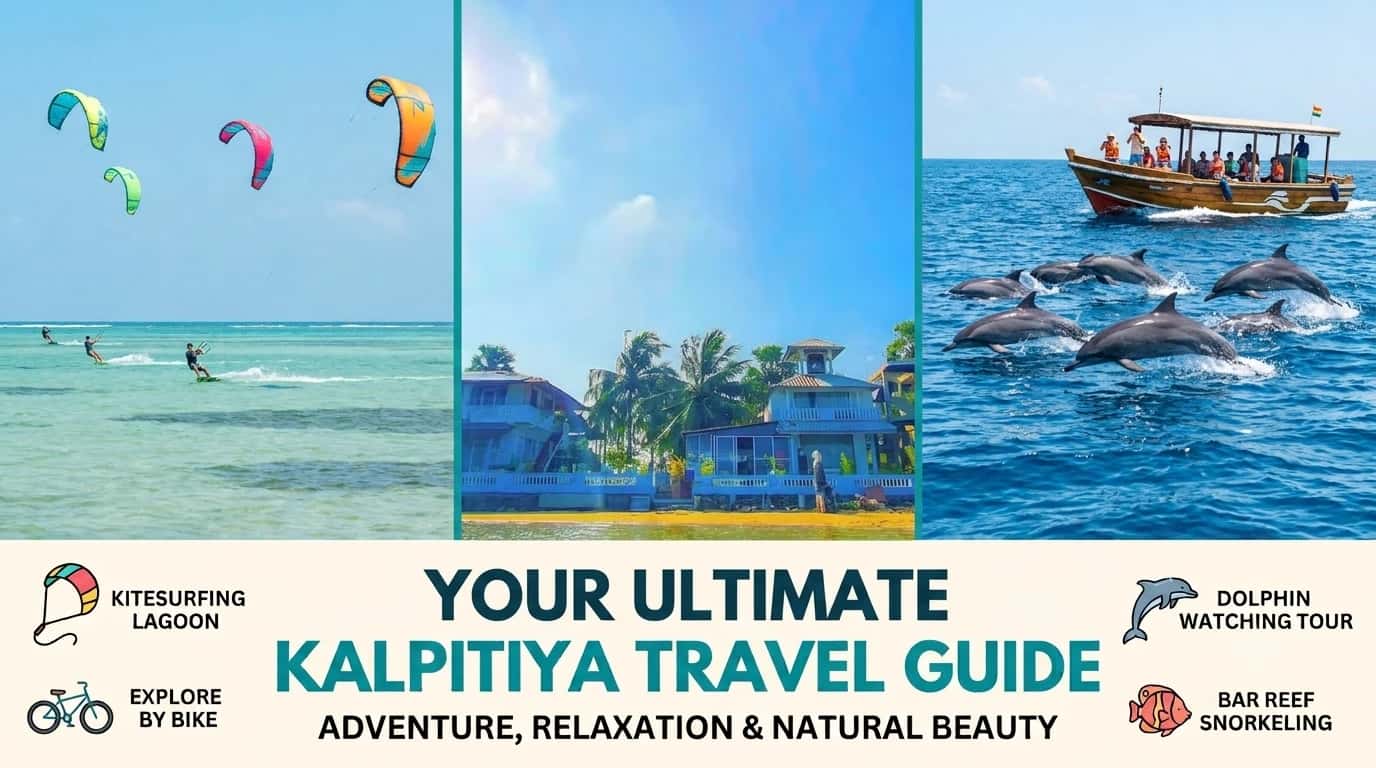
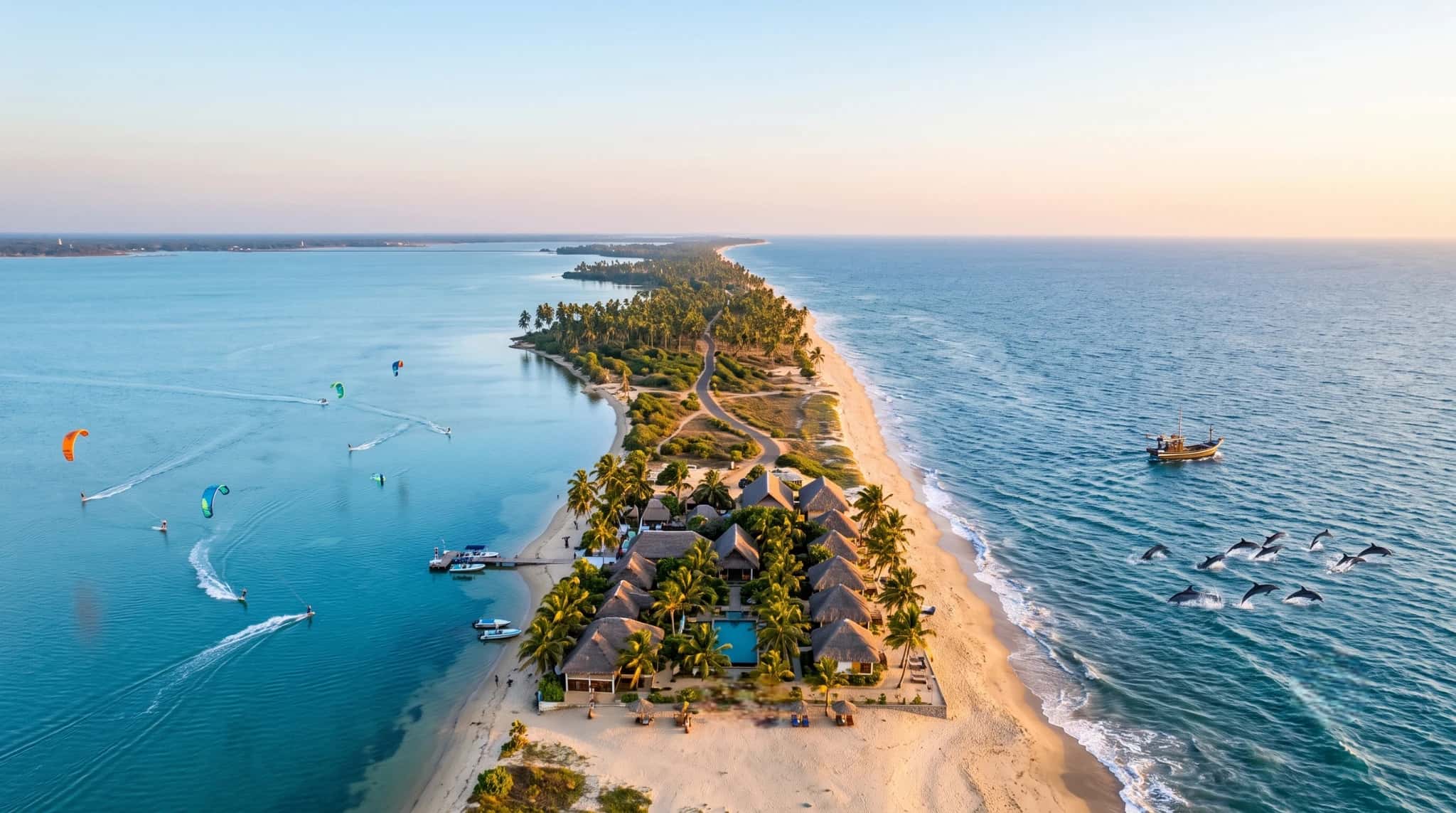
This is the combination no Yala trip can offer and no Wilpattu trip from Colombo can match: Kalpitiya, with its lagoon, dolphin watching, kitesurfing, and the unique boat approach to Wilpattu, gives you an experience that is categorically different from any other safari on the island.
Cost
Wilpattu is generally less expensive for foreign visitors than Yala. Entry fees are lower, jeep hire tends to be less competitive, and accommodation options near the park include affordable eco-camps alongside more upscale options. Yala's fame drives up prices across the board, particularly for accommodation near Block 1.
Who Should Choose Yala
Yala is right for you if:
- Your primary goal is a guaranteed leopard sighting and you want the highest possible probability
- You are on a classic southern Sri Lanka route (Galle, Mirissa, Ella) and Yala fits naturally into the itinerary
- You are a first-time safari traveller who wants active, eventful wildlife viewing with guide support and good facilities
- You want a dramatic, varied landscape with open sightlines
- You are visiting as a family with young children and want frequent wildlife encounters that hold attention
Who Should Choose Wilpattu
Wilpattu is right for you if:
- You want a solitary, immersive safari without competing jeeps
- The atmosphere of a genuine wilderness matters as much as the sighting count
- You are a photographer who wants unshared, unhurried wildlife encounters
- Sloth bear is on your list and you want the best chance of seeing one in the open
- You are combining your trip with Kalpitiya (dolphin watching, kitesurfing, lagoon experiences) or with the Cultural Triangle (Anuradhapura, Sigiriya)
- You have already done Yala and want a different experience on a return trip
The Kalpitiya Difference: Wilpattu by Boat
There is one way to experience Wilpattu that no tour operator near the park can offer and no Yala safari can replicate.
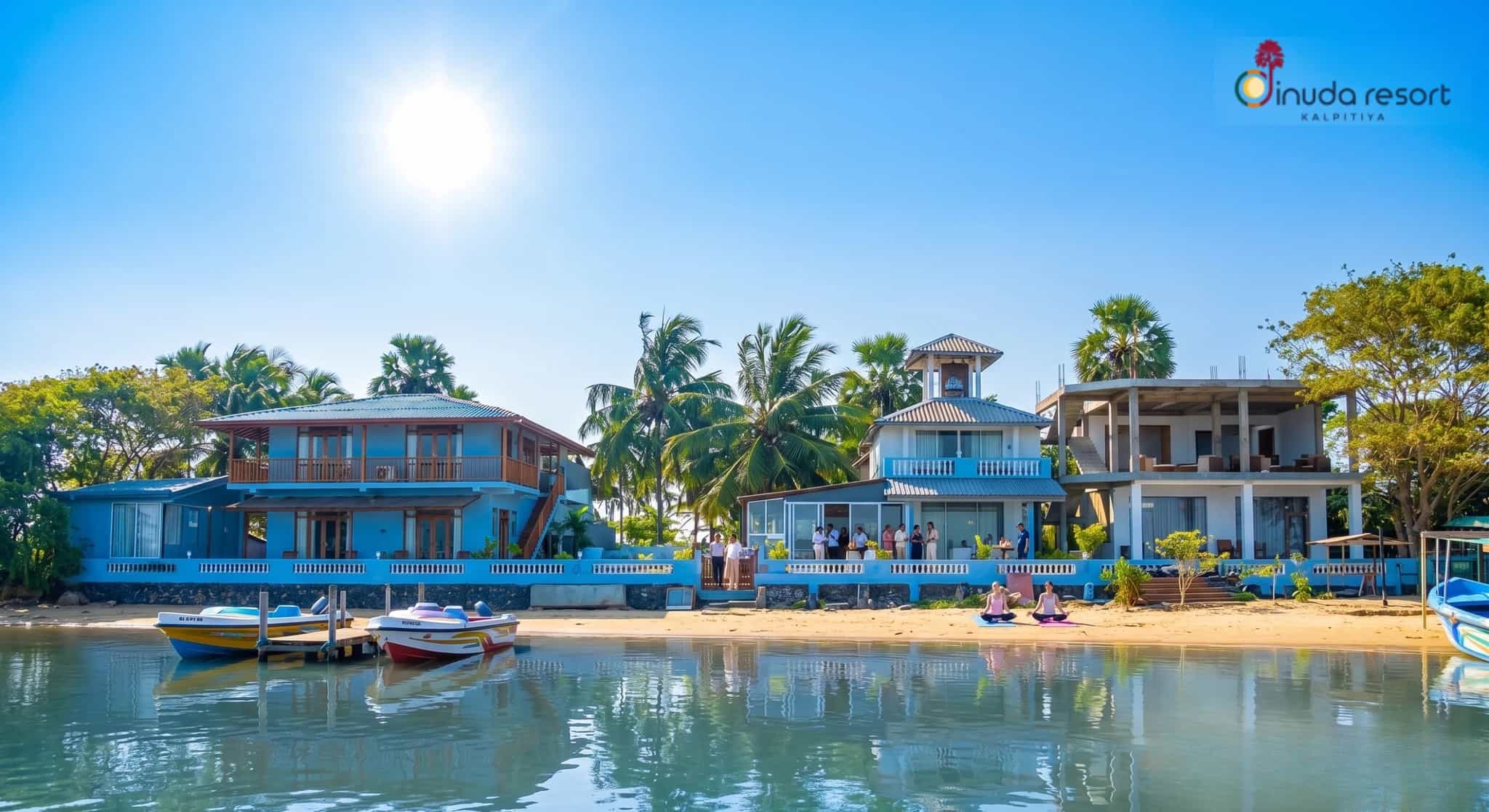
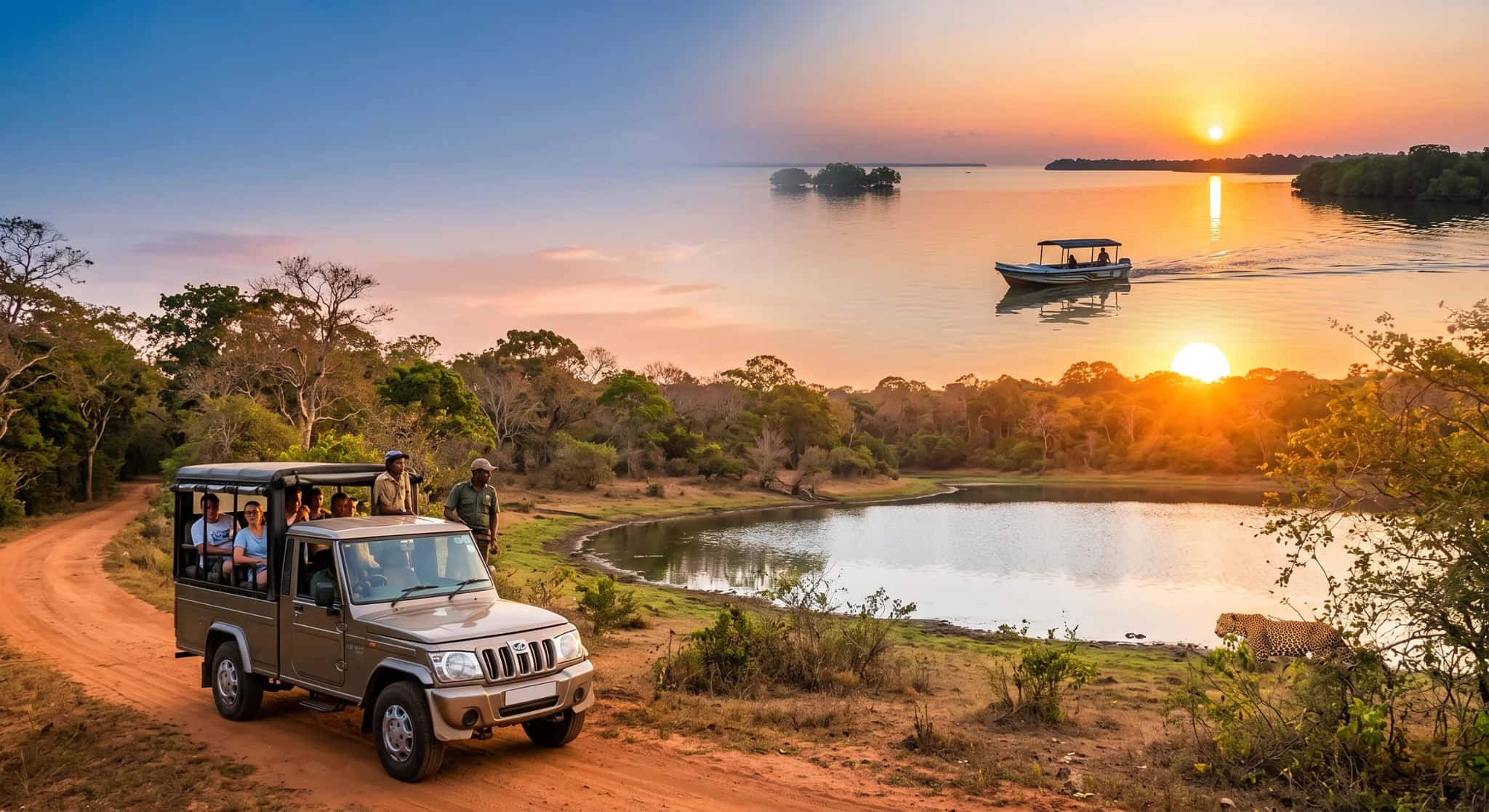
From Dinuda Lagoon Resort in Kalpitiya, the journey to Wilpattu begins with a sunrise boat ride across the Kalpitiya Lagoon. The boat departs at 5:15 AM, passing ten uninhabited islands as the sky shifts from grey to gold. Cormorants dry their wings on the rocks. The whole lagoon turns copper as the sun clears the horizon. The 45-minute crossing is, by itself, worth an early alarm.
At the jungle boundary, guests transfer to an open-roof jeep and enter Wilpattu through the Eluwankulama gate in the northern section of the park, where leopard sightings are most consistently reported. Two morning safari sessions run either side of a Sri Lankan breakfast served inside the park. The return journey stops at Gagewadiya on the Kala Oya River for a traditional rice and curry lunch on a banana leaf, at a riverbank outpost accessible only by boat.
The complete experience covers a lagoon at sunrise, a jungle at mid-morning, and a river at lunchtime. Three completely different environments. Three completely different meals. One route that begins and ends at the Kalpitiya Lagoon.
This is the only Wilpattu safari in Sri Lanka that arrives by water. And it is the only way to combine a national park with dolphin watching, kite surfing, and a lagoon resort in a single trip.
For the complete day-by-day breakdown of the Wilpattu safari from Kalpitiya, read our full guide.