
The Sri Lankan leopard is one of the most sought-after wildlife encounters in Asia, and Wilpattu National Park is the place in Sri Lanka where that encounter is most likely to happen in silence, in space, and without a queue of jeeps converging on the same animal. Spotting a wilpattu leopard requires patience, local knowledge, and the right timing. This guide covers the specific zones where sightings are most consistently reported, the best season and time of day for leopard activity, what experienced trackers actually look for, and why the Kalpitiya approach to the park through the Eluwankulama gate gives you access to the northern zones that most visitors never reach.

The Sri Lankan Leopard: A Subspecies Found Nowhere Else
The leopard that inhabits Wilpattu is not the same animal as the African or Indian leopard. The Sri Lankan leopard, known scientifically as Panthera pardus kotiya, is a distinct subspecies found only on this island. It is the apex predator in Sri Lankan ecosystems, playing a role that no other large cat occupies here: there are no tigers, no lions, and no competing big cats. The Sri Lankan leopard exists at the top of the food chain alone.
According to the IUCN Red List, Panthera pardus kotiya is classified as vulnerable, with Sri Lanka's national parks representing the most important strongholds for the population. Wilpattu's recovery since reopening after decades of closure during the civil conflict has produced a genuinely stable and healthy leopard population, confirmed by conservation monitoring in recent years.
The Sri Lankan leopard is generally larger than its Indian counterpart, with a heavier build and distinctive rosette patterns that trackers use to identify individual animals over time. The dense forest environment of Wilpattu has also produced a population that is notably different in behaviour from the more habituated leopards of Yala: less accustomed to vehicles, more elusive, and more likely to disappear quickly into the undergrowth when approached. That elusiveness is exactly what makes a Wilpattu leopard sighting feel so different from an encounter in Block 1 of Yala.
Wilpattu's Leopard Population
Wilpattu National Park covers 1,317 km² of dry mixed evergreen forest in Sri Lanka's northwest, making it the largest national park on the island. That size, combined with 60 or more naturally occurring villus (the sand-rimmed, rain-fed lakes unique to Wilpattu), creates a diverse and productive ecosystem that supports one of the largest leopard populations in the country.
The critical ecological factor is the villu system. Leopards are water-dependent, and during the dry season when standing water becomes scarce, the villus act as magnets for prey species. Spotted deer, sambar deer, and wild boar congregate at the water's edge. Leopards follow their prey, and the open shorelines of the villus create sighting opportunities that the dense forest interior rarely provides.
Researchers and trackers working in the park have documented individual leopards by their distinctive rosette patterns, and some of these animals have become well known to regular visitors. The Wilpattu King, a dominant male frequently spotted near Maradanmaduwa villu, has been photographed extensively. The Queen of Thimbiri Wila, a female often seen with cubs near Thimbiri Wila, is another consistent presence in specific zones of the park. These named animals are not guaranteed sightings on any given day, but they indicate the level of documentation that exists for specific territories and the value of working with trackers who know individual animals and their ranges.
The Best Zones for Leopard Sightings in Wilpattu
The Villu System
The most productive areas for leopard sightings across the park are the approaches to the larger villus, particularly during the dry season when the water level drops and the shoreline widens. Leopards move between the villus at predictable times of day, following prey that gather at the water in the early morning and late afternoon.
The tracks between villus, particularly the long sandy roads that wind through the interior, are where most leopard road crossings are observed. A leopard moving between water sources follows the path of least resistance, and the jeep tracks provide exactly that. Trackers read the sand for fresh prints before the jeep moves deeper into the park.
Maradanmaduwa Villu
One of the most consistently productive zones in Wilpattu. Maradanmaduwa is a larger villu with open shorelines and good sightlines across the water. The Wilpattu King, the dominant male documented in this territory, is a known presence here and trackers with current knowledge of his movements can increase the probability of an encounter significantly. The wide, sandy approaches to Maradanmaduwa also give the jeep good positioning for photography.
Thimbiri Wila
Thimbiri Wila is another of the documented leopard territories, associated with the female known as the Queen of Thimbiri Wila and her cubs. Female leopards with young are particularly interesting to observe: they move more deliberately, hunt in daylight more frequently than solitary males, and the presence of cubs creates extended sighting opportunities as the family moves along the tree line.
The Northern Zones: Eluwankulama
The northern section of Wilpattu, accessed through the Eluwankulama entrance rather than the main Hunuwilagama gate, receives significantly fewer visitors than the more central zones. This lower vehicle density is a practical advantage: when a leopard is spotted in the northern zones, the probability of being the only jeep present is considerably higher than at popular villus in the central park.
Trackers operating in the Eluwankulama zones consistently report the northern section as productive for leopard sightings, particularly for less habituated animals that retreat further from the main gate activity. The Kalpitiya approach to Wilpattu uses the Eluwankulama entrance specifically, and this northern access is one of the genuine wildlife advantages of reaching the park by boat from the Kalpitiya Lagoon rather than by road from Colombo or Puttalam.
The Best Time for Leopard Sightings
By Season
May to September is the peak window for leopard sightings in Wilpattu. The dry season reduces the number of functioning water sources across the park, concentrating prey species around the remaining villus and forcing leopards to move more frequently and more visibly through open ground. Vegetation is also thinner in the dry season, improving sightlines across the villus and along the track edges.
February to April is a strong secondary window. The park is green, the villus are full, and visitor numbers are lower than the peak months. Leopard sightings are very much possible during this period, and the cooler morning temperatures produce active animals earlier in the day.
December and January bring higher rainfall and heavier vegetation. Sightings are less frequent as prey disperses and animals move less predictably. The park remains open but conditions for wildlife viewing are more challenging.
By Time of Day
6:00 AM to 9:00 AM is the most productive window without exception. Leopards are most active in the early morning cool before the heat builds. The low morning light on the villus also produces the best conditions for photography.
4:00 PM to 6:00 PM is the second productive window, when animals return to water sources in the late afternoon before the park closes. This session is particularly useful for those doing a full-day safari.
10:00 AM to 3:00 PM is the least productive period. The heat drives animals into deep shade and sightings drop significantly. This is when experienced guides take the jeep to areas they expect leopards to rest, rather than cruising open ground.
The Dinuda Kalpitiya departure at 5:15 AM by boat puts the jeep at the Eluwankulama gate by 6:30 AM, precisely within the peak sighting window. For a full breakdown of the day's timing, read our Wilpattu safari guide from Kalpitiya.
What Makes Wilpattu Different from Yala for Leopard Sightings
The comparison is worth making clearly, because the two parks produce fundamentally different experiences even when both result in a leopard sighting.
In Yala's Block 1, leopards are highly habituated to vehicles. Popular individuals will rest on rocks in full view, walk along roads, or feed without apparent concern for the audience around them. Sighting probability in Block 1 during peak season is high. The experience around the sighting can involve multiple jeeps converging simultaneously.
In Wilpattu, leopards are less habituated. They appear more suddenly, move more quickly, and disappear back into the undergrowth faster. The sighting is harder to obtain and shorter in duration, but when it happens, it is almost always with only your jeep present. The combination of surprise, privacy, and the dense forest backdrop produces photographs and memories that are qualitatively different from a Block 1 Yala encounter.
For the full comparison between the two parks, see our Yala vs Wilpattu guide.
Sighting Tips from Experienced Trackers
Read the sand before the animals appear. The sandy jeep tracks in Wilpattu hold prints clearly. Fresh leopard prints crossing the track, particularly those heading toward a villu, are the strongest indicator that an animal is in the immediate area. Trackers who check the track surface at regular intervals position the jeep ahead of the leopard's likely direction of travel rather than chasing it from behind.
Stay quiet. Sound carries in the forest. Conversations, camera shutter noise, and engine idling all affect animal behaviour. The best encounters happen in silence, with the jeep engine off and everyone still.
Be patient at productive villus. Moving constantly between zones produces fewer sightings than waiting at a productive water source during peak activity times. Experienced trackers know which villus are currently in use by which animals and will hold position at the right spot rather than driving the full circuit.
Trust the tracker over the itinerary. If your tracker wants to stay longer at a particular villu or change direction mid-route, follow the advice. Current knowledge of animal movements changes daily and the tracker's judgment on any given morning is more valuable than a pre-planned route.
Multiple sessions improve probability significantly. A single morning session is a genuine opportunity but the odds improve substantially with a second outing. For those using Kalpitiya as a base, the day trip covers two full morning sessions with a breakfast break between them.
Photography Tips for Leopards in Wilpattu
The dense vegetation of Wilpattu produces different photography challenges than open-habitat parks. A leopard in the undergrowth can be perfectly visible to the eye and almost impossible to autofocus on cleanly.
Use a zoom lens of at least 200mm. The distance between jeep and animal is often 50 to 100 metres at Wilpattu. Shorter lenses produce small subjects. A 400mm or longer zoom gives you reach to fill the frame when the opportunity is brief.
Set continuous autofocus and use face or eye detection. Modern cameras with subject tracking autofocus handle the Wilpattu challenge well: the system locks on to the leopard even through partial foliage, provided there is enough contrast. Manually placed single-point autofocus is too slow for a moving animal in dappled light.
Pre-expose for the light conditions. Morning light in Wilpattu, particularly in the dry season, is a mix of bright open sky over the villus and deeply shaded undergrowth at the tree line. If your leopard steps from shadow into the open, a pre-set exposure for open conditions will be closer to correct than trying to adjust mid-sighting.
Shoot in short bursts. The sighting window at Wilpattu is often brief. Three to five frame bursts at the anticipated peak of movement produce cleaner results than sustained high-speed fire, which fills the buffer and can cause the camera to slow precisely when you need it fastest.
Other Wildlife to Watch For Alongside the Leopard
The leopard search in Wilpattu is never wasted even on days when the big cat stays hidden. The supporting cast is exceptional.
Sloth bear is the animal that wildlife photographers prioritise nearly as highly as the leopard in Wilpattu. June to August is the most reliable window, when palu and weera fruit fall and bears feed openly. The dry season evening hours around productive fruiting trees are the best window.
Asian elephant is reliably seen in smaller herds than at Udawalawe or Minneriya, but the encounters in Wilpattu feel more intimate because of the forest setting. Elephants at the villu edge in the early morning light are some of the most beautiful sights the park produces.
Mugger crocodile lies motionless on the banks of most larger villus throughout the day. They are easily overlooked against the dried mud, which is exactly what they intend.
Sri Lankan junglefowl, Indian peafowl, and grey langur are present in numbers throughout the park. The 240+ bird species recorded at Wilpattu include painted stork, serpent eagle, crested hawk-eagle, and lesser adjutant stork among the most frequently sighted.
The Kalpitiya Route to the Wilpattu Leopard Zones
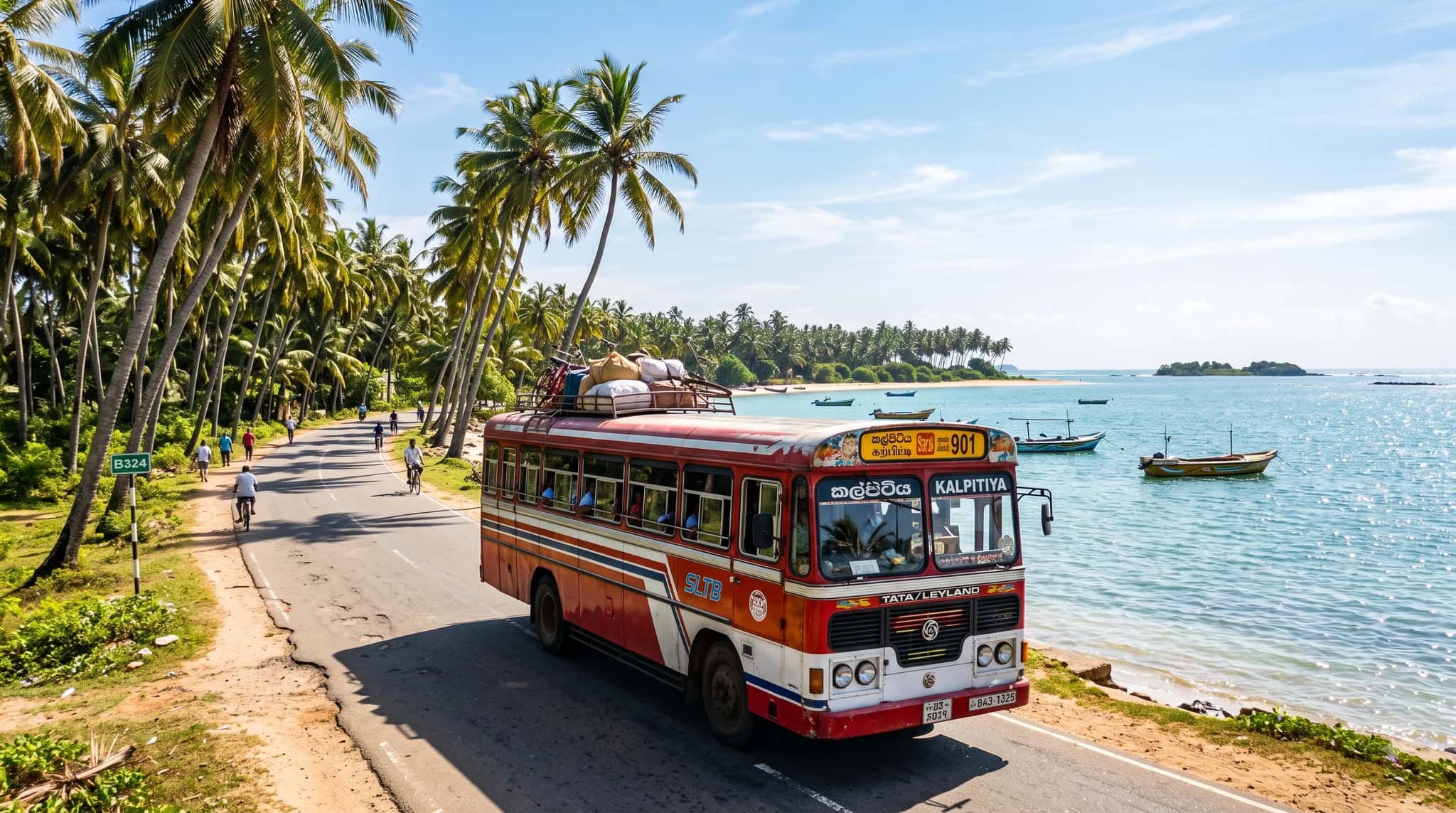
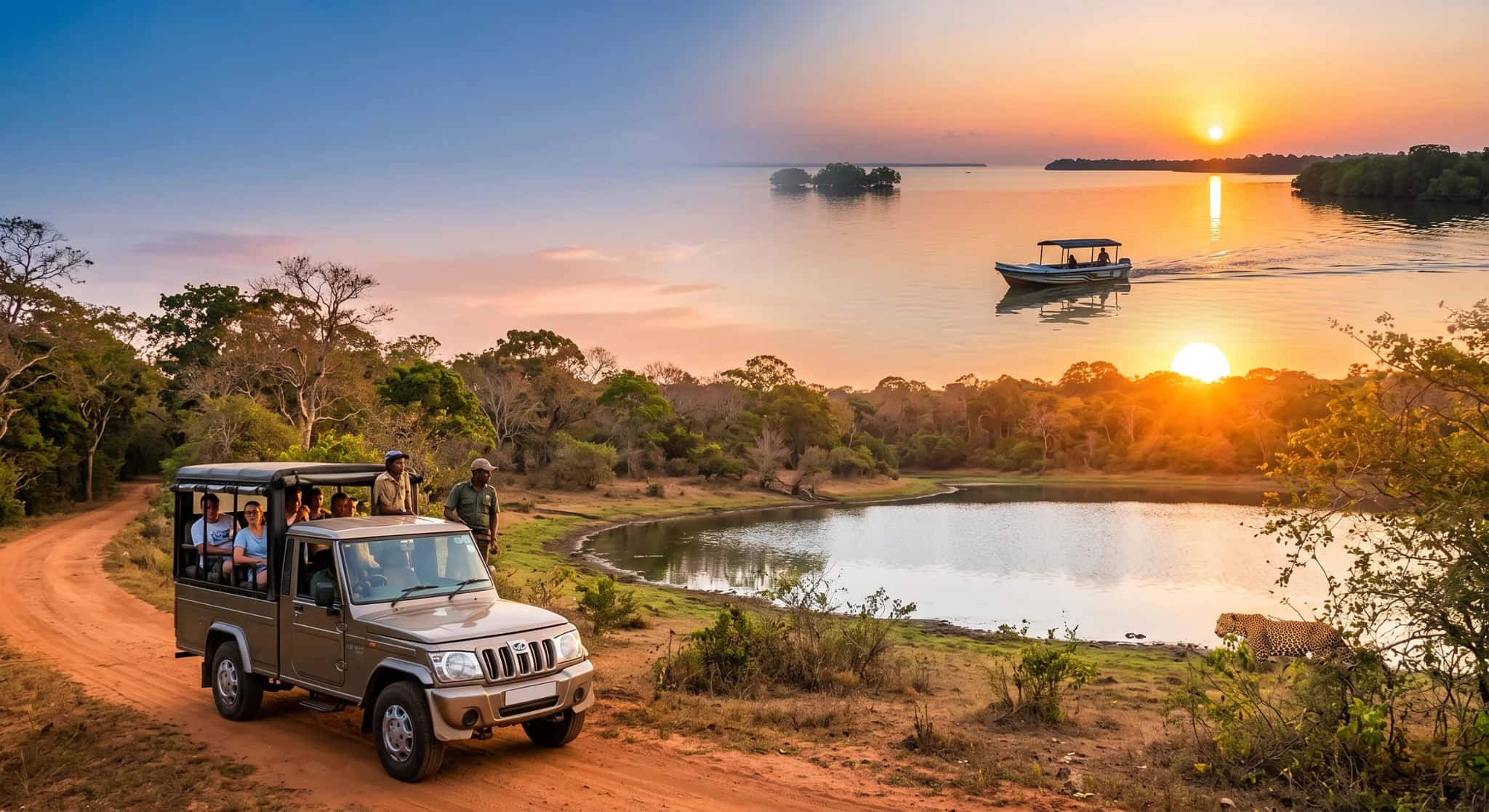
The approach to Wilpattu through Eluwankulama from Kalpitiya is the only boat-access route to the park in Sri Lanka. Arriving by water rather than by road means the first sight of the day is the Kalpitiya Lagoon at sunrise, passing ten uninhabited islands, before the jeep enters the park through the northern gate.
This approach is not just scenic. The Eluwankulama entrance gives direct access to the northern zones with their lower vehicle density, longer undisturbed sightings, and trackers who know the territory in detail. For travellers combining the leopard safari with dolphin watching, whale watching, or the wider Kalpitiya experience, this route requires no additional travel day. The full day begins and ends at the same lagoon.
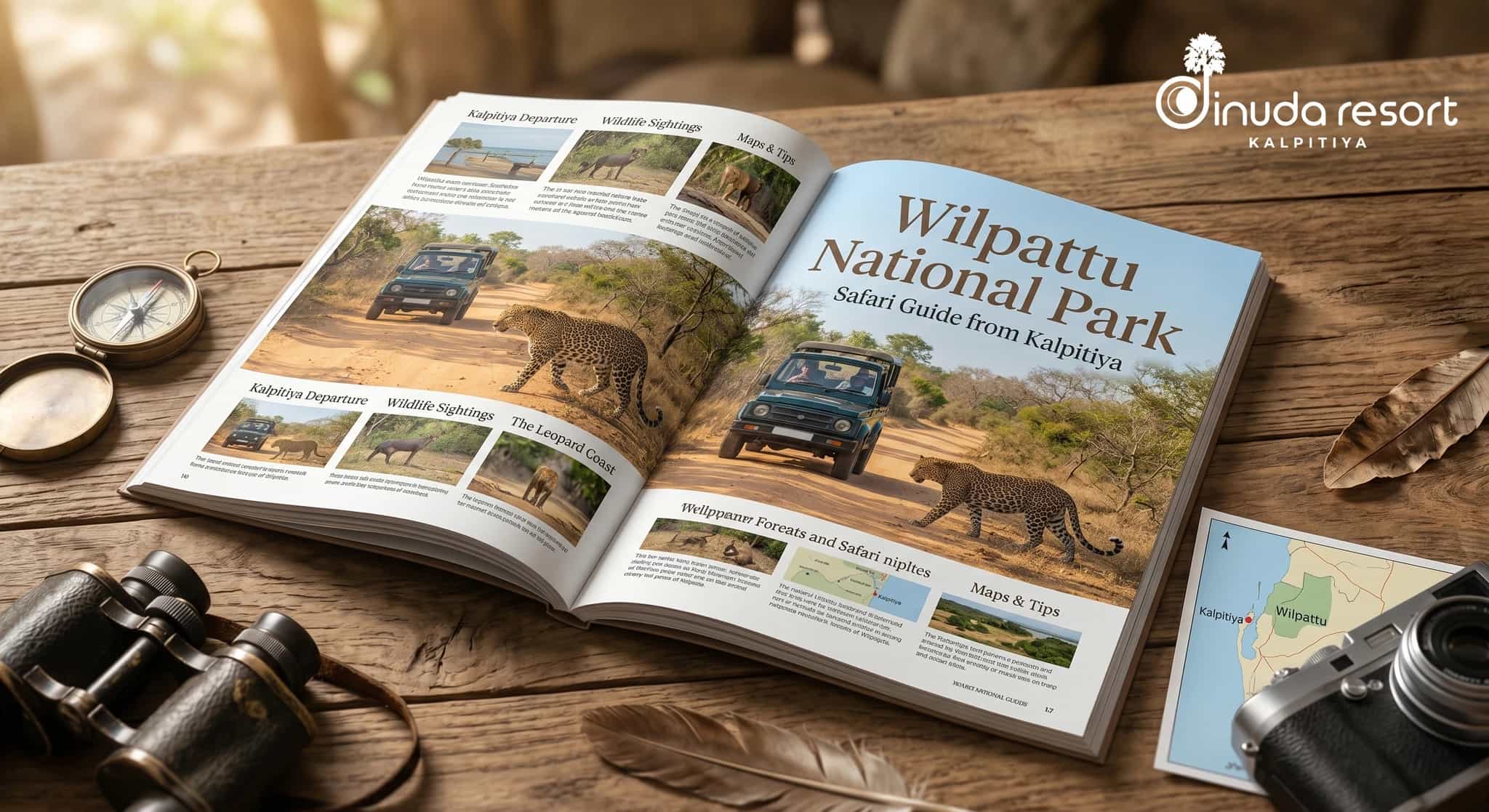
The Wilpattu safari as a day trip from Kalpitiya covers the hour-by-hour logistics, and all arrangements including boat, jeep, tracker, and park entry are handled by Dinuda Lagoon Resort.