
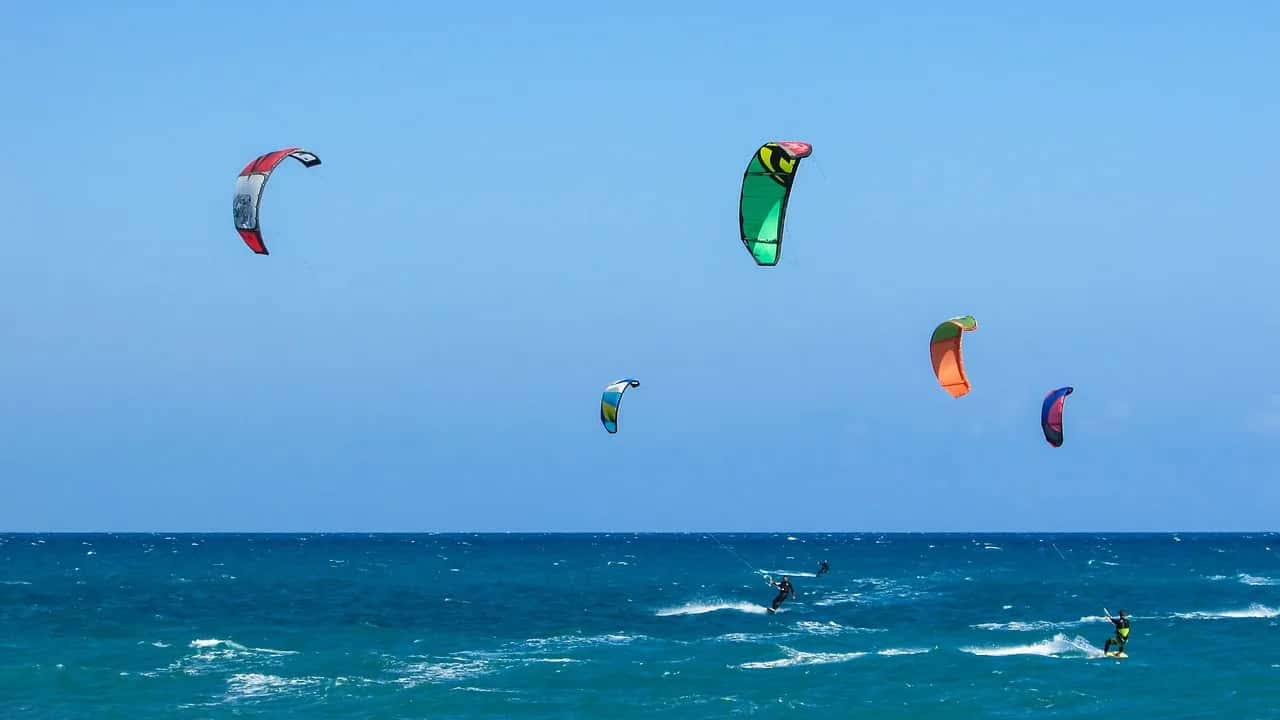
Packing for a kitesurfing trip to Kalpitiya raises the same question every time: do you pay the airline fees and travel with your own kitesurfing gear, or do you leave everything at home and rent on arrival? The honest answer depends on what equipment you have, how long you are staying, and which season you are visiting. This guide covers the specific kite sizes that work in Kalpitiya's two wind seasons, what rental gear is available on the peninsula, what you should always bring regardless, and what you can safely leave at home without missing a single session.

Bring Your Gear or Rent in Kalpitiya?
This is the question, and the answer is not the same for everyone.
Rent on arrival if:
- You are travelling for fewer than ten days and the airline bag fee does not make financial sense
- You do not have a strong preference for a specific kite brand or model
- You are a beginner or early intermediate rider who is not yet particular about equipment setup
- You are travelling with hand luggage only or as part of a broader Sri Lanka trip where a kite bag is impractical
- You are visiting for the first time and want to try the conditions before committing to gear
Bring your own gear if:
- You are staying for two weeks or more and the daily rental cost adds up to more than the bag fee
- You have a specific kite model, bar setup, or board preference that affects your riding significantly
- You are an advanced rider working on freestyle, foiling, or wave riding where equipment specifics matter
- Your harness fits and performs in a way that rental harnesses typically cannot match
Most experienced riders travelling to Kalpitiya for the first time rent kites and boards on arrival and bring their own harness, leash, and bar. That combination reduces luggage to a single carry-on level kit while maintaining the personal equipment that matters most for performance and comfort.
For the full breakdown of what a week on the water looks like from a planning perspective, read the Kalpitiya kitesurfing holiday 7-day guide.
What Kite Sizes Work in Kalpitiya
Kalpitiya has two distinct wind seasons and the correct kite size is completely different between them. Arriving with the wrong size kite is the most common and most avoidable gear mistake.
Summer Season (May to September)
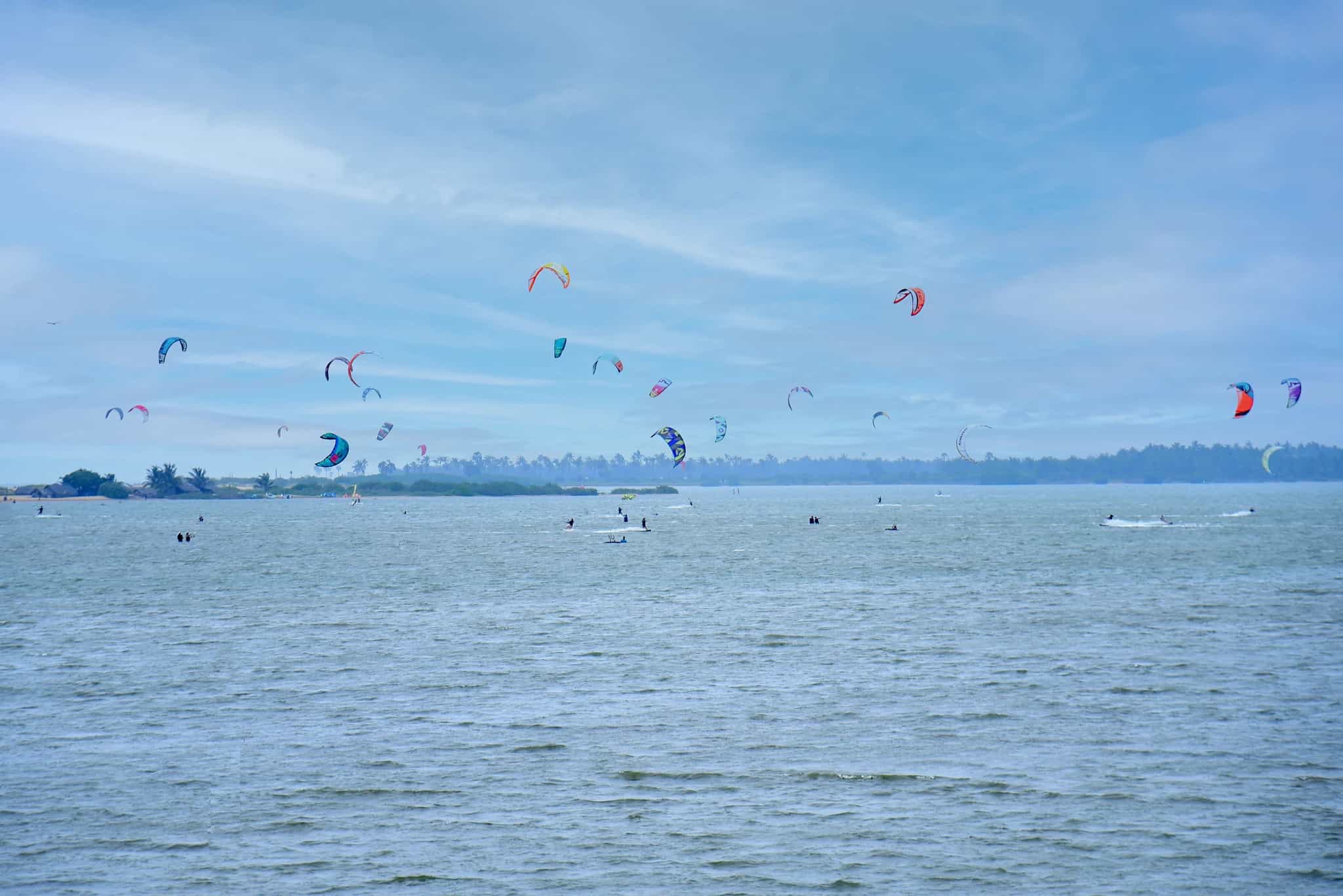
The southwest monsoon produces the strongest and most consistent wind of the year. June, July, and August are the peak months with 20 to 30 knots on most days.
Recommended quiver for summer:
- 9m kite as the main session kite for most riders
- 7m kite for the strongest days in June and July when gusts push beyond 30 knots
- 12m kite for the lighter edges of May and September
If you are only bringing one kite for a summer trip, a 9m is the single most versatile size for the Kalpitiya lagoon during this season. Most riders on the water in July are on a 9m or smaller.
Board: A standard twin tip works well on the flat lagoon. Shorter boards (130 to 135 cm for most riders) are better suited to the stronger wind conditions in peak summer.
Winter Season (December to March)
The northeast wind is lighter, building gradually through the morning and peaking in the early afternoon. Wind speeds average 15 to 22 knots.
Recommended quiver for winter:
- 12m kite as the main session kite
- 14m kite for the lighter days, particularly early December and late March
- 10m kite for the occasional stronger afternoon in January and February
If you are bringing one kite for a winter trip, a 12m covers the majority of conditions. Riders who want to be on the water every available day bring both 12m and 14m.
Board: A larger twin tip (135 to 140 cm) is more forgiving in lighter wind and gets you planing earlier on the soft days. Foil boards are also well-suited to winter conditions on the Kalpitiya lagoon.
What Gear Is Available to Rent in Kalpitiya
The rental infrastructure in Kalpitiya is well developed. Multiple operators on the peninsula stock current-season equipment from major brands.
Brands confirmed available for hire on the peninsula:
Duotone SLS, North, CORE, CrazyFly, Cabrinha, Ozone, and Eleveight kites are all stocked by various operators. Twin tip boards, freestyle boards, wave boards, and foil boards are available. Wing foiling equipment is also available at several centres.
Rental is organised by the session or by the day. Most operators price by the full day rather than the hour. Advance booking during peak season (June to August and January to February) is strongly recommended as stock is limited and popular sizes fill quickly.
Damage insurance is available at most operators for approximately 25 EUR per day and is worth considering, particularly for guests renting high-end SLS kites.
Secure kite storage is available free of charge at most kite centres for guests who bring their own equipment and want to leave it safely between sessions rather than carrying it back to their accommodation.
Gear arrangements for guests staying at Dinuda Lagoon Resort can be made directly through the resort experiences team, who coordinate with local operators to confirm size availability and reserve equipment ahead of your arrival.
What to Always Bring Regardless
Your Own Harness
A rental harness is functional but a personal harness that fits correctly makes a meaningful difference to comfort and performance over a full day on the water. Seat harnesses and waist harnesses fit differently on every body and a harness that rubs, sits wrong, or does not transfer load correctly is a constant distraction. Your own harness is the one item that most experienced riders never leave at home.
Your Leash
A personal safety leash suited to your riding style and preferred release system is worth packing. Rental leashes are typically standard-fit and may not match your preferred kite attachment point or release method.
Your Bar (Optional but Worth Considering)
If you have a strong bar preference, whether for the feel of the throw, the length of the depower line, or a specific safety system you are comfortable with, your own bar is worth including. Most rental kites come with the manufacturer's standard bar. If the brand available does not match your bar, riding with an unfamiliar system is a consideration.
Personal Protective Gear
Helmet and impact vest are available for hire at most kite centres but fit varies. If you ride with your own helmet, bring it. The protection it provides is more reliable when it fits you correctly.
What You Can Leave at Home
Kites. Unless you have a very specific size requirement not covered by the rental stock, kites are the highest-hassle and lowest-necessity item to travel with. Airline bag fees for kite bags can add significantly to the cost of a trip, and the rental stock in Kalpitiya is genuinely comprehensive.
Boards. Twin tips and foil boards are available everywhere on the peninsula. Unless you have a custom board built for your weight and style, a rental board performs at the same level for most riders. Board bags are also bulky and awkward to travel with.
Bulky spare parts. The kite schools in Kalpitiya carry basic repair supplies. A small personal kit (bladder patches, leading edge tape, a spare chicken loop) is useful. A full repair bag is not.
Travelling With Kite Gear: Airline Tips
If you do decide to bring your own kites and board, a few practical points reduce the friction.
Check the airline's oversize and sports equipment policy before booking. Kite bags are typically treated as oversize luggage and charged at a flat fee rather than by weight. This fee varies significantly by airline and route. Booking in advance rather than paying at the airport almost always costs less.
The Colombo route. Most international flights into Sri Lanka land at Bandaranaike International Airport (CMB) in Colombo. Budget airlines operating from European hubs often have stricter oversize policies than full-service carriers. If kite bag fees are a deciding factor, the carrier choice matters as much as the itinerary.
Pack kites deflated and loosely rolled inside a semi-rigid kite bag to reduce the risk of bladder damage during baggage handling. Boards wrapped in bubble wrap inside a padded board bag handle checked baggage handling without damage in most cases.
Beyond the Kite Gear: What to Pack for Kalpitiya
On the water:
- Rash guard with UV protection, long sleeve for full session sun protection
- Board shorts with a secure waistband (flat lagoon sessions involve water starts)
- Reef-safe sunscreen, minimum SPF 50, reapplied between sessions
- Polarised sunglasses with a secure strap
- Waterproof dry bag for the boat transfers to island spots
Off the water:
- Light cotton clothing for evenings, temperatures are warm year-round
- Insect repellent for mangrove areas and early morning sessions near the lagoon edge
- A small first aid kit including antiseptic for minor sand or reef abrasions
For island day trips:
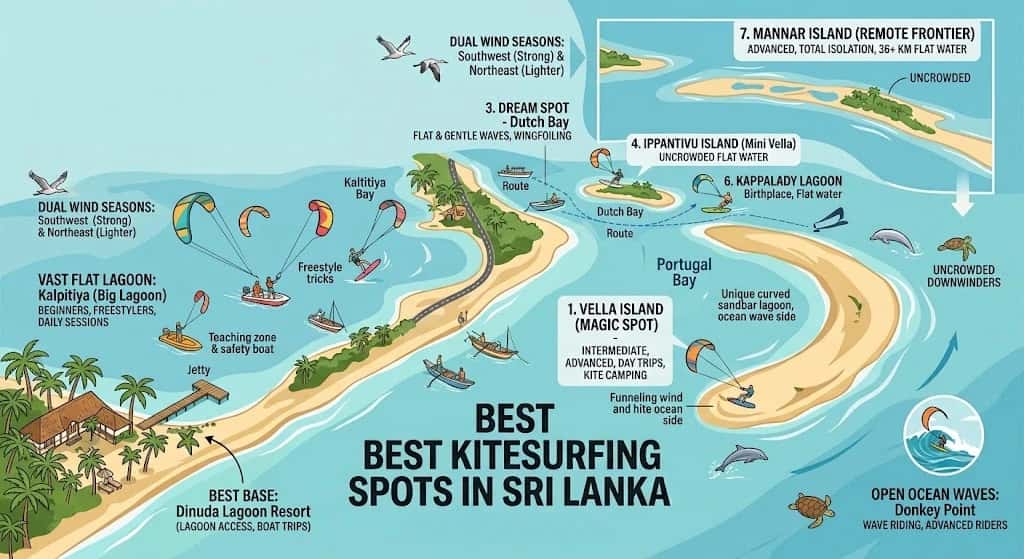
Vella Island and Dream Spot trips run by boat from the lagoon. Bring everything for a full outdoor session including food and extra water as facilities on the island spots are minimal. For spot detail and what each downwinder requires, read the best kitesurfing spots in Sri Lanka guide.