
Sri Lanka is one of the finest places in Asia to see sea turtles in the wild. The island's warm coastal waters are home to five of the seven species of sea turtle found on earth, and sightings are possible along much of the coastline year-round. Whether you want to snorkel alongside turtles on a reef, watch nesting females come ashore at night, or visit a hatchery where eggs are protected until hatching, this guide covers the best places to see turtles in Sri Lanka, what to expect at each one, and how to do it responsibly.

Five Species of Sea Turtle in Sri Lanka
Sri Lanka hosts a remarkable diversity of sea turtle species. According to the IUCN Red List, all five species found here are either vulnerable, endangered, or critically endangered globally, which makes Sri Lanka's conservation efforts particularly significant.
Green Turtle: The most commonly sighted species around Sri Lanka's reefs. Recognised by their smooth, rounded shell and gentle feeding behaviour in shallow water.
Hawksbill Turtle: Found around coral reefs, with a distinctive narrow, pointed beak. One of the more visually striking species to encounter while snorkelling.
Olive Ridley Turtle: The most abundant sea turtle species worldwide, and frequently sighted in Sri Lankan waters. Named for the olive-grey colour of its shell.
Loggerhead Turtle: Larger and less commonly sighted than the green or olive ridley, but present in Sri Lankan coastal waters.
Leatherback Turtle: The largest turtle species on earth, growing up to two metres long. Rarely sighted close to shore, as they prefer deeper open ocean.
Best Places to See Turtles in Sri Lanka, Ranked
1. Hikkaduwa
Hikkaduwa on the southwest coast is the most accessible turtle destination in Sri Lanka, and the one that most visitors encounter first. The turtles here are unusually habituated to human presence, and it is possible to see green and olive ridley turtles feeding in very shallow water, sometimes within metres of the shore.
Snorkelling from Hikkaduwa Beach produces reliable turtle encounters, particularly in the stretch of reef just offshore. The turtles surface regularly to breathe, which makes spotting them straightforward even for casual snorkellers.
A well-known local practice here involves holding out seaweed for turtles to feed from. While this is popular with visitors and often the image people associate with Hikkaduwa turtles, feeding wild animals is not encouraged by conservation organisations, as it alters natural behaviour. Observe rather than interact wherever possible.
Best for: accessible, shallow-water turtle snorkelling.
Best time: November to April, when the sea is calm.
2. Rekawa Beach (Tangalle)
Rekawa is widely considered the best place in Sri Lanka to watch nesting turtles come ashore. The Rekawa Turtle Watch is a community-run conservation project that guides small, controlled groups of visitors onto the beach after dark to observe female turtles laying eggs.
All five species nest at Rekawa, making it one of the most significant nesting sites in South Asia. The experience is managed carefully, with volunteer guides ensuring torches are kept off and distances are maintained so the turtles are not disturbed.
This is a very different experience from snorkelling with turtles. It is quiet, dark, and requires patience, but watching a leatherback or green turtle haul itself up the beach to nest is genuinely extraordinary.
Best for: witnessing turtle nesting behaviour.
Best time: April to July is peak nesting season, though nesting occurs year-round.
3. Kosgoda Turtle Hatchery
Kosgoda is home to several turtle hatcheries, which collect eggs from at-risk nests on the beach, incubate them safely, and release hatchlings into the sea. The hatchery visit is educational and widely accessible, making it a popular addition to a west coast itinerary.
Visitors can see hatchlings at various stages of development, learn about the five species present in Sri Lankan waters, and occasionally witness a release. The hatcheries are open year-round.
A note on responsible tourism: hatchling releases vary in their conservation standards. Handling hatchlings or placing them in the water rather than allowing them to navigate independently can affect their ability to return to the same beach to nest later in life. Choose a hatchery with clear conservation credentials.
Best for: learning about turtle conservation and seeing hatchlings up close.
Best time: year-round.
4. Mirissa and Turtle Bay
Mirissa on the south coast has a dedicated turtle snorkelling site known as Turtle Bay, a sheltered cove with a reef where green and hawksbill turtles are regularly sighted. The bay is calm, the water is clear, and the reef is accessible to confident swimmers.
Mirissa is also the departure point for whale watching trips, making it possible to combine turtle snorkelling with blue whale or sperm whale sightings in the same day.
Best for: snorkelling with turtles combined with other marine wildlife.
Best time: November to April.
5. Trincomalee (East Coast)
Trincomalee on the northeast coast offers reliable turtle snorkelling around Pigeon Island National Park, where turtles are frequently sighted among the coral reef alongside reef sharks and a wide variety of fish. The water here is exceptionally clear during the east coast season.
The east coast operates on an opposite season to the southwest, making it the natural turtle destination for visitors in the July to September window.
Best for: combining turtle snorkelling with reef diving and clear-water snorkelling.
Best time: May to September.
6. Bar Reef Marine Sanctuary, Kalpitiya
Bar Reef, situated approximately 35 km offshore from Kalpitiya on the northwest coast, is one of the largest coral reef systems in South Asia, covering around 307 square kilometres. Sea turtles, including green and hawksbill species, are regularly sighted during snorkelling and diving trips to the reef.
Bar Reef is less commonly cited as a turtle destination than the south coast sites, primarily because it requires an offshore boat journey. It is best approached as part of a broader Kalpitiya marine experience combining dolphin watching and reef snorkelling, rather than as a dedicated turtle trip.
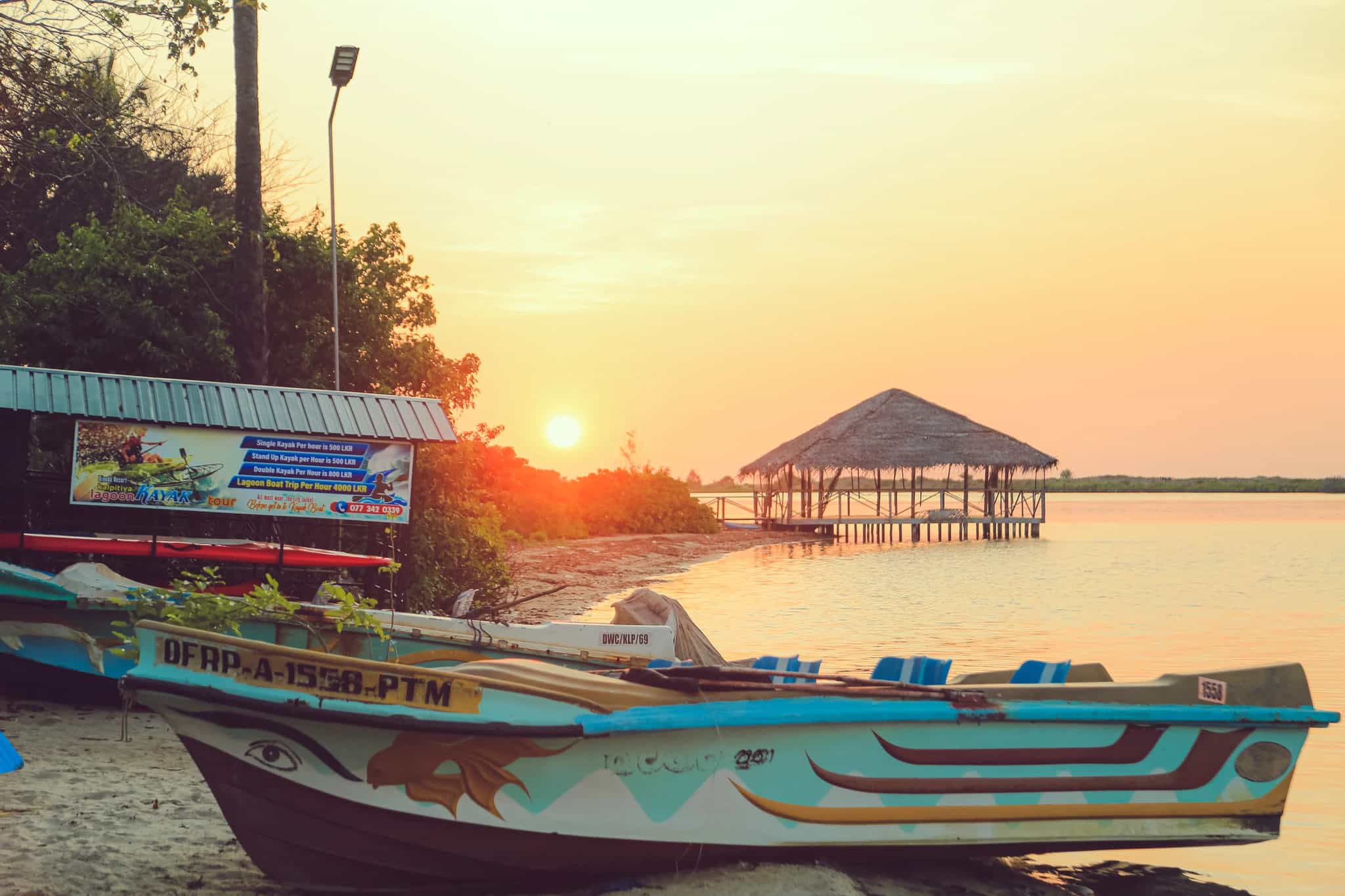
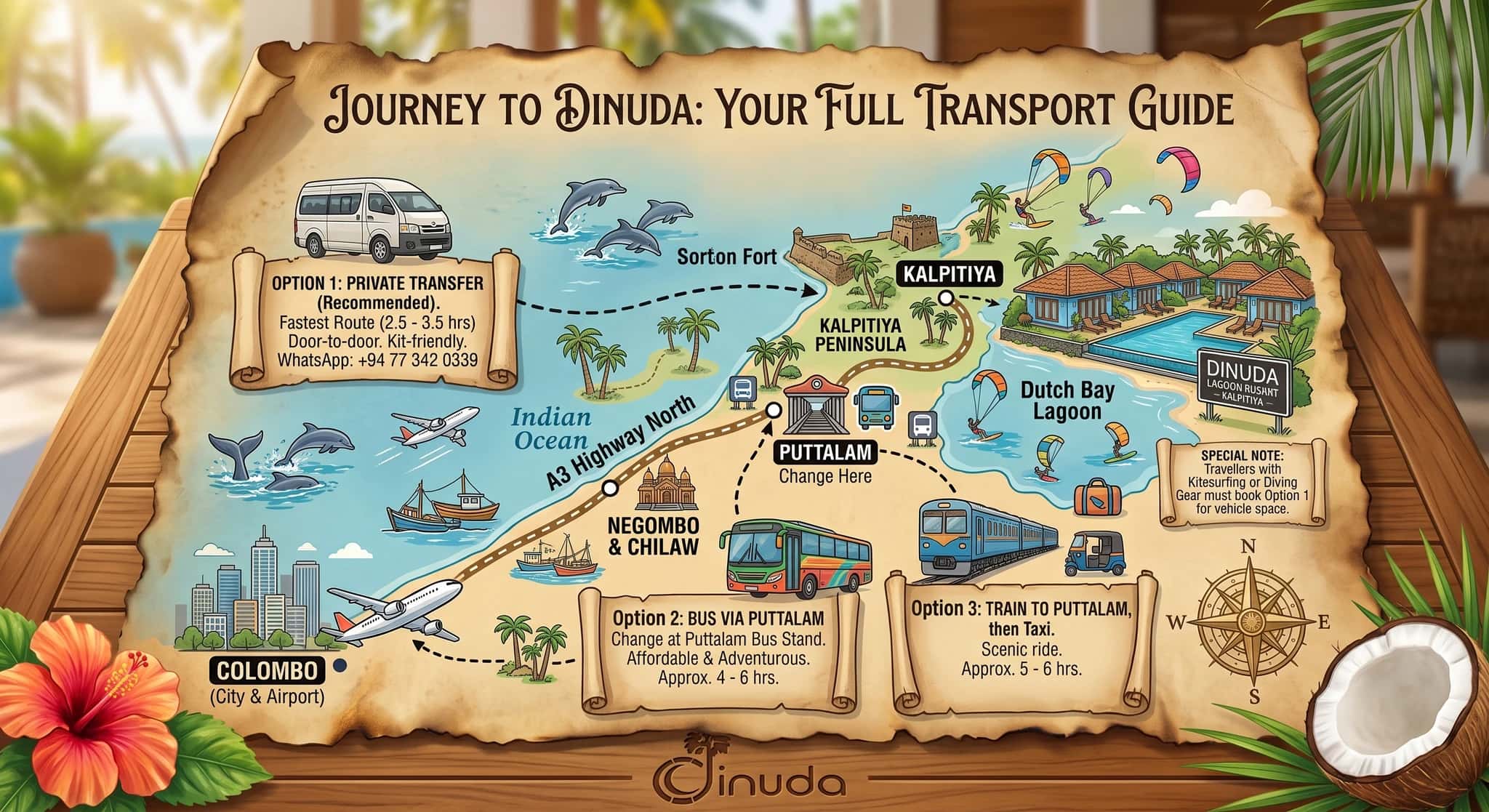
Snorkelling trips to Bar Reef depart from Kalpitiya, and are arranged through Dinuda Lagoon Resort as part of a longer stay that also includes dolphin watching and, depending on the season, kitesurfing.
Best for: combining reef snorkelling with other Kalpitiya marine experiences.
Best time: November to April, when seas are calm and visibility is highest.
Best Time to See Turtles in Sri Lanka
The honest answer is that turtles are present in Sri Lankan waters year-round. Species, behaviour, and sighting conditions vary by location and season.
Southwest coast (Hikkaduwa, Kosgoda, Mirissa, Rekawa): best from November to April when the sea is calm and snorkelling visibility is at its highest. Rekawa nesting peaks from April to July.
East coast (Trincomalee, Pigeon Island): best from May to September when the northeast monsoon gives way to calm, clear conditions.
Northwest coast (Bar Reef, Kalpitiya): best from November to April, the same window as dolphin watching and the calmer marine season.
Ethical Turtle Watching: A Short Guide
Sri Lanka's turtles are vulnerable and legally protected. A few principles apply to every encounter:
- Do not touch or chase turtles in the water or on the beach. Approach slowly and let them set the pace.
- Keep torches off on nesting beaches. Artificial light disorients nesting females and hatchlings finding the sea.
- Give nesting turtles space. Stay at least five metres back and avoid surrounding the animal.
- Do not feed turtles. It alters natural feeding behaviour and creates dependency.
- Choose conservation-led hatcheries. Look for organisations that release hatchlings to self-navigate rather than placing them in the water by hand.