
Sri Lanka is one of the most rewarding first international trips you can take. In roughly the size of Ireland, it packs eight UNESCO World Heritage Sites, leopards and blue whales, ancient rock fortresses, mist-covered tea hills, colonial fort towns, and some of the warmest hospitality in Asia. It is also, for first-time visitors, a place where knowing a few things in advance makes the difference between a smooth, memorable trip and an avoidable series of small frustrations. This guide for sri lanka first time visitors covers everything from visas and seasons to what to eat, how to get around, what the cultural rules are, and the one destination that most first itineraries leave out.

Is Sri Lanka Easy to Visit for the First Time?
Yes, with a few caveats. English is widely spoken across the country, the tourism infrastructure is well developed across the main circuit, and Sri Lankans are genuinely and consistently warm toward visitors. The country is safe, the food is extraordinary, and the range of experiences available within a compact geography is almost unmatched in South Asia.
The caveats are practical: travel times are longer than maps suggest, cash matters more than cards, and the monsoon affects different parts of the island at different times of year. None of these are obstacles once you know about them. This guide covers all of them.
When to Visit Sri Lanka
Sri Lanka has two monsoon seasons that affect different coasts at different times. Understanding this before you book changes everything about where you go and when.
South and West coasts, Hill Country: Best from December to March. This is peak season for Galle, Mirissa, Unawatuna, Hikkaduwa, Kandy, Ella, and Nuwara Eliya. The sea is calm, the skies are clear, and the wildlife season is active across Yala and the south coast whale watching belt.
East coast: Best from May to September. Trincomalee and Arugam Bay are at their best in this window when the southwest monsoon has pushed through.
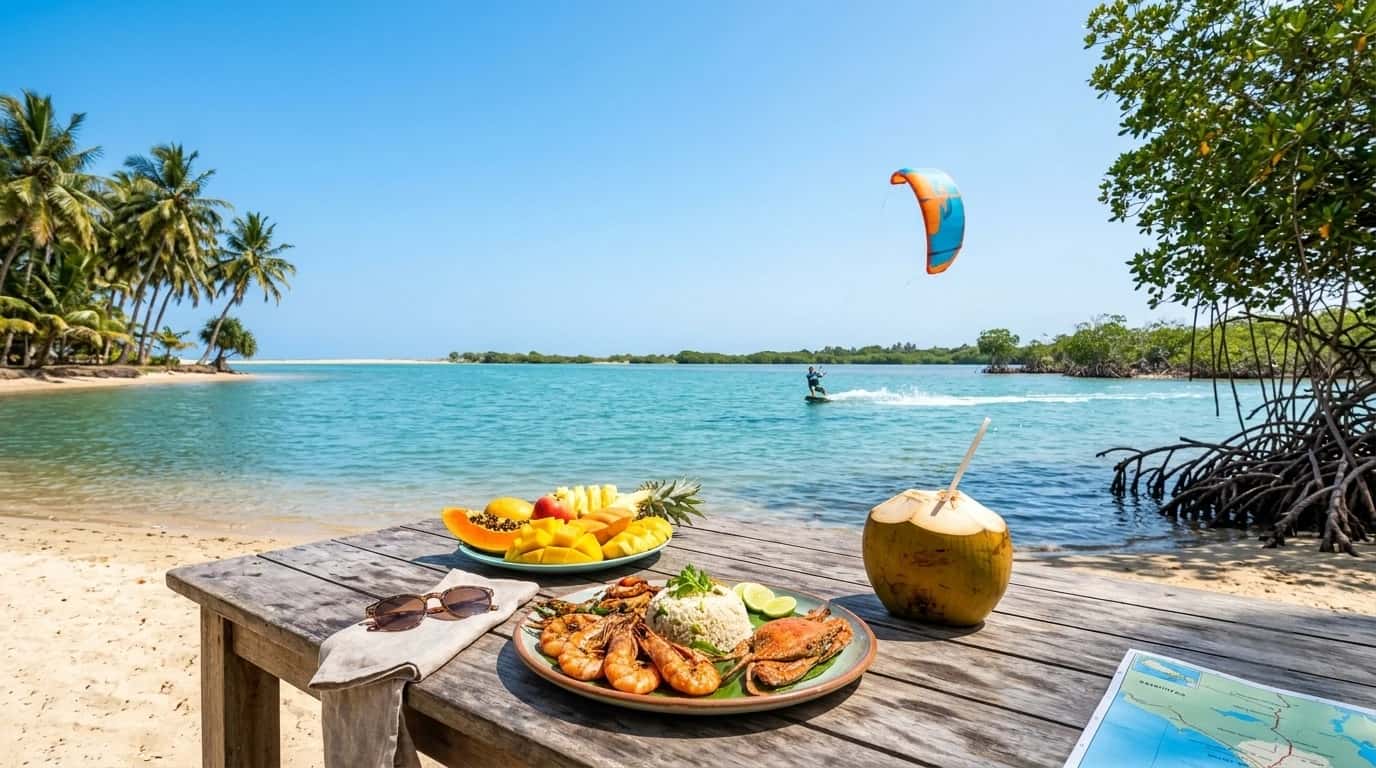
Northwest coast (Kalpitiya): November to April for dolphin watching, whale watching, and Bar Reef snorkelling. May to October for kitesurfing.
The practical implication: A first-time visitor planning a two-week trip in December to March gets the south and west circuit at its best and can include Kalpitiya at the beginning or end of the route. A May to September visit works better with a Cultural Triangle and east coast focus. The hill country is reasonable year-round.
Entry Requirements: ETA Before You Arrive
Most nationalities need an Electronic Travel Authorization (ETA) to enter Sri Lanka. Apply online through the official Sri Lanka immigration portal before departure. The ETA covers a 30-day stay and is typically approved within 24 hours.
From May onwards, Sri Lanka scrapped the ETA fee for approximately 40 nationalities including the United Kingdom, Ireland, most of Europe, the United States, Canada, Australia, and New Zealand. For other nationalities, the fee is approximately USD 35 to 50 depending on your passport. Check the official portal for your specific country before applying.
Do not rely on getting the ETA on arrival. Apply online before you fly.
Getting There
The main international gateway is Bandaranaike International Airport (CMB), located at Katunayake, approximately 35 kilometres north of Colombo city. Most international flights arrive here. Sri Lankan Airlines, Emirates, Qatar Airways, Singapore Airlines, and Malaysia Airlines operate regular connections from major hubs in the Middle East, Southeast Asia, and South Asia. Direct flights from Europe operate on limited routes; most European visitors connect through Doha, Dubai, or Singapore.
From the airport, private transfers to Colombo city take approximately 45 to 60 minutes. Taxis are available at the arrivals hall and can also be pre-booked through your accommodation. For visitors heading directly to Kalpitiya from the airport, the transfer takes approximately 2.5 to 3 hours by road and can be pre-arranged through your resort.
Getting Around Sri Lanka
Understanding transport before you arrive saves significant time and avoidance of frustration.
A key rule: double the time Google Maps gives you. Sri Lanka's roads involve buses, tuk-tuks, cattle crossings, and narrow mountain passes. What looks like a 90-minute drive frequently takes three hours. Plan accordingly and you will enjoy the journey rather than stress about it.
Private vehicle with driver is the most practical option for first-time visitors covering multiple destinations. A reliable driver who speaks English, knows the roads, and can recommend stops along the way transforms the overland sections from logistics into experience. Your accommodation can arrange this at each stop.
Trains are the exception to the pace rule. The train journey from Kandy to Ella through the tea country is one of the most scenic rail journeys in the world and worth booking in advance. Observation car seats sell out quickly.
Tuk-tuks are the standard transport for short distances within towns and villages. Negotiate the fare before getting in.
Buses cover most routes across the island at very low cost. Government buses are slower and more crowded. The Colombo to Kalpitiya bus guide covers the northwest coast route in detail if you are travelling on a budget.
Where to Go: The Main Regions
Cultural Triangle (Sigiriya, Dambulla, Polonnaruwa, Anuradhapura): The archaeological heartland of Sri Lanka. UNESCO World Heritage Sites and ancient cities. Three to four nights here covers the major sites.
Kandy: The cultural capital in the central hills. The Temple of the Tooth Relic, Peradeniya Botanical Gardens, and the Kandyan cultural show are the core. Two nights works well.
Hill Country (Ella, Nuwara Eliya): Tea estates, the famous Kandy to Ella train, the Nine Arch Bridge, and cool misty air at altitude. Two to three nights.
South Coast (Galle, Mirissa, Unawatuna, Tangalle): Colonial history at Galle Fort, whale watching from Mirissa in season, calm bays, and beachfront accommodation. Three to four nights.
Northwest Coast (Kalpitiya): The destination most first-time itineraries leave out, and the one most visitors wish they had included. Covered in full below.
East Coast (Trincomalee, Arugam Bay): Best May to September. Turquoise beaches, diving at Pigeon Island, surf at Arugam Bay.
For a full itinerary connecting these regions, read the Sri Lanka two-week travel guide.
Where to Stay
Sri Lanka offers accommodation across every price point, from simple guesthouses to luxury villas.
Guesthouses are the most common mid-range option across the island. Family-run, often including breakfast, and located in or near the main attractions. Quality varies; reading recent reviews before booking matters.
Boutique hotels in historic buildings are a particular strength of Galle Fort and parts of Kandy. These fill up early and are worth booking well in advance for the November to March peak season.
Resort properties on the coasts range from large international chains on the south coast to smaller, more intimate properties on the northwest coast at Kalpitiya.
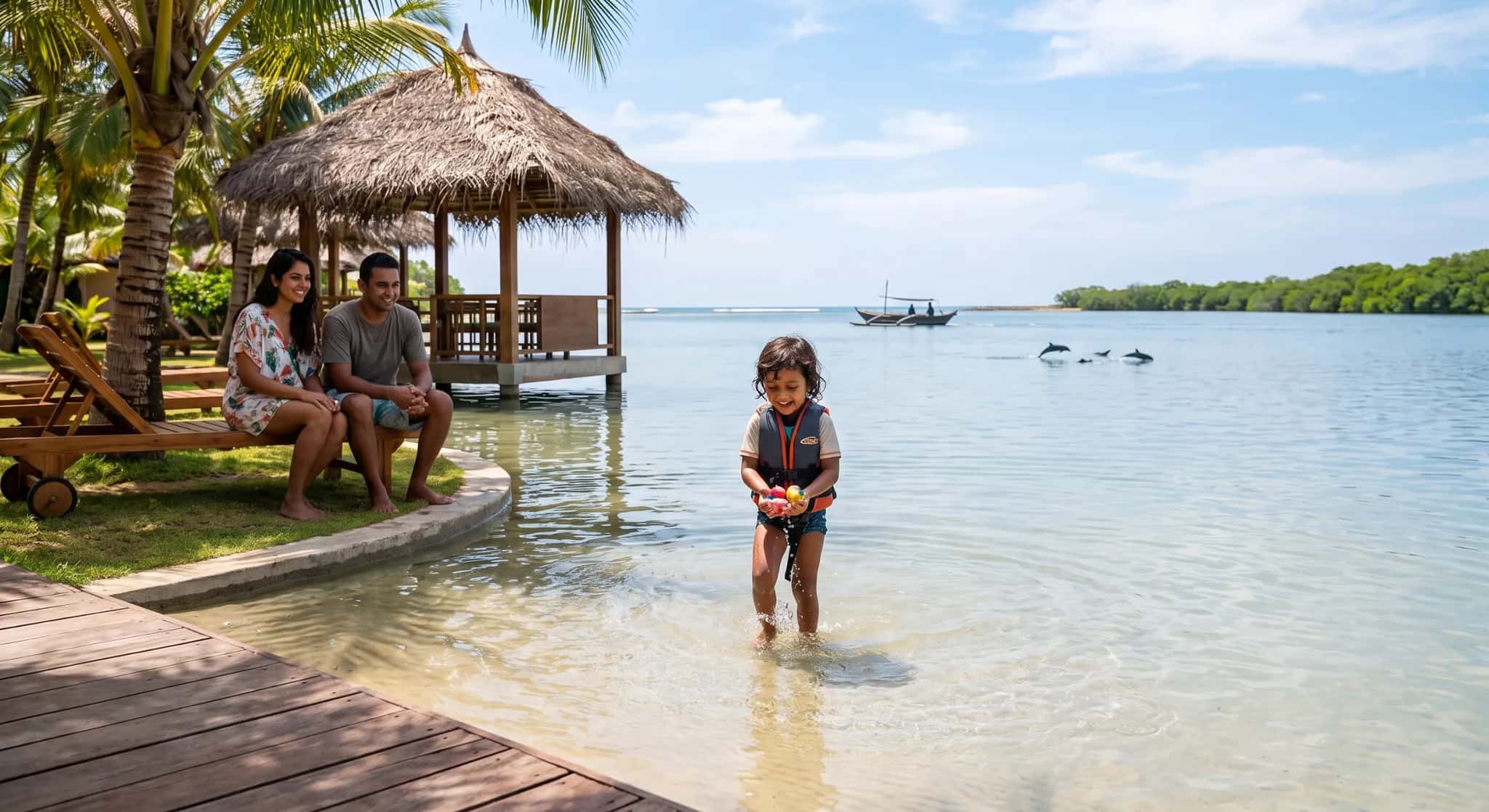
For couples and families who want to add the northwest coast to their itinerary, Dinuda Lagoon Resort in Kalpitiya sits directly on the Dutch Bay Lagoon. All marine wildlife experiences including dolphin watching, whale watching, Bar Reef snorkelling, and the Wilpattu safari depart from the property.
Booking direct with your accommodation, rather than through OTAs, typically gives better rates and more flexibility. Most properties in Sri Lanka can be booked directly by WhatsApp or email.
What to Eat
Sri Lankan food is genuinely extraordinary and first-time visitors consistently name it as one of the highlights of the trip. A few things to know before you arrive.
Must-try dishes: Rice and curry is the foundation of Sri Lankan meals, a plate of steamed rice surrounded by multiple small curries of vegetables, dhal, sambol, and meat or fish. Hoppers (appa) are bowl-shaped rice flour pancakes, often with an egg in the centre. Kottu roti is a street food staple, chopped roti stir-fried with vegetables, egg, and your choice of protein. String hoppers are steamed rice noodle discs served with curry for breakfast.
Spice levels: Sri Lankan food is often very spicy. If you are not used to chilli heat, ease in slowly and let restaurants know your tolerance. Most guesthouses will adjust spice levels if asked.
Practical rules: Drink only bottled water and check the seal before drinking. Avoid ice in rural areas. Go where locals eat — high turnover means fresher food and lower risk. Carry rehydration salts in case your stomach needs adjustment during the first few days.
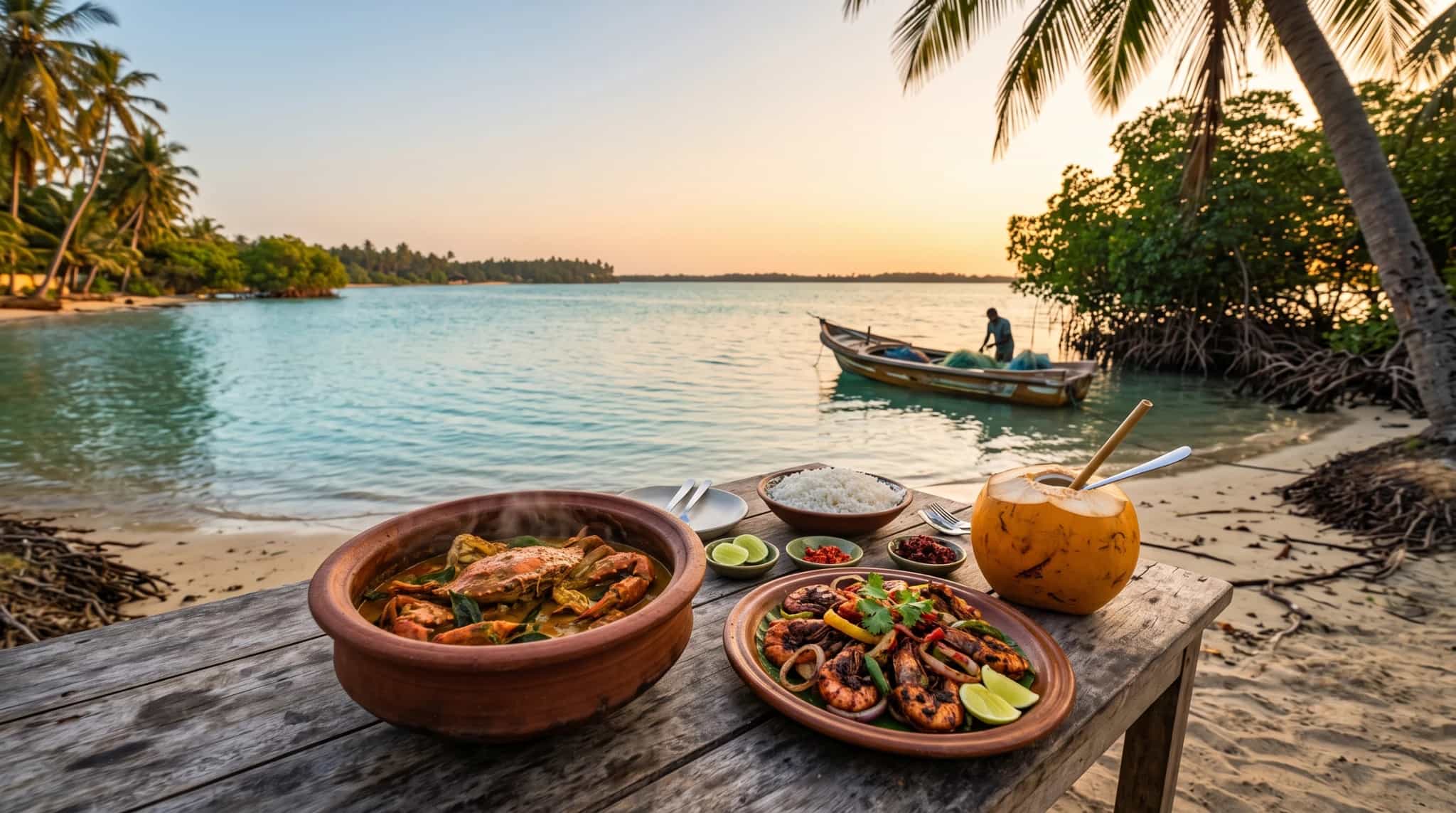
Seafood: The coastal regions of Sri Lanka offer extraordinary fresh seafood. Go where it is busy — high turnover usually means fresher meals. The lagoon seafood at Kalpitiya, sourced directly from local fishermen, is among the best on the island. Rough Guides
Cultural Customs and Laws Every First-Time Visitor Should Know
At temples and religious sites: Remove shoes before entering. Cover shoulders and knees. Many sites provide sarongs to borrow if needed. Face toward Buddha statues for photographs and never pose with your back to one. Avoid displaying tattoos of Buddha or religious imagery.
Photography: Do not photograph military buildings or soldiers. This can lead to serious consequences.
Poya days: Sri Lanka observes Poya days on each full moon, which are public holidays. Alcohol is not sold on Poya days. If you are planning an evening that involves wine or beer, check the lunar calendar for your travel dates.
Drugs: Even small amounts of illegal drugs carry serious legal consequences in Sri Lanka. Trafficking penalties are severe.
Wildlife and nature: Stick to visiting national parks and always go with reputable guides. Avoid elephant rides or attractions where animals are chained or used for entertainment. Taking coral, shells, or animals from beaches and national parks is illegal. Globaltravelplanning
Money and Payments
The Sri Lankan Rupee (LKR) is the local currency. Card payments are not universally accepted, particularly outside Colombo and the main tourist areas. ATMs can be finicky — there are times when an ATM exists but does not take foreign debit cards. Carry more cash than you think you need, especially when visiting national parks, rural restaurants, tuk-tuks, and smaller guesthouses. Staying Blonde
ATMs are reliable in Colombo, Galle, Kandy, and the main tourist towns. Withdraw enough when you are in a city before heading to more remote areas.
Health and Vaccinations
Sri Lanka does not require any compulsory vaccines. Nonetheless, consult your healthcare provider at least eight weeks before your visit. Recommended vaccinations include Hepatitis A, typhoid, and tetanus, particularly for travellers planning to eat street food or spend time in rural areas. lonelyplanet
Pack a basic travel health kit: insect repellent with DEET for evening coastal areas and national park visits, rehydration salts, broad-spectrum sunscreen, and any prescription medications you need for the duration of your trip.
The One Destination Most First Itineraries Miss
Every standard first-time Sri Lanka itinerary follows the same route: Colombo, Cultural Triangle, Kandy, Ella, south coast, Galle, back to Colombo. It is a genuinely excellent circuit. It is also one that leaves out the northwest coast entirely.
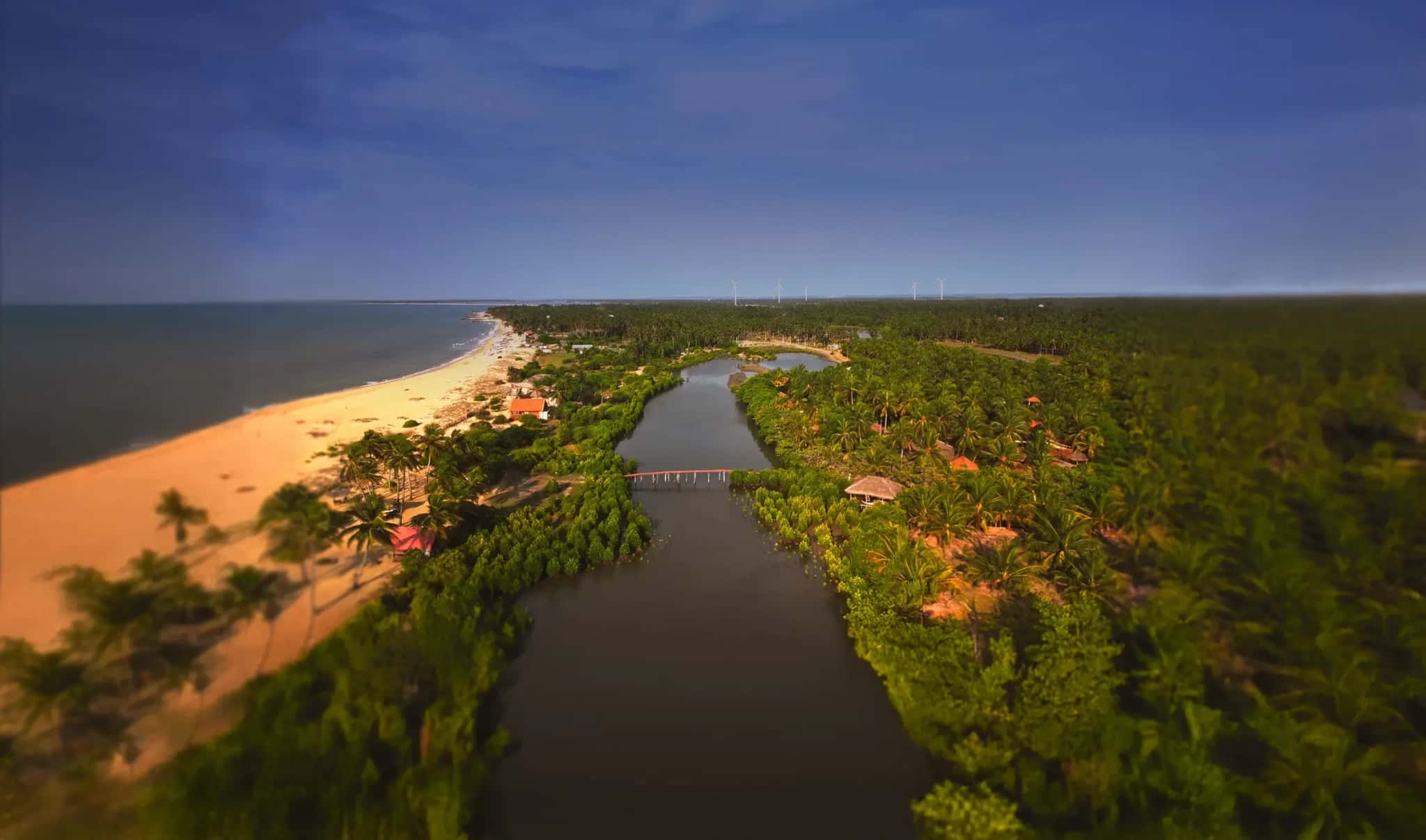
Kalpitiya, on the Dutch Bay Lagoon approximately 175 kilometres from Colombo, is where spinner dolphin superpods of several hundred animals gather from November to April, where the only boat-access route to Wilpattu National Park exists, where the lagoon glows bioluminescent blue on dark nights, and where the white sandbank separating the lagoon from the Indian Ocean is reachable in under an hour by boat from the resort.
Sri Lanka is going through a major tourism upswing, and Kalpitiya is the part of that story that the standard circuit has not yet caught up with. Most first-time visitors discover it exists only when someone who has been tells them about it. Rough Guides
Adding three to four nights at the start or end of a standard circuit route gives you the complete Sri Lanka: the ancient cities, the hill country, the south coast beaches, and the lagoon experience that none of the others can replicate.
Dinuda Lagoon Resort in Kalpitiya arranges every northwest coast experience from one base. Contact the team to add Kalpitiya to your first Sri Lanka trip.
Start Planning Your First Sri Lanka Trip
Sri Lanka repays first-time visitors generously. The combination of ancient history, extraordinary wildlife, warm hospitality, world-class food, and completely varied landscapes within a manageable geography makes it one of the most satisfying first-time travel destinations in Asia.
For the Kalpitiya section of your first Sri Lanka trip, Dinuda Lagoon Resort handles the airport transfer, accommodation, and every experience from the lagoon.